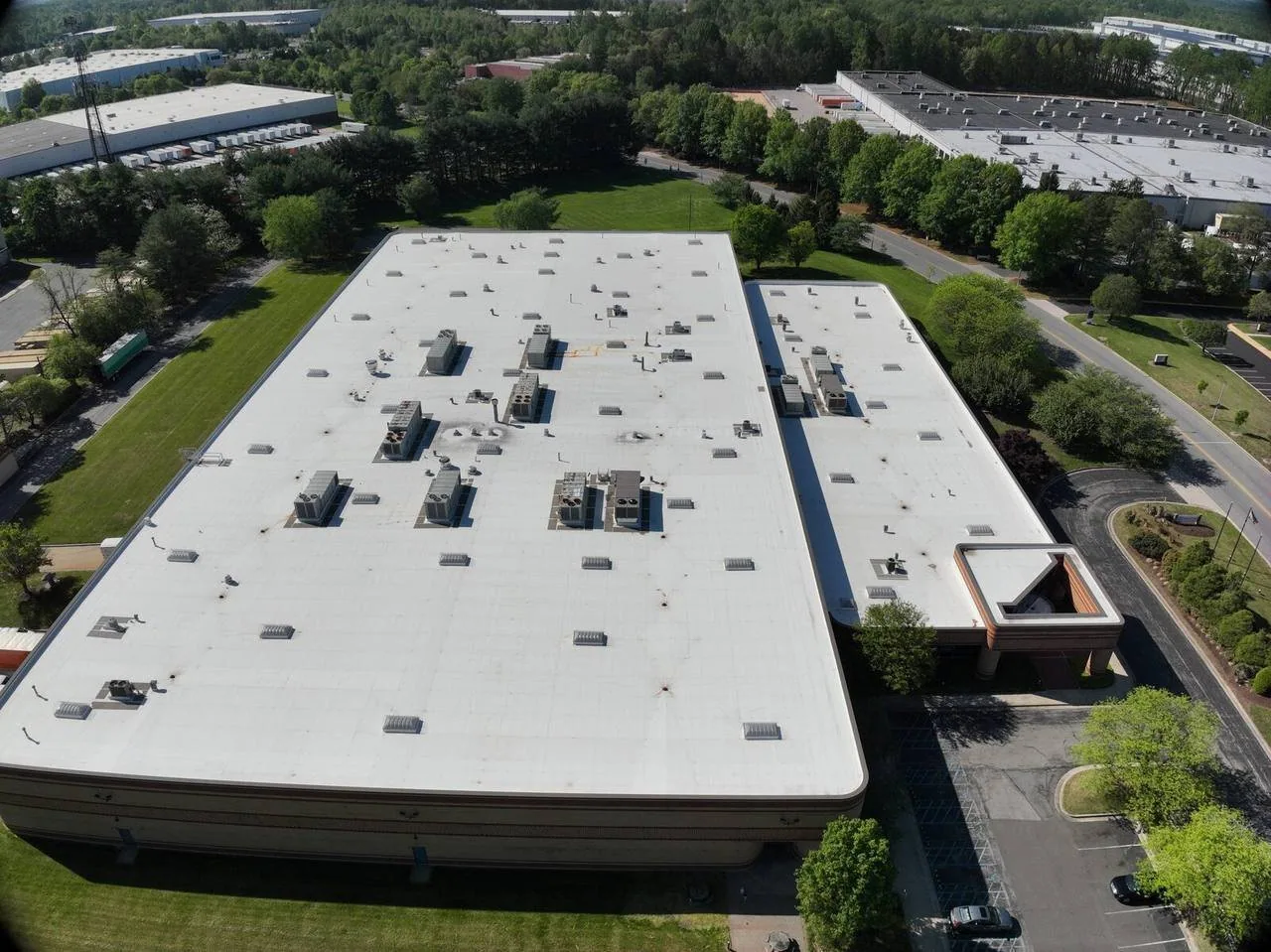
EPDM Roofing in Clearwater, FL

EPDM rubber roofing for Clearwater, FL: splice and flashing repair, ballasted and adhered systems, hail resistance, and recover or replacement options.

An EPDM roof can develop openings at its splices, corners or damaged field. It lets go at the splices and the corners, where rubber that has been pulled tight finally gives up. The big black sheet is forgiving. The small joints around it are not.

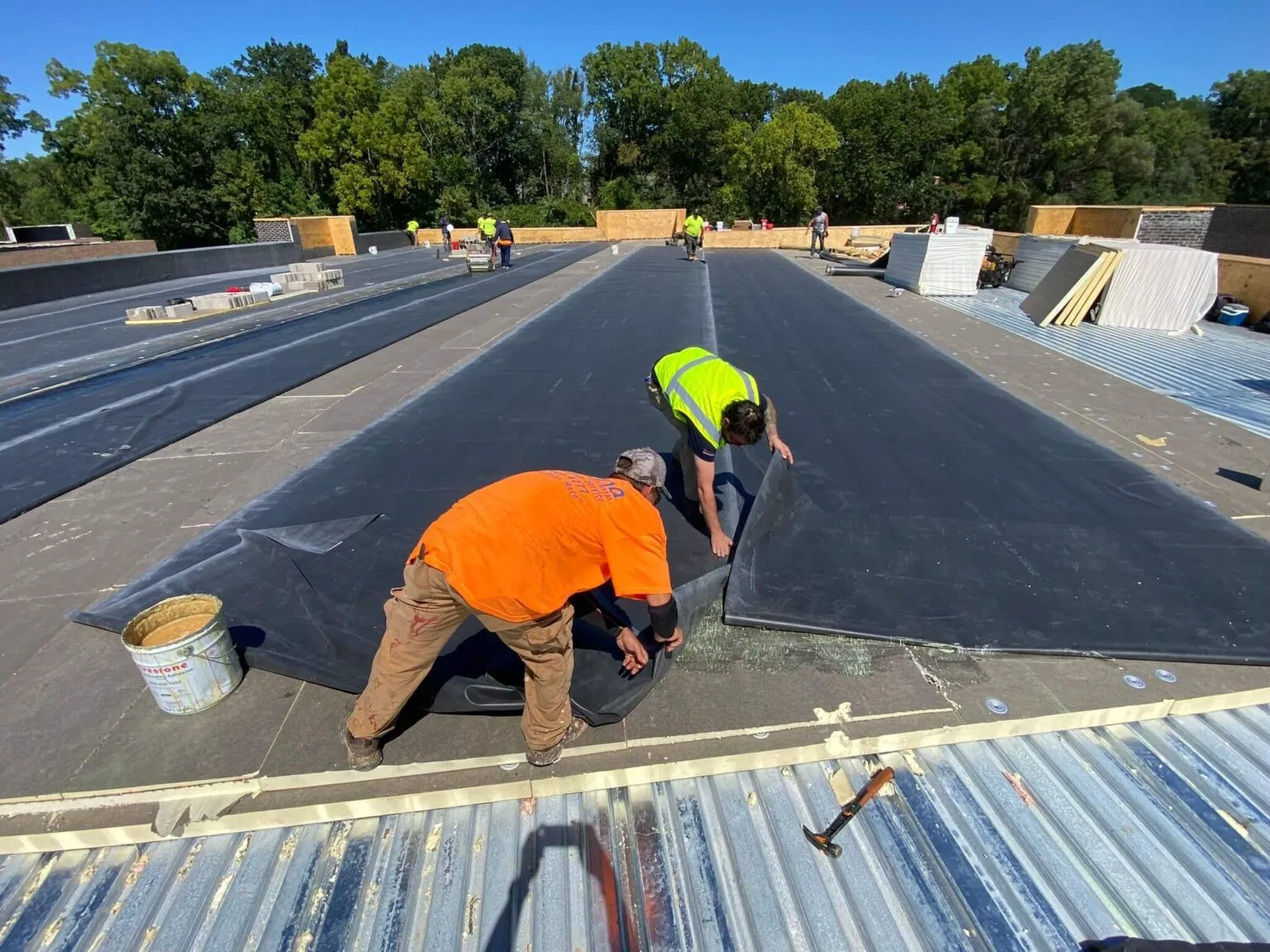
EPDM is a synthetic rubber membrane, sold in wide rolls so there are fewer seams than most roofs have. It stretches, its impact performance depends on the selected membrane and supporting assembly, and it has been laid on flat roofs for a very long time.

Here is the plain version for owners in Clearwater, FL. Rubber ages in the sun. Its seams depend on adhesive or tape, not heat welds. And the wet season tests both, every afternoon, from late May into October.
Rubber that gets pulled

Rubber that gets pulled

Think of a rubber band left on a sunny dashboard. It does not snap at once. It dries, loses some stretch and pulls toward itself. EPDM does the same, slowly. The sheet shrinks a little, and the pull lands on the flashing at walls, curbs and pipes.

Step one is the splice. EPDM seams are bonded with adhesive or splice tape. If the bond was made over dust or moisture, or if the tape has worked loose under heat, the seam opens at an edge. Water then runs under the lap and into the insulation.

Step two is the corner. Inside corners and pipe boots are made from patches of uncured rubber, and they are the usual weak spots. The detail was often formed by hand years ago, and thinner rubber at a fold fatigues first.

Step three is the ballast or the adhesive. On a ballasted roof, stone holds the sheet down but also hides the seams. On an adhered roof, a patch of failed glue lets the sheet bubble and lift in a storm.

Hail, lightning and black rubber

The wet season brings more than rain. Late May and June carry the most severe storms of the season in West Central Florida, with hail, damaging winds and waterspouts. In Tarpon Springs, at the north end of Pinellas County, summer thunderstorms can occasionally bring hail and even tornadoes off the Gulf. EPDM is a good match for that, because soft rubber absorbs impacts that crack brittle surfaces.

Black rubber also runs hot. A dark roof in Clearwater absorbs a great deal of summer sun and then gets cooled quickly when a storm blows in. That swing is hard on seams and sealant, so any EPDM roof, whether it covers an office property near Ulmerton Road, a low-rise in Largo or one of the apartment roofs nearby, needs a careful look at its details every year.

The Tampa Bay area is known as the lightning capital of North America. Lightning does not change what EPDM is made of, but the strikes can puncture the sheet or loosen rooftop equipment, and we look for that after major storms.

Splices, patches and low spots

Splices, patches and low spots

A walk on an EPDM roof is quick if you know where to look:

  • Seam edges with a visible gap, a lifted tape strip or a line of dirt trapped inside the lap.
  • Pipe boots and inside corners with cracks, tears or dried sealant.
  • Bubbles under the sheet on a fully adhered roof.
  • Stone that has shifted or scoured away from the edges on a ballasted roof.
  • Standing water that is still there the day after a storm.
  • Chalky, cracked rubber on the surface.

Ponding is the one that hides a larger problem. Water that sits on rubber for days speeds up wear on the sealant and puts weight on the deck, so a low spot deserves attention. Ponding water roof repair works on the drainage so the sheet is not left wet.

Ballasted, adhered or fastened

EPDM assemblies can use ballast, mechanical attachment or adhesion, but each method has conditions that need review. Ballast adds load and requires assessment of wind, perimeter containment and the supporting structure. The choice needs the manufacturer's system requirements and the building's applicable criteria, rather than a general assumption that loose stone is suitable for every rubber roof.

Fully adhered roofs glue the sheet to the board below, which spreads the hold across the whole surface. Mechanically attached roofs use plates and screws along the seam lines. The appropriate method follows the building loads and tested assembly requirements.

Cost depends on which method, how much old roof comes off and how many curbs and penetrations need new flashing. Permit review adds a step too, since the City of Clearwater wants approval sheets for the exterior products. A recover can save time on a dry, single-layer base, and roof recover and overlay work starts by testing what lies underneath.

Splice tape and flashing resin

Splice tape and flashing resin

Old EPDM does not take a patch the way new rubber does. First we scrub the area with a cleaner made for rubber, then we test a small piece to see if adhesive will bond. If it bonds, we lay a cured patch or splice tape with a good overlap and roll it. An unsuccessful test requires review of contamination, preparation and material condition before the repair method is selected.

For corners and boots, we select compatible formed or liquid-applied details only where the system requirements permit them. A liquid-applied flashing resin cures into the shape of a tricky corner and removes the seam that failed. Our work on flashing failure repair follows the same order for any membrane.

When the sheet is chalky across the field and the splices keep opening, patching stops being a plan. Then the choice is a new roof, either another EPDM or a different system such as TPO roofing or modified bitumen roofing. We lay out what each would do on your building.

When comparing an EPDM repair with replacement, inspect the bond at seams and flashings before judging the open field. A broad sheet can look serviceable while tape has lost contact at a lap or a pipe boot has hardened. Cleaning and preparation are critical because new splice tape will not hold on a contaminated surface. We identify whether the repair is a local splice, a rebuilt penetration or a larger membrane section, then check the adjoining drainage and edge details. That keeps a repair recommendation tied to the failure mechanism instead of the color or age of the sheet.

Commercial Roofing Questions

How long does an EPDM roof last in this climate?

Age is only half of it. A well-detailed sheet with clear drains can outlast one with ponding and open corners by years. We judge by the condition of the splices and the flashing, not by a number on a calendar.

My roof is black. Will it run my cooling bills up?

A dark sheet absorbs more heat than a white one, and Pinellas sits in a hot-humid climate zone. Adding insulation or switching to a lighter system can cut that. We can show you both options, with the trade-offs.

Can EPDM take hail?

Soft rubber absorbs impact better than a brittle surface. A thick sheet over a firm cover board holds up well. After a severe storm we still check for punctures and for flashing that took a hit.

Is it better to patch or replace a rubber roof with open seams?

Look at how many. A handful of open splices on a sound sheet is a repair. Widespread openings require investigation of bond, preparation, movement and moisture. We compare a larger repair scope with replacement rather than assign the cause from seam count alone.

Do I need a permit to swap an EPDM roof for a different system?

Installing or replacing roofing components in Clearwater needs a permit and a product approval sheet. Switching systems is a replacement, so yes. We prepare the submission and plan the schedule around it.

Send photos of the splices

Send photos of the seams, corners and any standing water, or book an inspection. We will show you what we see on the rubber, explain it plainly and give you a plan for the repair or the next roof. Call any day of the week.

Request a Roof Assessment   or call 555-555-5555

Call555-555-5555