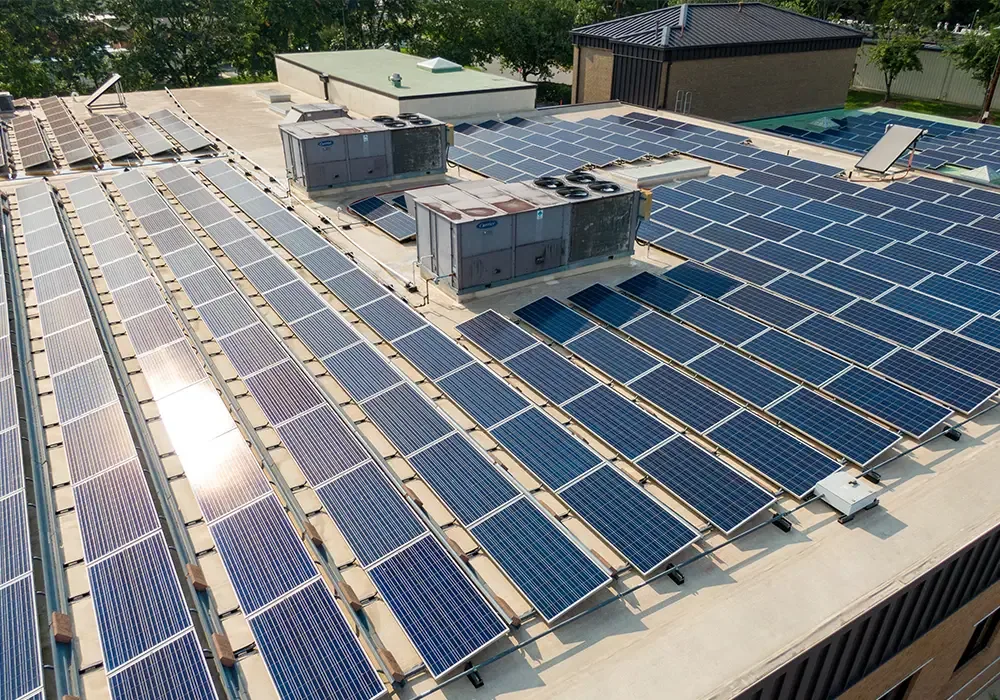
Commercial Roof Replacement in Clearwater, FL

Full tear-off and replacement of low-slope commercial roofs in Clearwater, FL, built for wet-season storms, salt air, hurricane wind and the permit process.

Repeated openings can leave a roof with repairs scattered across several sections. Closing the next gap may stop a leak, but it does not settle whether the remaining assembly is sound enough to keep.

Commercial roof replacement in Clearwater, FL begins by separating local defects from broader deterioration. We examine the membrane, investigate suspected moisture and check the deck where the scope requires it. Those findings show which layers need removal and which conditions the new assembly must address.

A replacement rebuilds the roofing over a suitable deck. The scope needs to explain the removal, any deck correction, insulation, drainage and new waterproofing. Each of those decisions affects the work sequence and the building below it.

Signs the roof is finished

Signs the roof is finished

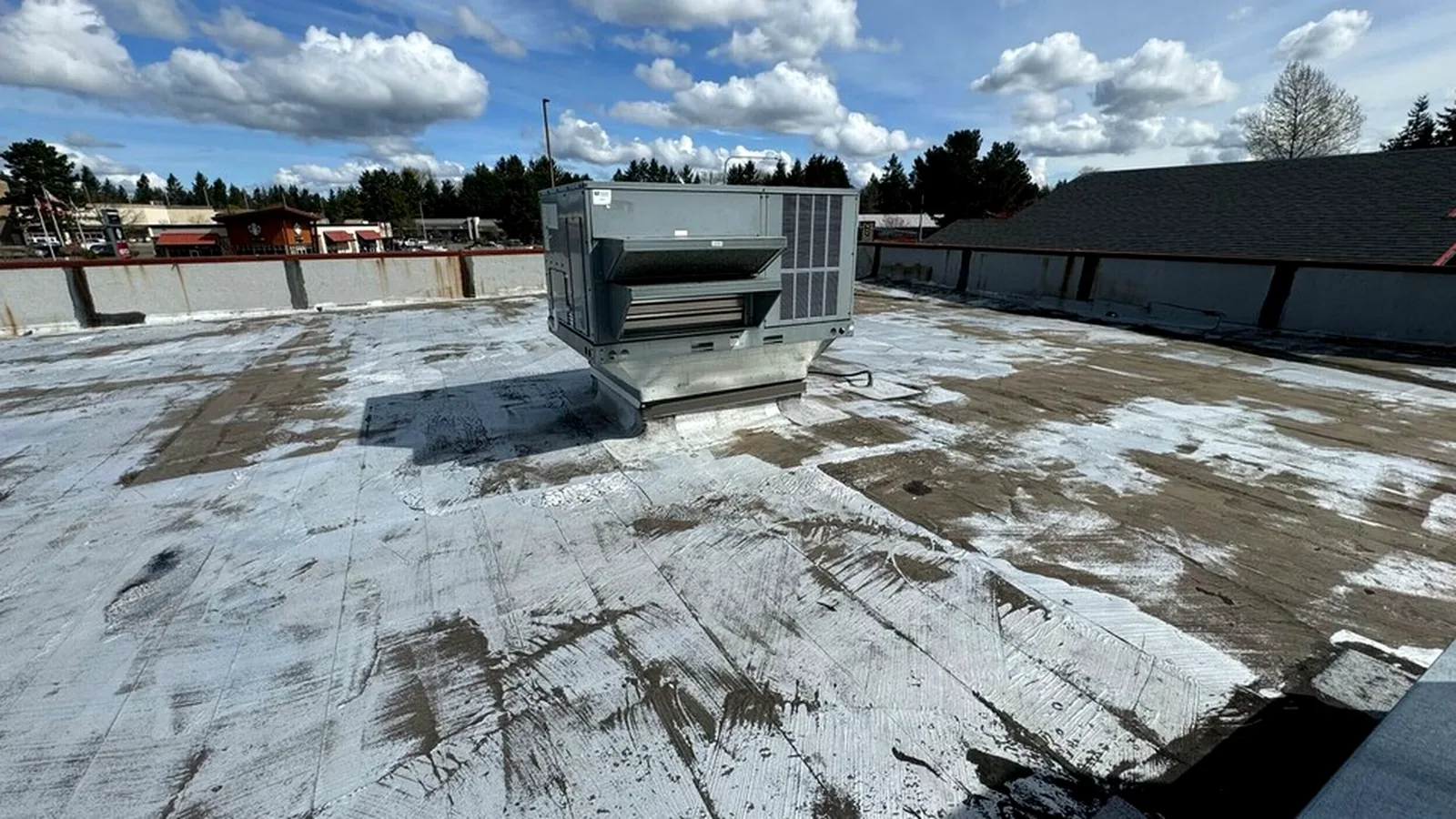
Walk the roof slowly. Start where water collects, then work toward the edges. This is what to look for:

  • Soft areas that require investigation of the underlying insulation and support.
  • Seams that have opened, lifted or shrunk back from the flashing.
  • Ponding that is still standing a day after the afternoon storm has passed.
  • The same corner or drain area patched more than once.
  • Blisters, ridges or bare reinforcing fabric where the surface has worn through.

One of these can be a repair. Several findings together call for a broader assessment of the assembly. They matter most near drains, edges and rooftop equipment, because each detail connects the waterproofing to another component.

Why Clearwater roofs age fast

Clearwater takes about 52.6 inches of rain a year, and most of it falls as daily thundershowers in the summer wet season. A low-slope roof lives through that cycle every year: hard sun, heavy rain, hard sun again.

The reason is simple. Heat expands the membrane and a cloudburst cools it in minutes. Seams and flashing flex a little every day. Over many seasons they crack, pull loose or leave small gaps. Salt air off the Gulf adds corrosion to fasteners, edge metal and rooftop units, and Pinellas is a peninsula that is more than half water.

Then come the named storms. Hurricane Helene pushed a record surge onto Clearwater Beach in September 2024. Hurricane Milton followed in October with gusts reaching 101 mph in parts of Pinellas County. Loose details and deteriorated attachment need correction for the assembly selected. The inspection identifies those weaknesses before replacement work is specified.

Tear-off, step by step

Tear-off, step by step

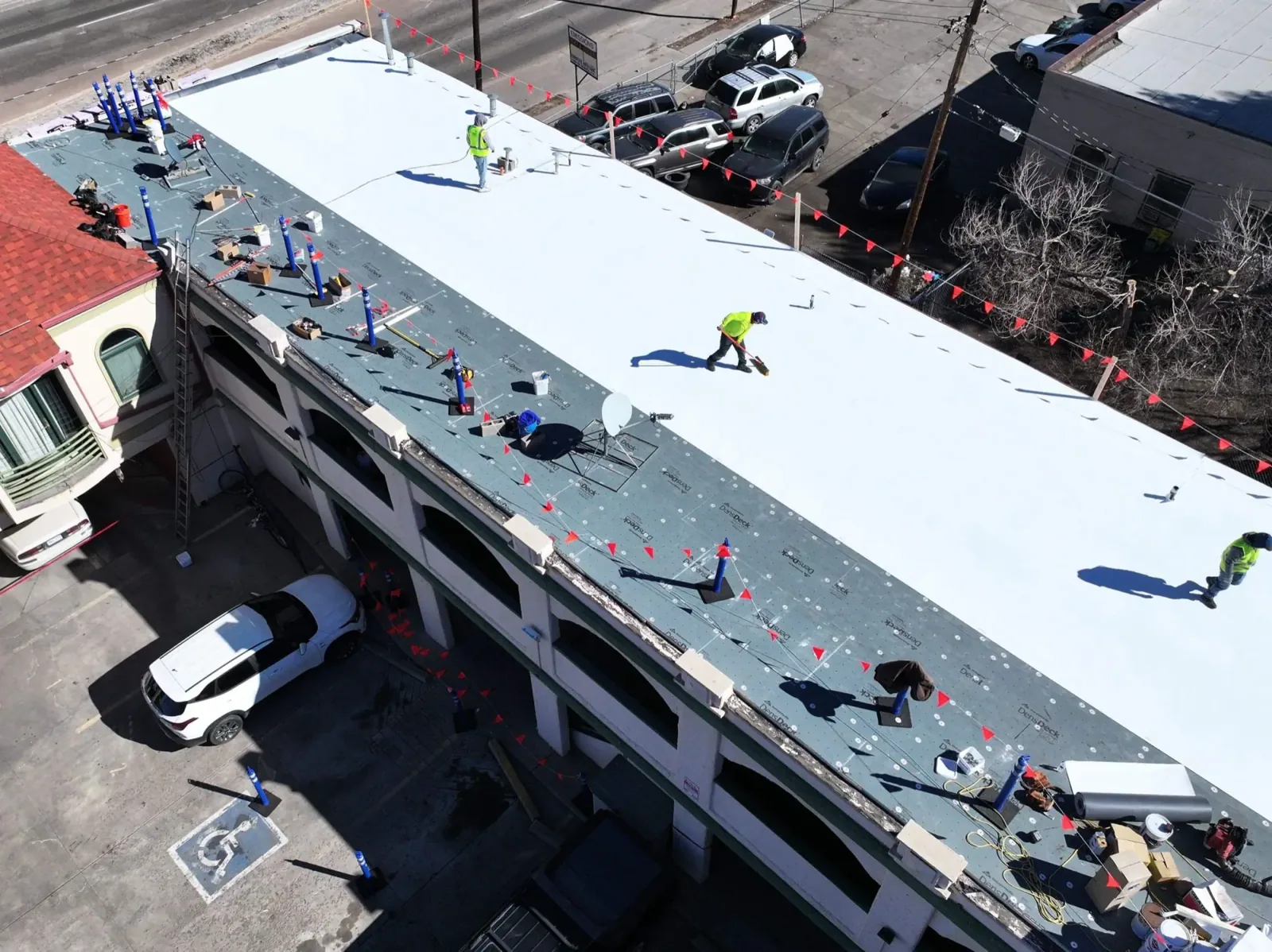
Step one is always the same: find out what is under the membrane. After that, the work runs in this order, and each stage protects the next.

  1. Survey the roof by hand and map the moisture, so the scope matches what is really there.
  2. Pull the permit. The City of Clearwater requires a building permit to install or replace any roofing component, with a product approval sheet that lists the exterior products.
  3. Tear off in sections, sized so each one is dried in before the crew leaves for the day.
  4. Repair the deck. Rotted or corroded deck is cut out and replaced before anything new goes down.
  5. Install insulation and cover board, fastened or adhered to the uplift rating the building needs.
  6. Install the membrane, flashing and edge metal, and detail the perimeter first, since wind pulls hardest there.
  7. Walk the finished roof with you and hand over photos of the details.

What the code asks of a new roof

Attachment is designed for the building, its location and the selected assembly. Roof height, geometry and the applicable wind requirements affect the fastener or adhesive arrangement. Perimeter and corner zones can need different treatment from the field.

The permit scope also addresses thermal performance and material approvals. We confirm the requirements for the project before installation, rather than selecting a membrane first and treating the layers beneath it as incidental.

Insulation and cover board provide the specified build-up and suitable support for the covering. Where a reflective roof surface is selected, the rest of the assembly still needs to meet the building's requirements. Surface color alone does not establish wind resistance or insulation performance.

Different buildings, different tear-offs

Different buildings, different tear-offs

Countryside Mall's documented layout includes two levels and skylights. A replacement scope for a retail property needs the actual roof dimensions and penetration details before quantities are settled. Floor area should not be used as a substitute for measuring the roof.

US 19 carries shopping centers and other commercial uses through Clearwater. At an occupied retail building there, loading, customer access and rooftop equipment changes can set the work sequence. We establish those arrangements with the property team before removal starts.

Medical operations add their own access and protection requirements. Our hospital roofing work accounts for the spaces affected by the project. For reroofing an occupied building, the scope identifies staging, equipment coordination and the plan for keeping completed sections protected while adjoining work proceeds.

Plan around the storm calendar

Timing is part of the scope. The rainy season runs roughly from late May to the second week of October, and hurricane season overlaps most of it. A tear-off in the middle of that stretch means more weather stops and more temporary protection. The owner's operating calendar and the system's installation requirements also enter the scheduling decision.

If a roof cannot wait, we plan for it with sectioned work, suitable temporary protection available and a forecast check every morning. If the deck and insulation are sound, a roof recover may be an option. A roof inspection identifies the assembly, with further checks as needed to evaluate the available options. System choice matters too, and single-ply options such as TPO roofing and PVC roofing can be evaluated for a suitable low-slope assembly in Countryside and across the county.

Before the first section is opened, the owner should know how the work will be divided, where removed material will travel, and who can approve a concealed-deck change. Those decisions keep a field condition from becoming an improvised scope revision. We mark drains, curbs, skylights and wall transitions on the roof plan, then tie each detail to the installation sequence. A closeout walk checks those same points against the completed work. Photos and a written record give the next facilities manager a useful baseline for inspections, equipment changes and future leak reports.

Commercial Roofing Questions

How do I know replacement beats another round of repairs?

The extent of deterioration determines the comparison. Confirmed wet material needs removal, but a local affected area does not automatically require replacing every roof section. We compare the remaining assembly, recurring defects and available repair options, then explain the removal scope supported by the findings.

How long will my building be exposed during tear-off?

Sectioning controls it. We remove only as much roof as we can dry in the same day, then close the work to the weather before the crew leaves. Afternoon storms in the wet season shape the daily plan, so work stops early when the sky turns.

How do you reroof a clinic or a retail center without closing it?

Continued operation requires a project-specific access and protection plan. Noise, odor and access are the real limits, so we plan loading areas, parking and rooftop equipment shutdowns with the property manager first. Medical and retail spaces get the most careful sequencing.

Will the new roof meet current code?

The permit review establishes the applicable requirements for the project. We identify the assembly and product documentation in the scope, including attachment and the affected roof details. The installation and inspection sequence then follows the approved work rather than relying on a general material description.

What should I send you to start a replacement scope?

Photos of the roof, the age if you know it, and any leak history. Roof plans or past reports help. We confirm everything on the roof with a hands-on walk and moisture readings before the scope is written.

Send photos, get a plain answer

Send us photos of the roof or book an inspection. We will walk it with you, show you what we see, and explain what it means for repair or replacement. Call any day of the week.

Request a Roof Assessment   or call 555-555-5555

Call555-555-5555