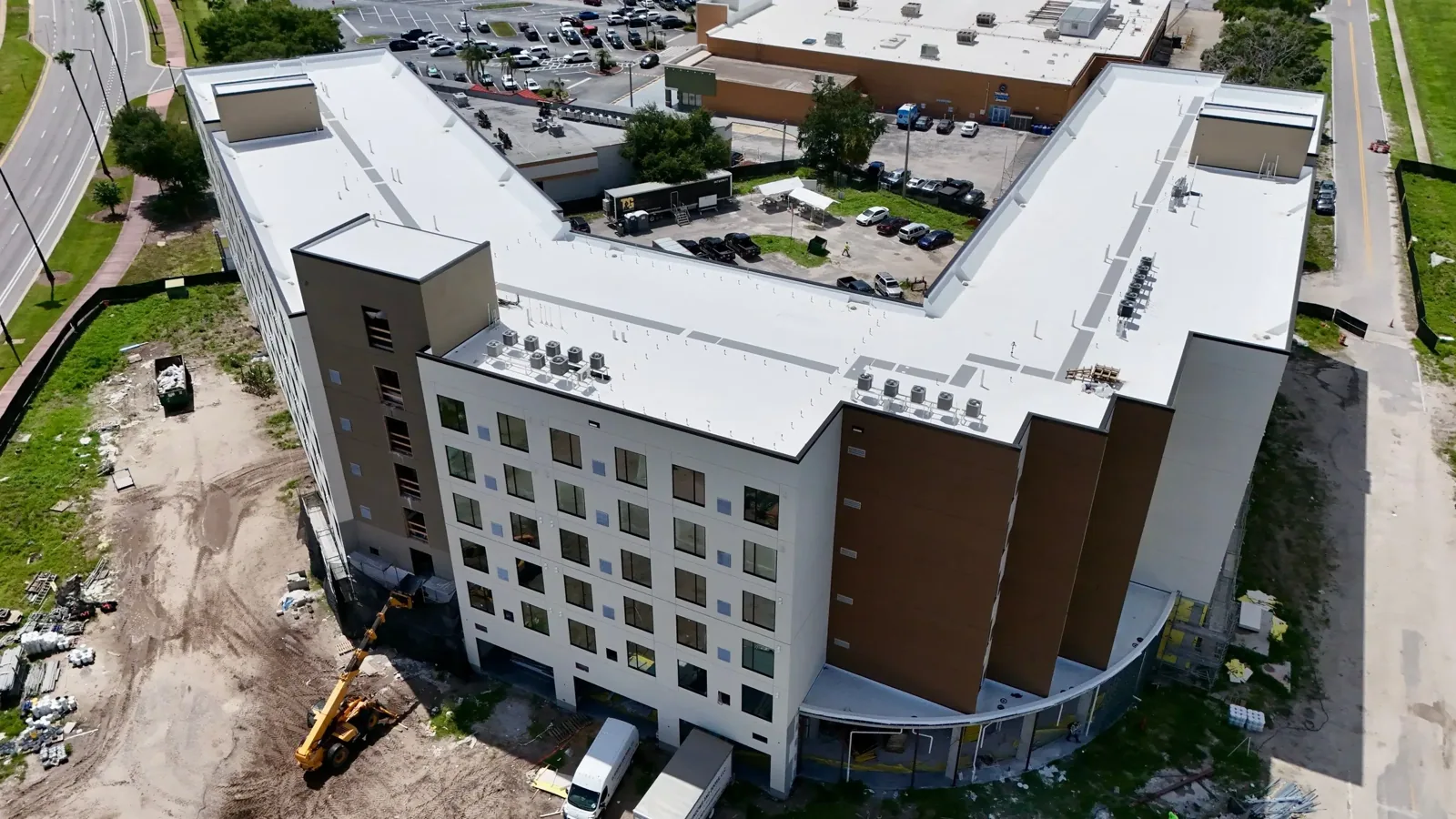
Commercial Roof Leak Repair in Clearwater, FL

We trace active commercial roof leaks in Clearwater, FL back to the real entry point, inspect the affected assembly and explain a supported repair scope.

An intermittent ceiling drip needs an inspection of the roof connections above and nearby. Water takes the easy path. It slides along the deck, drops into a flute, crosses a joint in the insulation and finally lets go somewhere far from where it came in.

That is why guessing fails. A crew that patches the roof above the stain may spend a day and leave the leak untouched. In Clearwater, FL, that mistake gets expensive fast, because summer afternoon storms repeatedly test open details. The job is to follow the water back to its entry point, repair the supported cause and check the completed connection.

Here is how we do that, one step at a time.

Follow the water, not the stain

Follow the water, not the stain

A leak has three parts. Water gets in at an opening. It travels inside the roof. Then it shows up inside the building. The stain only marks the third part.

On a steel deck, water can run along the ribs a long way before it finds a fastener hole to drip from. On a roof with insulation, it can spread sideways between boards and soak a wide area. On a concrete deck, it can follow cracks. The point where you see it can sit well away from the opening in any direction.

This is also why the same ceiling stain can come back after a patch. If the first repair went in at the wrong spot, the real opening is still there, still feeding water into the layers. The second storm proves it. We try to make the first repair the right one.

So the ceiling is a clue, not a map. We use it to choose where to start, then move uphill and toward the nearest seam, curb, drain or wall.

How we trace a leak

We treat a leak like a puzzle with a short list of suspects. This is the order:

  1. Ask when it leaks. Only in driving rain, only after a long soaking, or any time it wets the roof? Each pattern points somewhere different.
  2. Look inside. We check ceiling tiles, ductwork, light fixtures, walls and the deck underside where access allows.
  3. Walk the roof from the stain uphill, checking seams, flashing, penetrations, drains and edges.
  4. Where suitable and safe, use a controlled water test in small zones with interior monitoring. We review the assembly and protect affected operations before testing; some leaks require another investigation method.
  5. Use an infrared moisture survey where the assembly and weather permit. Confirm suspect patterns with suitable checks; thermal findings do not establish the entry point by themselves.
  6. Stop the leak with a repair that fits the membrane, then retest the same zone.

A found leak ends one of three ways. It gets a local repair, a rebuilt detail such as a curb or a wall flashing, or a recommendation for larger work when wet insulation has spread beyond the opening. We tell you which one applies, and we show you the evidence so the decision is easy to explain to an owner or a lender.

Why wet season leaks come back

Why wet season leaks come back

Tampa Bay has almost daily afternoon thunderstorms through the summer, and the rainy season runs for months. A roof with one weak seam gets tested again and again. A small opening that stays dry in a mild week may pour in the first heavy storm after it.

Wind makes it worse. Storm gusts push rain sideways under flashing and over low edges, where rain falling straight down would never reach. When Hurricane Milton passed through in October 2024, parts of Pinellas County took over 18 inches of rain with gusts up to 101 mph. A loose detail needs inspection after that exposure, with any water entry documented at the affected property. Lightning also matters here, since this part of Florida is known for it, and strikes can damage membranes and rooftop equipment. We check for scorch marks and punctures after a close strike.

Leak points by building type

Different buildings leak in different places. Countryside Mall has skylights, and every skylight curb is a joint that has to stay sealed through years of sun and rain, which is why skylight and penetration flashing gets a close look on any roof like it. At beachfront hotels near Clearwater Beach we map the actual roof levels and equipment connections, then inspect exposed metal for corrosion. That is typical of hotel roofing.

Morton Plant has pavilions from different building periods. We identify the present roof assemblies and records before assigning roof ages or materials. A leak there needs a fast fix and careful interior protection. Large flat roofs with ponding add another source, since water that sits has far more time to find a way through. A supported drainage defect needs ponding water correction alongside any open-detail repair.

Protect the inside first

Protect the inside first

While we trace the leak, the building still needs protecting. Move inventory and electronics away from the wet area. Place buckets and plastic sheeting under active drips. Keep clear of wet electrical equipment and have the responsible qualified person arrange safe isolation. Photograph everything with the date visible.

When water is coming in now and the weather is still bad, call us. Suitable temporary protection can limit exposure once weather and access allow safe work, while the permanent scope is prepared. Our emergency roof repair response runs every day of the week. If the leak led to damage that you plan to claim, our team can assist with roof insurance claim documentation, using the same photos and findings we gather on the roof.

Inside access can shorten the search, but it does not replace a roof-side inspection. We ask when the stain appears, whether equipment runs above it and if the mark grows after wind-driven rain. Those details help compare the interior path with nearby curbs, seams and wall transitions. On the roof, we document the suspected entry point and check whether moisture has spread beyond the visible ceiling area. If the opening is temporarily protected, the report should still describe what needs permanent repair and what should be monitored after the next rain. That is how the owner avoids treating a symptom as the whole scope.

Commercial Roofing Questions

Why does my roof only leak in big storms?

Storm-only entry can involve wind-driven rain, overwhelmed drainage or a detail that opens under particular conditions. It pushes water sideways under flashing and over low edges that stay dry in ordinary rain. We start at the walls, curbs and perimeter, then test those details with water to confirm.

What protection can be arranged before the rain has stopped?

Weather and safe access govern the response. We assess suitable temporary protection and explain its limits. Permanent material installation then follows the surface preparation and weather requirements for the selected system.

Will the leak return after the repair?

We inspect the completed connection and use appropriate testing where practical. A returning symptom needs investigation for incomplete repair, another opening or retained moisture. We retest the zone, and we tell you plainly if the roof has more than one problem.

What should I document for my insurer?

Dated photos of the ceiling, the roof and any damaged contents come first. Add the date and time of the storm and any work orders. Our reports pair roof findings with photos so the claim file shows the cause, not just the stain.

How much water damage is too much to leave alone?

Any damp ceiling tile, sagging panel or musty smell means the leak has gone on long enough to need action. Confirmed wet material and deck deterioration need a defined scope. Prompt investigation can prevent continued exposure, but the necessary repair depends on the condition found.

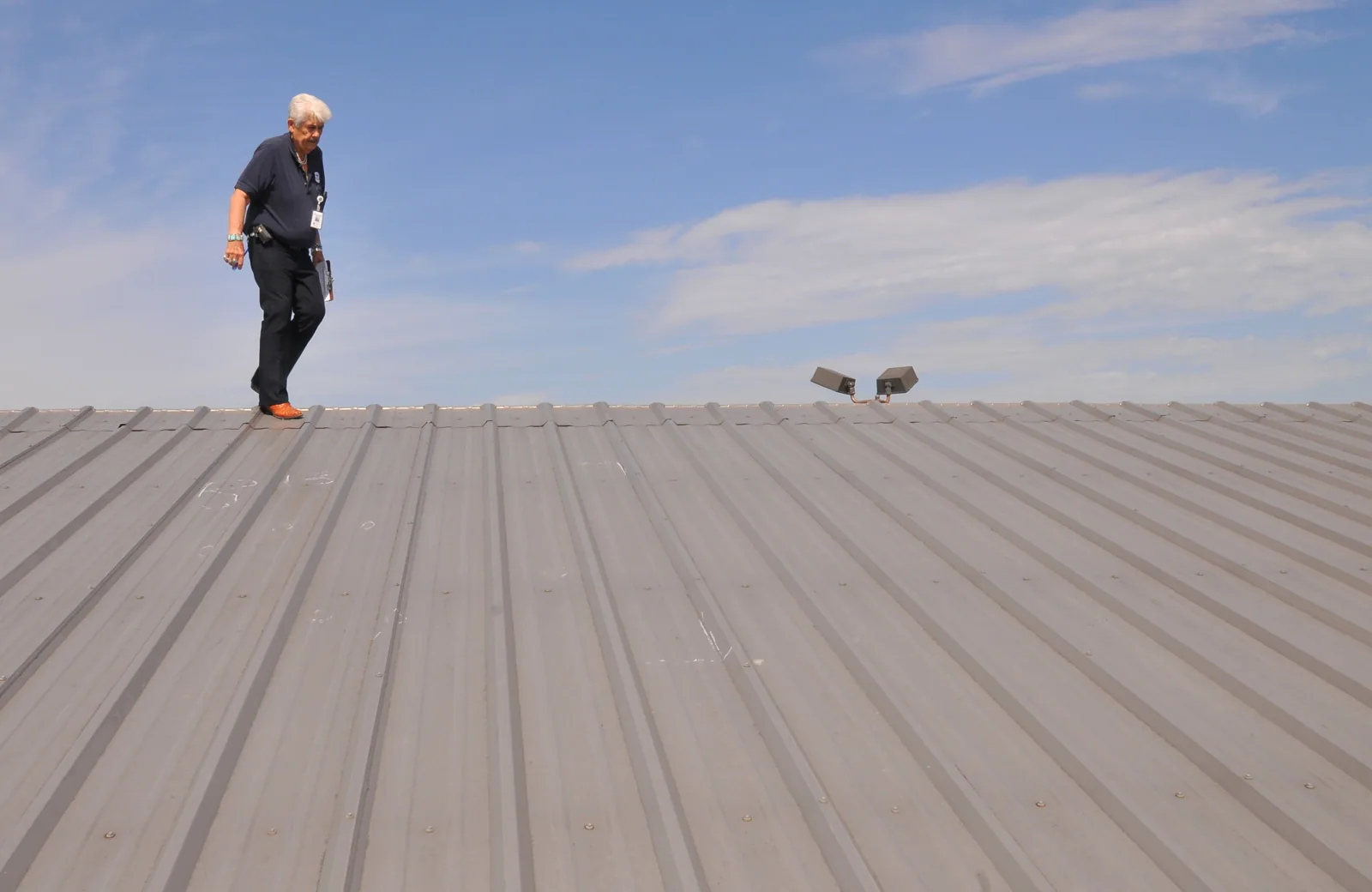
Tell us where it is dripping

Send photos of the stain and the roof above it, or book an inspection. We will trace the entry point, show you what we find, and explain how to stop it. Call any day, including weekends.

Request a Roof Assessment   or call 555-555-5555

Call555-555-5555