Emergency Commercial Roof Repair in Clearwater, FL

Round-the-clock emergency roof repair in Clearwater, FL: tarping, temporary dry-in and storm damage response for commercial buildings, any day of the year.

A loose roof corner can leave rain entering while the occupied space below needs immediate protection. The first task is to assess the opening and arrange a measure that can be secured safely to the damaged assembly.

That order tells you what to do. Get the opening closed, get the interior protected, and leave the permanent repair for a dry day. In Clearwater, FL, with storms that can arrive within the hour, speed matters more than polish on the first visit.

We answer emergency calls around the clock, on weekends and on holidays. Here is what happens when you call, and what you can do while you wait.

The first visit, in order

The first visit, in order

Step one is safety. A wet roof is slick, and a damaged deck can fail underfoot. We assess access and visible hazards before roof entry, and arrange specialist review where structural safety is uncertain.

  1. Check for hazards: loose metal, standing water, exposed wires, weak deck.
  2. Find the opening. Wind damage often leaves several, and the largest is not always the worst.
  3. Close it. We use tarps secured with battens, temporary membrane patches or board-up, depending on what the roof will accept.
  4. Control water inside. The property team isolates unsafe interior areas and protects contents where safe. Sagging ceilings require appropriate building safety assessment.
  5. Photograph the roof, the damage and the repair, with dates visible.
  6. Explain the protection provided, its limits and checks, and the permanent work still required.

A tarp is a bridge, not a repair. Its job is to keep the building dry until real work can begin.

What counts as an emergency

Call right away if you see any of these:

  • Water coming through the ceiling or running down a wall.
  • Membrane peeled back at an edge, a corner or around a curb.
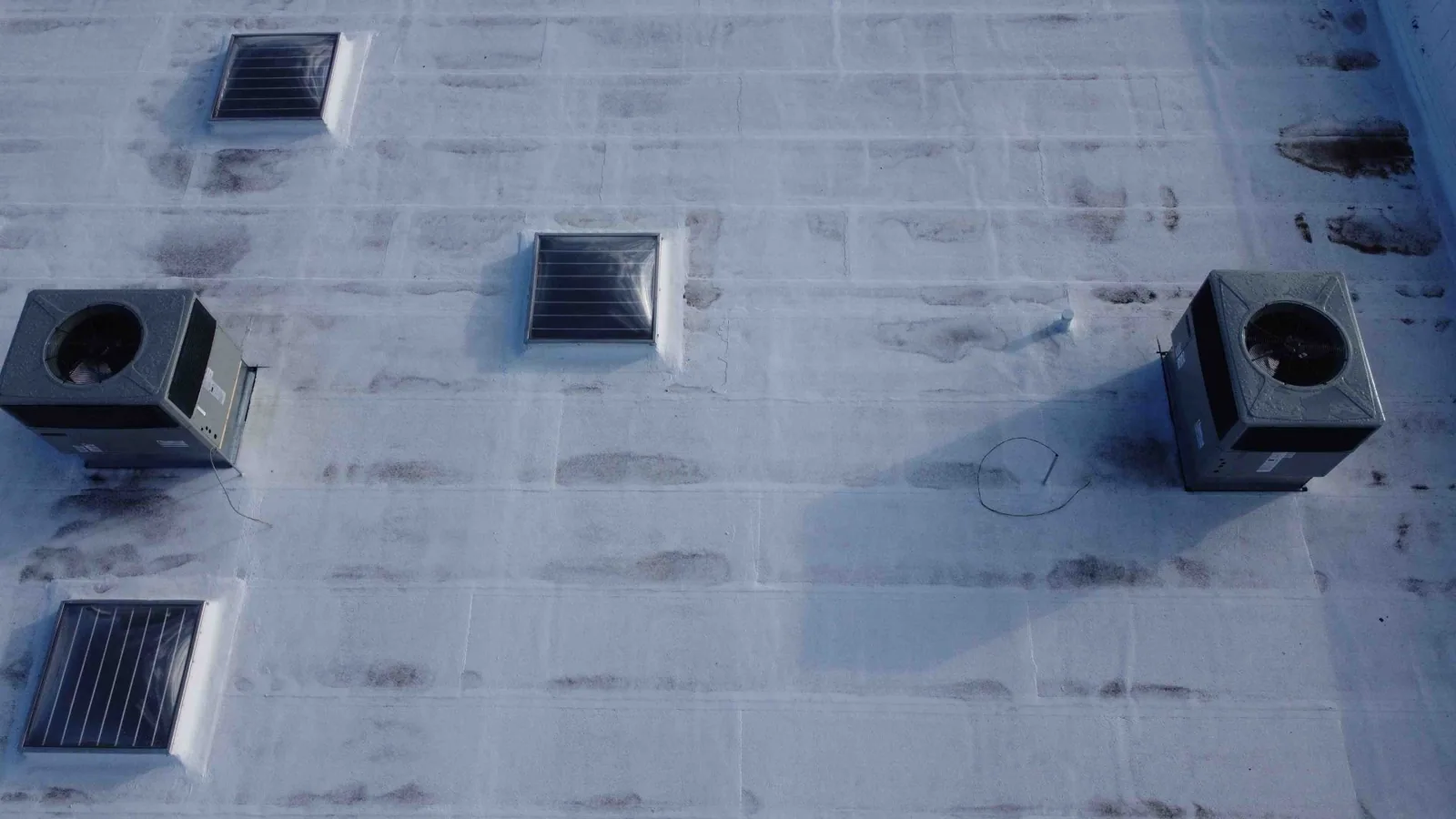
  • Rooftop equipment shifted, tilted or knocked loose.
  • A hole from fallen limbs, debris or hail.
  • Sagging ceiling tiles, bulging panels or light fixtures filling with water.
  • A smell of smoke after a lightning strike or fire.

Small signs after a storm can hide a large problem. A lifted edge may look minor from the ground, yet it is the spot where the next gust gets underneath. Loose gravel, bent coping and scattered fasteners all mean the perimeter took a hit. Treat them as a reason to call, not a reason to wait for the next rain.

If the roof is still intact but you suspect trouble after a storm, send photos. Photos help the initial discussion, but concealed damage and safety cannot be established from them alone. A continuing drip still needs roof leak investigation to find and correct the entry point, even when temporary protection has reduced its immediate effect.

What the 2024 storms taught Pinellas

What the 2024 storms taught Pinellas

Hurricane Helene sent a record surge onto Clearwater Beach in September 2024, with a peak gust of 73 mph. Hurricane Milton followed in October with gusts up to 101 mph and over 18 inches of rain in parts of Pinellas County. About 70 percent of the county lost power. Milton partly tore the roof from Tropicana Field in St. Petersburg.

Milton also spun off at least 46 confirmed tornadoes across Florida, and the Tampa Bay weather office issued a record 29 tornado warnings in a single day. Think of it this way: a tornado warning and a flat roof do not mix. A low-slope assembly resists uplift through its specified attachment, ballast where used, and supported perimeter details. Damage at those connections needs inspection before permanent correction.

Our hurricane damage roof repair and wind damage roof repair work starts the same way every time. We first assess safe access and suitable protection, then investigate the permanent correction.

Getting to your roof

After a major storm, the roads decide how fast anyone can reach you. Flooded streets, downed lines and closed bridges slow the whole county. The Courtney Campbell Causeway and the Clearwater Memorial Causeway are the links to Tampa and to the beach, and the Bayside Bridge helps traffic bypass US 19 toward the airport area. When one is closed, routes change.

That is why we ask for the building address, access details, roof hatch or ladder location and an on-site contact when you call. Beachfront properties near Clearwater Beach and buildings in Pinellas Park or Largo each need a different route in. We plan around the traffic, not around the clock, and we tell you plainly what to expect. Calls for active water entry and for damage that threatens people come first.

From temporary to permanent

From temporary to permanent

After the dry-in, the permanent plan begins. We inspect the whole roof for secondary damage, since wind that opens one corner often loosens others. Where the assembly and conditions are suitable, an infrared moisture survey helps identify areas needing moisture confirmation.

Then comes the scope: a local repair, or in some cases rebuilding a storm-damaged roof section. When the loss involves insurance, our crew photographs the roof, records the cause and compiles findings that support roof insurance claim assistance. Keep every receipt, and coordinate evidence retention with the insurer without leaving unsafe debris on the property.

Before the next named storm, take a few small steps. Clear the drains and scuppers so water can leave. Secure loose panels on rooftop units. Photograph the roof so you have a baseline. Keep our number where the whole facilities team can find it, including the night staff.

Once water is controlled, preserve a short record of the affected rooms, equipment and roof areas. Note the time, weather direction if known, and any temporary protection installed. Do not remove a safe temporary cover before the permanent repair is ready, and keep staff away from wet electrical equipment or unstable ceiling materials. When conditions allow, the follow-up inspection separates immediate stabilization from lasting repairs. The written scope can then identify materials that need replacement, connections that need rebuilding and interior areas that require a separate contractor. That clear handoff helps operations resume without losing track of remaining roof work.

Commercial Roofing Questions

Do you really answer on weekends and holidays?

Every day of the year. Storms and leaks do not keep office hours, so emergency calls reach us at night, on weekends and on holidays. Have the address, a contact name and a short description ready, and send photos if you can.

What will you actually do during the emergency visit?

Safety and access come first. Suitable temporary closure may use secured covering or compatible patches, with its limits recorded. Permanent materials are installed within their preparation and weather requirements; the response does not promise a closure under unsafe conditions.

Will a tarp be enough until the permanent repair?

The opening, available attachment and expected weather determine whether temporary protection is suitable. We explain its limitations and the checks it needs while permanent work is arranged. A tarp can shift or deteriorate, so a temporarily covered opening remains an item needing a permanent repair.

Who pays for emergency repairs?

Payment and coverage follow the policy and the insurer's decision. We document the observed damage, immediate work and proposed permanent repair. Keep the invoices and photographs with the claim record, and coordinate any reporting requirements with the insurer while protection of the building is arranged.

Is it safe for my staff to go on the roof?

Stay off. A wet membrane is slick, damaged deck can give way, and storm debris hides edges and openings. Take photos from the ground or a window, or let us handle the roof access.

Call now, send photos when you can

If water is coming in, call us any hour of any day. Send photos of the damage and the building address. We will assess safe access, explain available protection and its limits, and prepare the permanent repair scope.

Request a Roof Assessment   or call 555-555-5555

Call555-555-5555