Close the repair and the cause
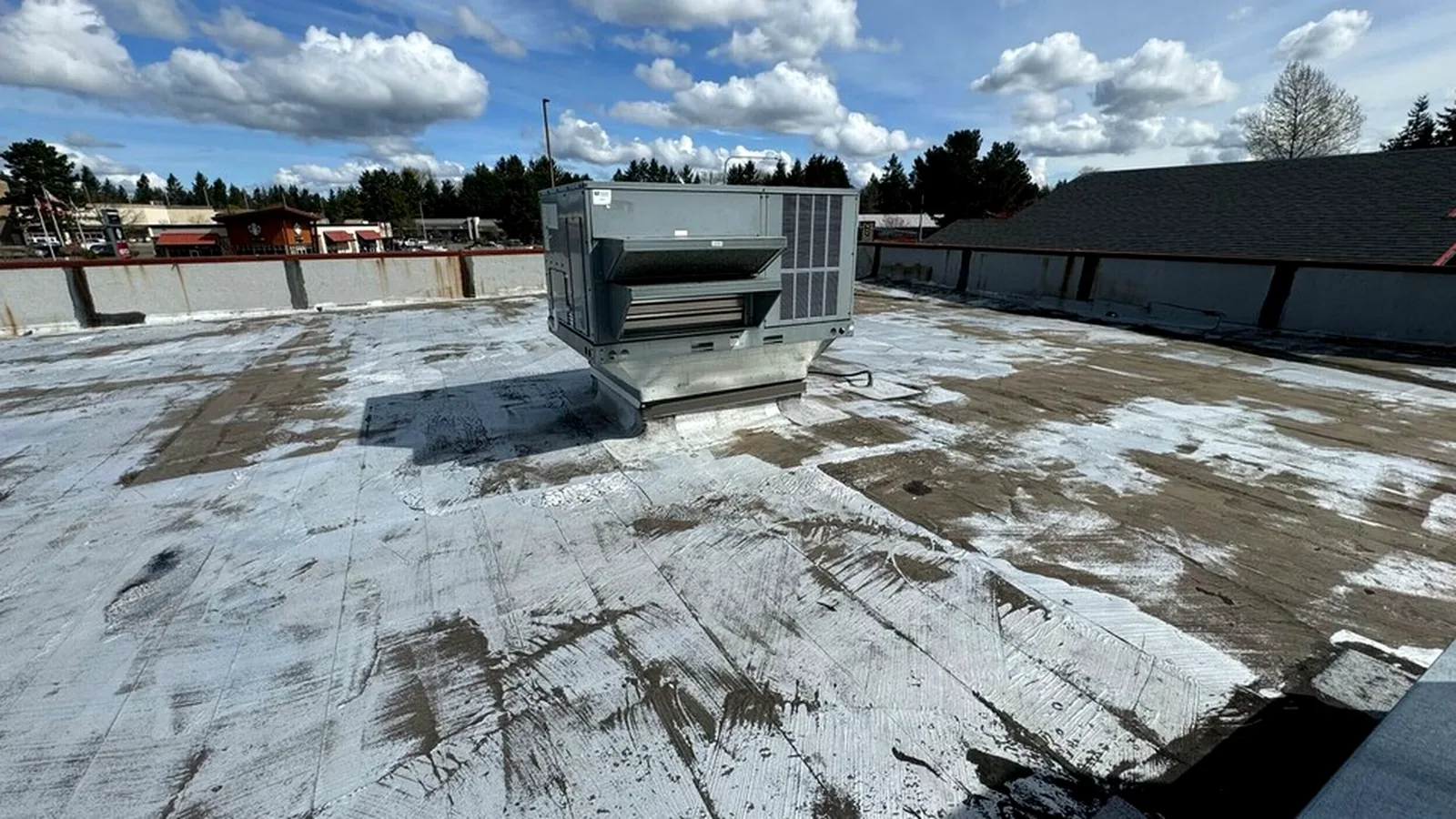
Completed flashing should not be left beneath another trade's unfinished work. We inspect the affected connection after equipment installation and record the finished condition. A new walking route or compatible protection may be needed where technicians repeatedly approach the same unit.
Preventive roof care can revisit those service paths, outlets and equipment details. The plant should report new penetrations and equipment changes between visits. A roof record that stays current helps distinguish an aging detail from damage introduced by a recent alteration.
Price and timing reflect damaged layers, access, equipment coordination and operating restrictions. We explain which repairs stop an active opening and which reduce repeat damage. Emergency assistance is available during nights, weekends and holidays. Send the affected line location and safe photographs, and we will explain the roof findings with the production contact.
Process changes can alter roof exposure even when the membrane itself is unchanged. New exhaust, discharge lines, supports or cable routes may introduce a penetration or concentrate moisture near a former opening. We compare the maintenance history with the equipment layout and inspect both the connection and nearby drainage. If production cannot stop for a full workday, the scope can identify tasks that fit the approved window and the protection needed between shifts. A repair record should also capture any equipment work completed later, so a future leak investigation can distinguish roof failure from a changed process connection.
Commercial Roofing Questions
A new exhaust unit was installed before the leak began. Where do you start?
The altered curb and nearby service route deserve close inspection. We examine the roofing connection and compare the timing with the equipment work, while the mechanical trade checks its own components.
Can you use our planned maintenance shutdown for roof repairs?
The scope must fit the actual shutdown window. We review access, material removal and equipment steps first, then explain which areas can be completed and protected within the available conditions.
Does a coating protect the roof from every process discharge?
Chemical compatibility requires a specific review. We identify the existing roofing and the exposure, then check the proposed product requirements. Correcting discharge control may be needed before any surface repair.
Our line has stopped, but materials remain underneath. Can work start?
Interior protection still needs approval from the plant. We explain the tasks overhead and the debris controls, then coordinate the necessary clearing or isolation with the operation.
Will a recover solve the soft area near the drain?
Hidden moisture or damaged support may make covering that area inappropriate. We investigate the assembly and show what must be removed or corrected before a recover can be considered.