Use the dry season well
The rainy season ends around October 10, and hurricane season runs a little longer. The weeks after are the best window for larger work. Afternoon storm activity generally eases, but substrate dryness and the work schedule still need checking for the proposed start.
Plan the big projects there. Keep small fixes on a spring calendar. Before the first storms of late May, clear every drain, check the edge metal and walk the paths to each unit. A scheduled look beats a surprise report from the floor.
A warehouse roof needs its own equipment and access assessment before the maintenance sequence is set. For operators with several sites, our logistics and 3PL roof programs put every building on one yearly calendar. Recurring equipment visits also matter on a manufacturing roof; record the actual service path and connection condition before assigning its protection detail.
Commercial Roofing Questions
Can you work nights and weekends so the dock keeps running?
Usually, with limits. Noise and lights suit some sites and not others, and adhesives and welded seams need suitable material and weather conditions, with adequate lighting for inspection. We split the job between early shifts for open-roof work and later hours for cleanup, and we confirm which windows your operation can spare.
A new rooftop unit is coming. What happens to the roof around it?
The curb and flashing are rebuilt in the same visit as the unit. Compare the new equipment footprint and connection requirements with the existing curb before deciding which roofing details need rebuilding. We bring the membrane up the new curb, seal the edges and add a walkway pad for the technicians.
What does a storm-opened roof do to my shipping schedule?
Water on the slab stops forklifts first, then it wets stock and cardboard. We arrange temporary protection as quickly as safe access and conditions allow, and coordinate the affected floor area with the operator. Photos with dates are taken before any repairs, so insurance and customers see the same record.
Is it worth putting solar on an older roof?
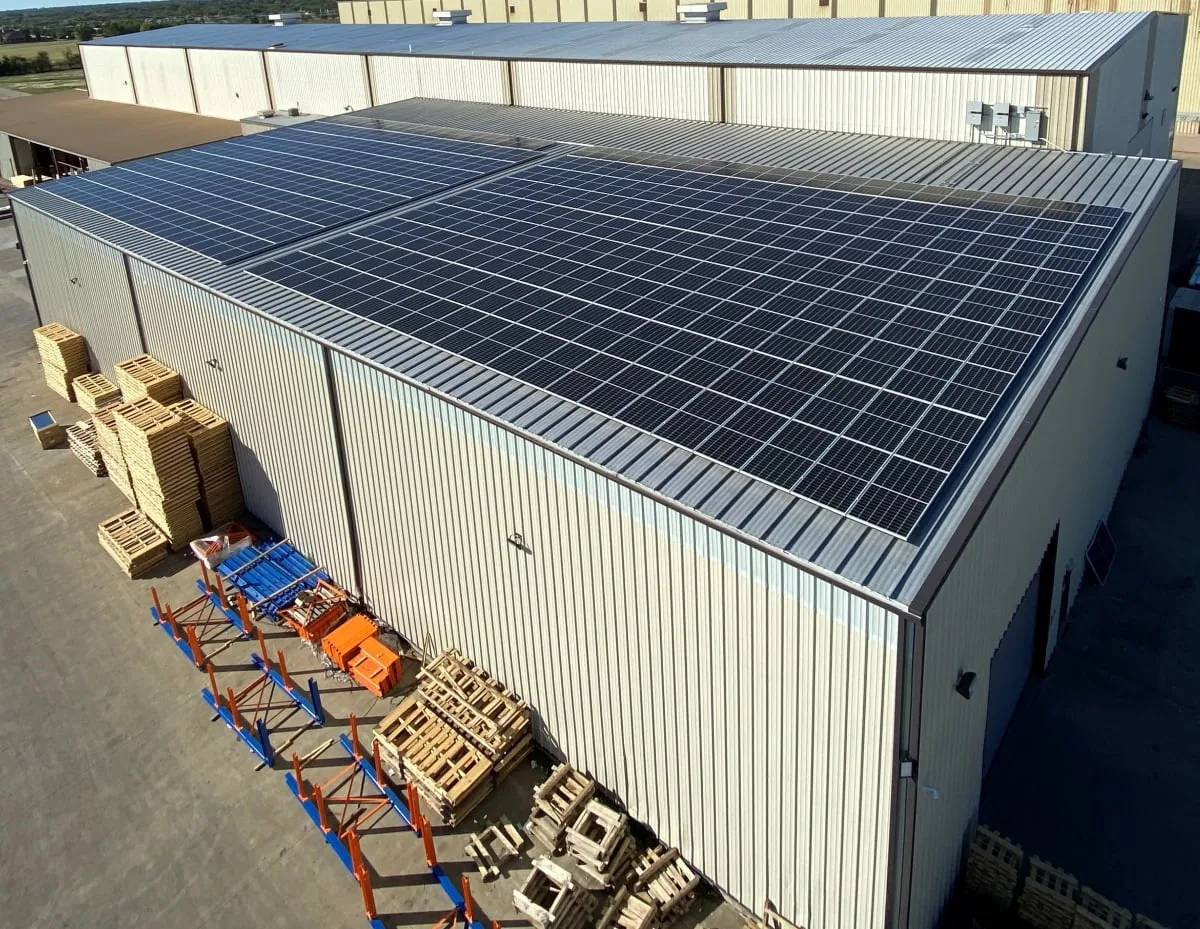
Test the roof before the array goes up. Panels will stay for many years, and a membrane near the end of its life underneath them is a problem you pay to solve twice. If the roof is sound, we mark the supports and run the walkways. If it is not, reroof first.
Do you work on buildings with sprinkler risers and conveyor penetrations through the deck?
Yes. Every penetration gets its own flashing detail, and we photograph each one before and after. We coordinate with the fire protection contractor so pipe supports are not cut or buried, and any required interruption of life-safety equipment is coordinated with the responsible parties before that work proceeds.