Built-Up Roofing (BUR) in Clearwater, FL

Built-up roofing (BUR) in Clearwater, FL: how multi-ply tar and gravel roofs age, repair of splits and blisters, gravel and wind, and replacement choices.

A built-up roof usually fails from the top, when the gravel moves, the bitumen dries and the felts underneath begin to split. The layers below are patient. The surface is what gives out first.

Built-up roofing, or BUR, is the classic tar and gravel roof. Crews mop hot asphalt between several plies of reinforcing felt, then flood the top with more asphalt and embed gravel in it. The result is a thick, layered skin. Multiple plies provide redundancy, but damage through the assembly can still admit water.

That redundancy is why BUR has lasted so long on flat roofs. For owners in Clearwater, FL, it is also why a BUR roof can carry on quietly for years while the surface wears. Here is how it ages, what to look for and how we repair it.
Gravel, felts and the first split

Gravel, felts and the first split

Step one is the gravel. The stone shields the asphalt from sun and foot traffic. When it blows or washes away, bare patches appear, usually near edges and drains. Bare asphalt bakes and hardens.

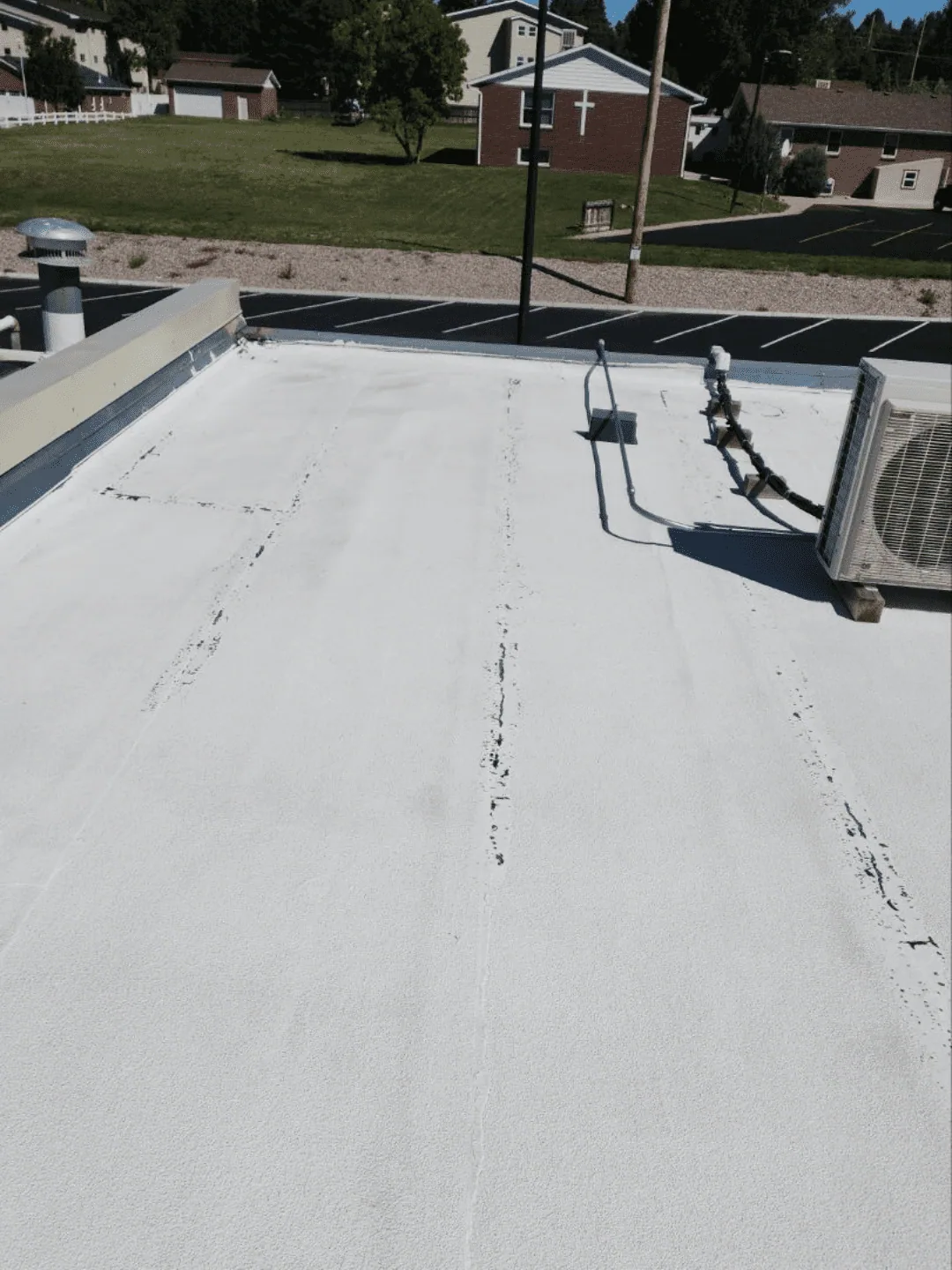
Step two is the felt. Once the top coat cracks, the plies beneath start to see water and heat. They shrink and pull. A split, often in a straight line along a deck joint or insulation edge, is the classic sign.

Step three is the flashing. At walls and curbs the roof turns upward, and the same pull that splits the field tears at the base flashing. Old flashing cracks, slides down the wall and opens a path behind the plies.

Ridges and blisters round out the list. A ridge is a raised line where the felts have buckled. A blister is a pocket of trapped moisture or air. Both can sit for years, then break open under foot traffic or a hard storm.

Why gravel and hurricanes do not mix

Loose gravel is a hazard when the wind picks up. Milton's October 2024 gusts topped out at 101 mph in parts of Pinellas County. Proper embedded surfacing contributes to performance, while actual wind exposure and assembly requirements still need review. Stone sitting loose on dried-out asphalt can become flying debris, and it leaves bare spots that start the aging process all over again.

The attachment and edge construction for a new BUR assembly follow the applicable project design. Surfacing also needs the specified treatment and containment at the perimeter. We inspect the existing edge and identify loose material separately, so a surface maintenance task does not obscure a connection that needs rebuilding.

The wet season adds its own stress. Around 49 inches of rain falls on Tampa Bay each year, most of it between June and September. Ponded water on a BUR roof speeds up cracking at the low spots. In the airport industrial park at St. Pete-Clearwater International Airport, an area developed in the 1980s, any assigned roof needs its actual slope and outlet arrangement inspected before a drainage scope is settled.

Walking a gravel roof

Walking a gravel roof

A BUR roof is easy to read if you know the signs. Look for:

  • Bare asphalt where the gravel has moved.
  • Gravel piled against curbs, walls or drains.
  • Straight splits across the field.
  • Ridges and blisters that move or crunch underfoot.
  • Base flashing that has slid down or pulled away from the wall.
  • Water that remains in low areas a full day after rain.

Splits and ponding go hand in hand. If water collects, the asphalt below it ages faster and the felts cook. Fixing the drainage may matter as much as patching the split, which is why we look at roof drains and scuppers in the same visit. After a storm, wind damage roof repair starts by checking where gravel went and what the edge metal looks like.

Weight, heat and smell

A new BUR roof is heavy, and it takes hot work. A kettle heats asphalt on site, a crew mops it between the plies, and the fumes carry. That has consequences for neighbors, intake vents and anyone nearby. Some buildings can handle that. Others cannot, and for those we recommend cold-applied BUR or a different system.

Cost is driven by the number of plies, the surfacing, the insulation, the flashing and how much old roof must come off. Weight matters because the deck has to carry it. Permit review at the City of Clearwater comes with a product approval sheet for exterior materials, and the schedule must make room for it.

Hot work on an occupied building takes planning. Fire watch, material storage, odor control and tenant notice are part of the job. Our approach to occupied building reroofing starts with those questions before a kettle is ever lit.

Repairs that last

Repairs that last

We start with a clean surface. Loose gravel is swept back, bare spots are cleaned and the splits are cut open to see how deep they run. A split gets reinforced with felt stripping set in cold or hot asphalt, then recovered with fresh gravel or a protective coat. Blisters are assessed before disturbance; suitable repair may require opening and rebuilding the affected layers with compatible material.

Flashing gets new base and cap layers, with termination bars at the top. We check the insulation with moisture readings and core cuts so the repair does not seal in water.

When the roof has served its time, the choice is a new BUR, a modified bitumen system or a single-ply membrane. A thin layer of wet insulation under the felts, or a deck that cannot carry gravel, argues for something lighter. Modified bitumen roofing keeps the multi-ply feel with less weight, and insulation and cover board choices help any replacement take wind better. A full tear-off is a commercial roof replacement.

Gravel changes how a built-up roof is inspected. Some areas may need careful clearing so the membrane beneath can be examined, and displaced stone should not be pushed toward drains or scuppers. We check whether the exposed bitumen is cracked, whether reinforcing layers remain bonded and whether water is moving to an outlet. Loose aggregate can also complicate coating adhesion or a recover design. The recommendation therefore starts with the actual layer condition and roof loading, then accounts for debris handling, staging and protection of air intakes. A sample opening may be needed before selecting a larger scope.

Commercial Roofing Questions

My gravel roof is decades old and still dry. Should I replace it?

Not on age alone. Look at the surface, the splits, the flashing and the moisture below. A dry roof with a worn surface can often be repaired or coated. Wet insulation or widespread splitting changes the answer.

Why does gravel blow off in a storm?

It was never bonded well, or the asphalt dried and let go. Surfacing must meet the selected assembly's requirements and applicable design. A perimeter without a good guard edge is where it starts to move.

Can a BUR roof be coated instead of replaced?

Sometimes. A coating can protect a sound surface, but it will not close an open split or dry out wet insulation. We make the repairs first, then check whether the base is ready to be coated.

How noisy and smelly is a new built-up install?

Hot asphalt gives off fumes, and the kettle needs a safe spot on site. We plan around intakes and tenants. Cold-applied or other suitable methods change the work process but still require material-specific odor, intake and safety planning.

Do I need a permit to repair a gravel roof in Clearwater?

A new roof or replaced roofing component does. We review the proposed repair with the city before deciding the permit requirement, and we prepare the paperwork if needed.

Send photos of the gravel and the splits

Send photos of the surface, the flashing and any ponding, or book an inspection. We will walk the roof, show you what we see and explain whether repair, a coating or a new system makes sense. Call any day of the week.

Request a Roof Assessment   or call 555-555-5555

Call555-555-5555