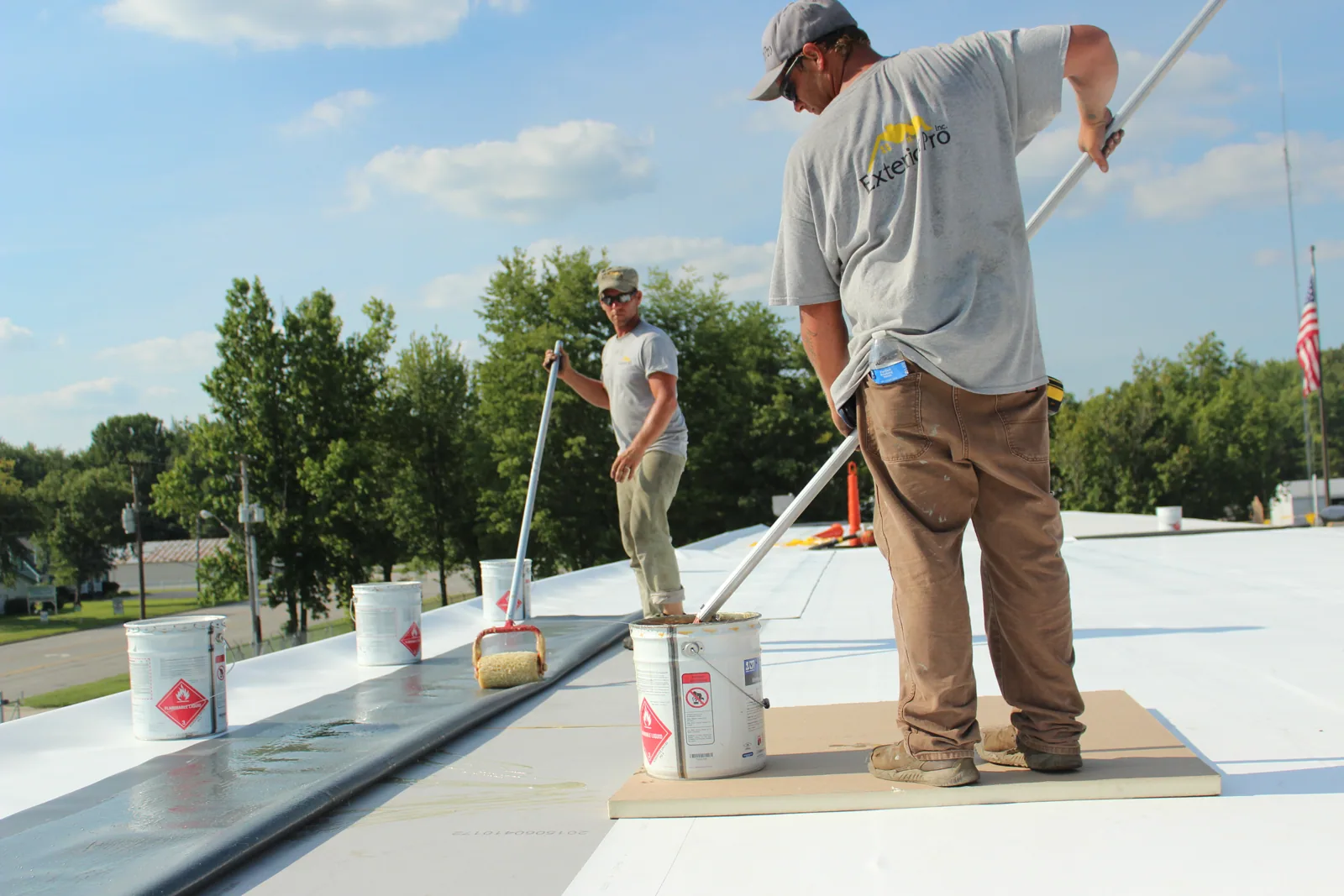
Commercial Roof Repair in Clearwater, FL

Commercial roof repairs in Clearwater cover seams, flashing and edges. We inspect affected materials and explain compatible repairs with clear records.

Roof leaks can begin at a seam, flashing connection or damaged area of the membrane. They fail at the details: a seam, a curb, a pipe boot, a strip of edge metal. The big membrane sheet does its job. The small joints around it let go.

That is good news for owners in Clearwater, FL. A repair aimed at the real cause is often enough to settle a roof for a long stretch. A repair aimed at the stain on the ceiling is not. The stain can sit ten feet from the opening, and water follows the deck and the insulation before it shows itself.

The short version: we find the cause, fix the cause, and show you the proof. Here is what that looks like on a working building.

Why details fail first

Why details fail first

Every roof is a sheet with joints. The sheet moves with temperature. The joints take the strain. A seam is only as strong as the weld or adhesive holding it, and flashing is only as strong as the fastener and sealant behind it.

Wind adds a second force. It pulls up at the perimeter and corners, where air speeds up as it wraps the building. Loose edge metal is how a roof starts to peel. Once the edge lifts, the next gust gets under the membrane and keeps going.

Water adds the third. Any open joint lets it in. Insulation drinks it, the deck rusts or rots, and a small gap becomes a large repair. That chain is why we trace the failure back to the first weak point before we pick up a tool.

Seams, flashing and penetrations

Our inspection checks the accessible details that connect the roofing to adjacent components:

  • Seams: open edges, pinholes, lifted laps, or welds that have shrunk back.
  • Flashing: cracked sealant, torn corners, loose termination bars, gaps at walls and curbs.
  • Penetrations: pipe boots, conduit and vent stacks with dried or split collars.
  • Edge metal: loose fascia, open joints, missing fasteners, rusted cleats.
  • Membrane: punctures from foot traffic, tool drops and fallen limbs.
  • Drains: debris, cracked clamping rings and bowls that sit high.

Open joints require compatible seam repairs, while damaged wall or curb connections can need flashing repair.

What heat and salt do to a patch

What heat and salt do to a patch

Tampa Bay summer highs in the low 90s turn a dark roof into a griddle. The surface runs much hotter than the air, and that heat softens sealants and stretches the membrane. Then the afternoon thunderstorm arrives and cools it in minutes. We inspect joins for stress and separation under those repeated temperature changes.

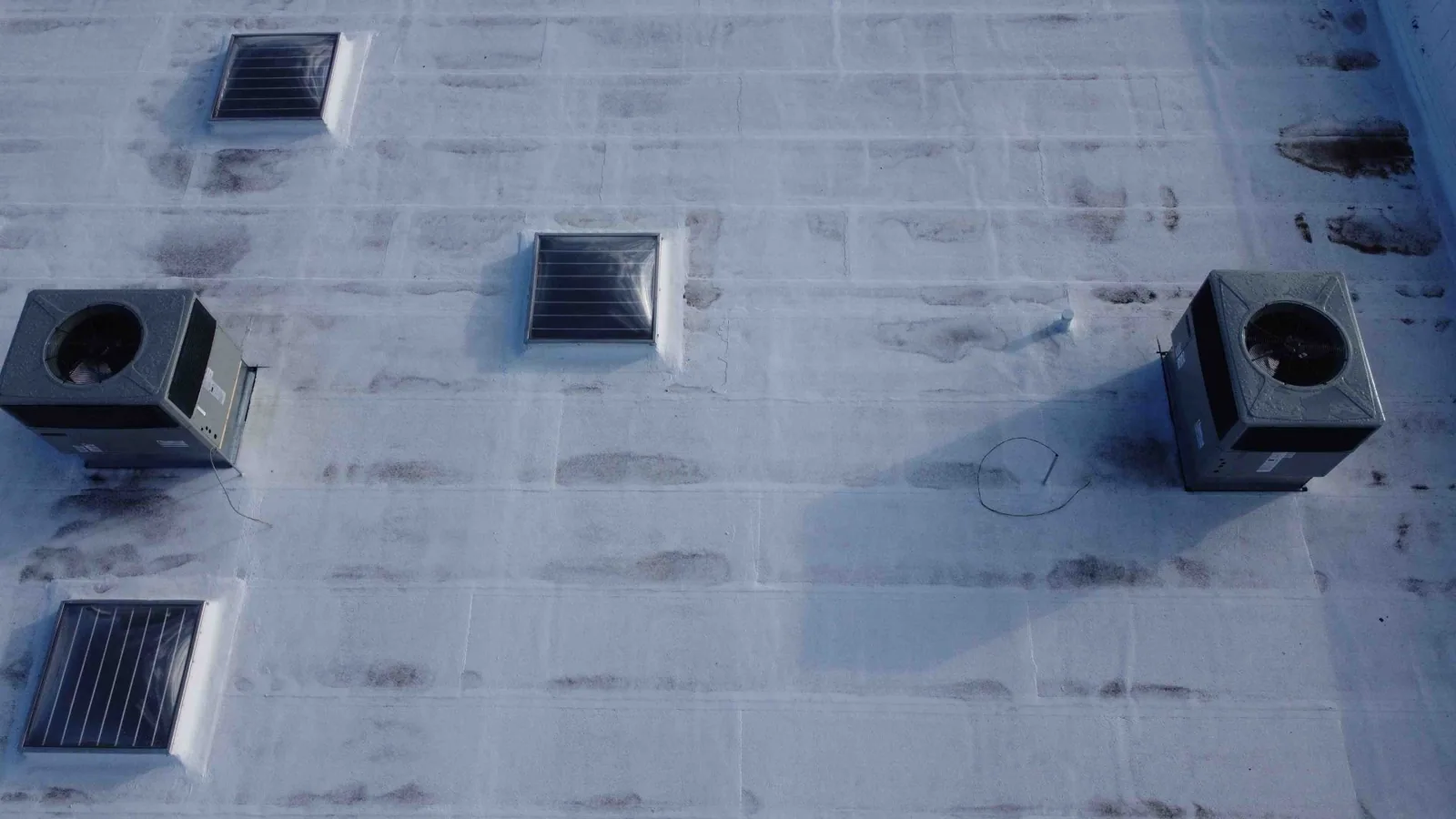
Salt air adds slow corrosion to metal, so fasteners, termination bars and edge cleats rust out sooner near the water. Office roofs in Gateway and Ulmerton Road and around Feather Sound deal with the same heat, the same humidity with their own equipment arrangements and perimeter exposure. Office buildings in Gateway have different equipment and perimeter conditions. We measure each roof layout before defining its inspection or repair scope. The same applies to any office building roof with rooftop units, because each unit adds curbs, flashing and a place for water to look for a way in.

Then there is the single-ply surface itself. A white TPO roof uses a reflective surface whose performance depends on the selected product and its condition, but its seams still move with every swing of temperature, and sealed edges and welded laps still need a look once a year. Surface color influences heat absorption, while movement also depends on the membrane and attachment.

A repair, done in order

Step one is a dry roof and a clear picture. We walk the roof, mark every defect and photograph each one. Then the repair follows a set order:

  1. Locate the cause. Water tests, moisture readings and a look at the ceiling below tie the leak to the opening.
  2. Cut out wet or damaged material where it will not dry on its own.
  3. Clean and prepare the surface. A patch will not stick to dust, oil or old sealant.
  4. Install repair materials that match the membrane. A TPO weld, an EPDM splice and a modified bitumen flashing each use different methods, so one product does not fit all.
  5. Seal, probe and inspect each repair before moving on.
  6. Report back with photos and a plain note on what we saw and what we fixed.

The finished record shows the area addressed and any concerns remaining. You see what we saw.

Repair, restore or replace

Repair, restore or replace

A local repair needs sound material around the defect for the new connection. We check that boundary and any affected layers before setting the scope. If the surface remains suitable for restoration, a roof coating restoration can extend a roof that still has dry insulation. If the layers are wet or the roof is worn through, commercial roof replacement may need consideration after investigating the extent of affected material.

Either way, a small routine does the most good. Preventive roof maintenance clears drains, checks edges and fixes small defects before the wet season turns them into leaks. Walk the roof in spring, before the afternoon storms start, and again after any named storm. A clean drain and a tight edge cost little. A flooded roof costs a great deal.

A repair scope is strongest when it records the boundary of the defect, the material used and the adjacent condition at the time of work. That context matters when another leak appears months later. A new ceiling stain does not automatically mean the earlier repair failed; water can travel along a deck or insulation joint before it becomes visible. We compare the report with the roof map and trace the likely path from the interior location back to seams, penetrations or drainage details. The owner gets a clear distinction between completed repair, observed concern and any additional investigation that remains open.

Commercial Roofing Questions

How do I know a repair is worth doing and not just delaying a bigger job?

Moisture is one part of the comparison. We also inspect membrane condition, attachment, deck concerns and the pattern of failures. Confirmed local wet material does not automatically require replacing every section. We explain the repair boundary and the larger options supported by those findings.

Can you match the membrane that is already on my roof?

Yes, with the right material for each system. TPO, PVC, EPDM, KEE, modified bitumen and built-up roofs each need their own repair method. We identify the membrane first, then choose compatible patches, flashings and sealants, because mixing products is how repairs peel.

How long will a repair last?

Cause and age set the answer. A compatible puncture repair on sound material can perform differently from a repair tied to deteriorated sheet. A seam repair on a worn, shrinking membrane buys less time, and we tell you which situation you are in.

Does a repair need a permit in Clearwater?

Scope of work matters. Clearwater ties its permit rule to installing or replacing a roofing component, and we review the proposed repair against that requirement. We confirm with the city before we start and handle the paperwork when it applies.

What do I get when the work is done?

Photos of each repaired spot, taken before and after. You also get a short written summary of the cause, the fix and anything we saw that deserves watching. Property managers use it for owner reports, budget requests and insurance files, and it gives the next technician a map of what was already done.
Send photos of the problem spot

Send photos of the leak, the stain or the damaged detail, or book an inspection. We will show you what we see and explain what it will take to fix it. Call any day of the week.

Request a Roof Assessment   or call 555-555-5555

Call555-555-5555