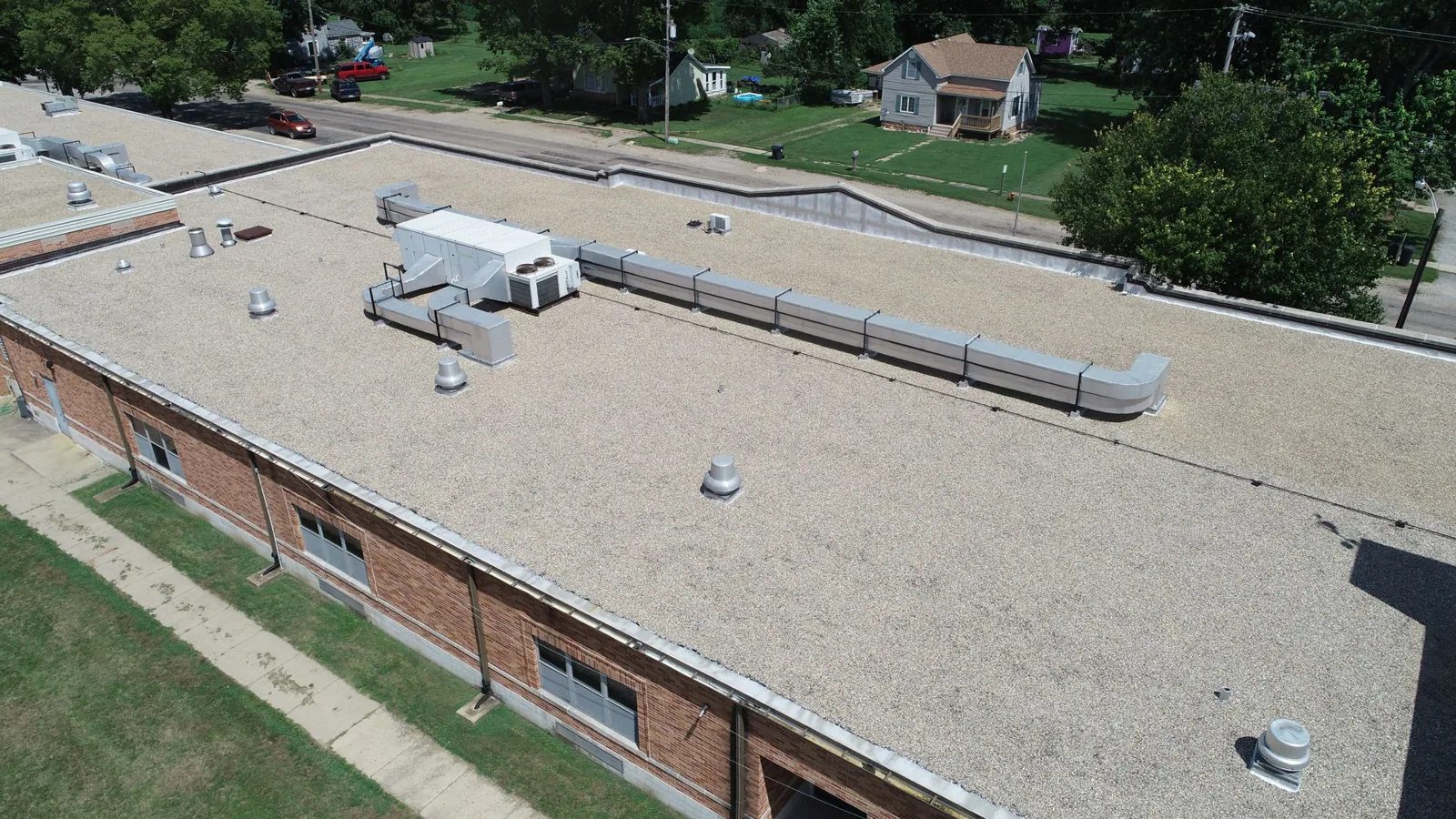
Warehouse Roofing in Clearwater, FL

Warehouse roof repair, recover and replacement in Clearwater, FL. Ponding, edge uplift and wet insulation, found early and fixed over a working floor.

A low area on a warehouse roof can hold water after the surrounding surface has drained. Water settles into a low spot, sits there through a week of afternoon storms, and works at a seam from above. The first sign is a stained ceiling tile in the office or a wet pallet on the floor.

Here is how it works. A warehouse is a wide box with few interior walls. The roof is one big flat field with a handful of drains, a lot of seams and an edge that runs a long way. Small defects have room to grow before anyone sees them.

Clearwater, FL has industrial properties of this kind, from the Airport Industrial Park near St. Pete-Clearwater International to the industrial and flex space that Pinellas County funds through its Employment Sites Program. We start with the field, then the drains, then the perimeter. You get the findings in writing.

Water finds the low spot

Water finds the low spot

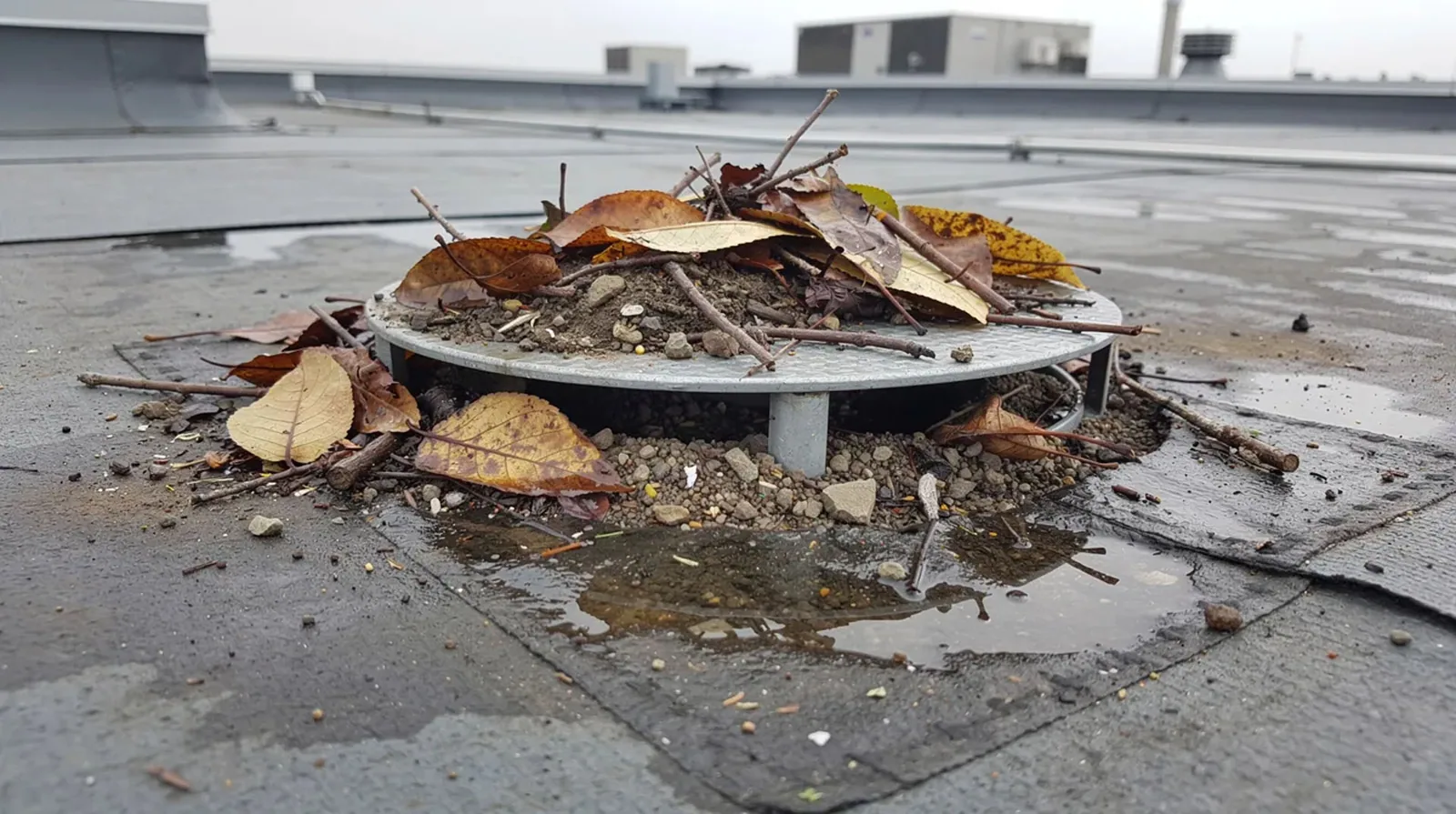
Think of it this way. A long steel deck behaves like a long beam. Under its own load it sags a little between supports, and rain follows the sag. A drain that should clear the low area may sit just above it, so a shallow pool stays behind after the storm ends.

The pool does three kinds of harm.

  • It adds load, which needs assessment against the structure and drainage design.
  • It keeps existing openings submerged and gives water more opportunity to enter a defective detail.
  • It collects dirt and algae at its edge, and that film holds moisture against the membrane.

Summer accounts for nearly two-thirds of Tampa Bay's roughly 49-inch annual rainfall, concentrated between June and September. A pool that never fully dries between July storms gets no rest. Water that stands for more than a couple of days is worth a visit, and our ponding water repair work starts by finding out why the water stayed.

Wind pulls at the long walls

Wind does not push down on a warehouse. It pulls up. The pull is strongest along the edges and at the corners, and a long building has a long edge. If the metal at the perimeter is loose or the membrane is thinly fastened there, one strong gust can start a peel.

Milton damaged the roof of Tropicana Field in St. Petersburg during October 2024, with severe wind also reported elsewhere in Pinellas. A big roof is not a safe roof. Wind finds the one weak edge and works on it.

A warehouse roof needs an attachment design for its height, geometry and applicable wind requirements. The perimeter components and field attachment must work as parts of the selected assembly. An older roof was built to whatever its permit year asked, and fasteners loosen with heat and age. Why it matters: a loose edge today decides which section opens in the next storm.

What the floor tells you

What the floor tells you

Interior observations help guide the roof investigation. Walk the building after a hard rain and look for these:

  • Stained or sagging ceiling tiles in offices and mezzanines.
  • Damp patches on the slab, in the same place each time.
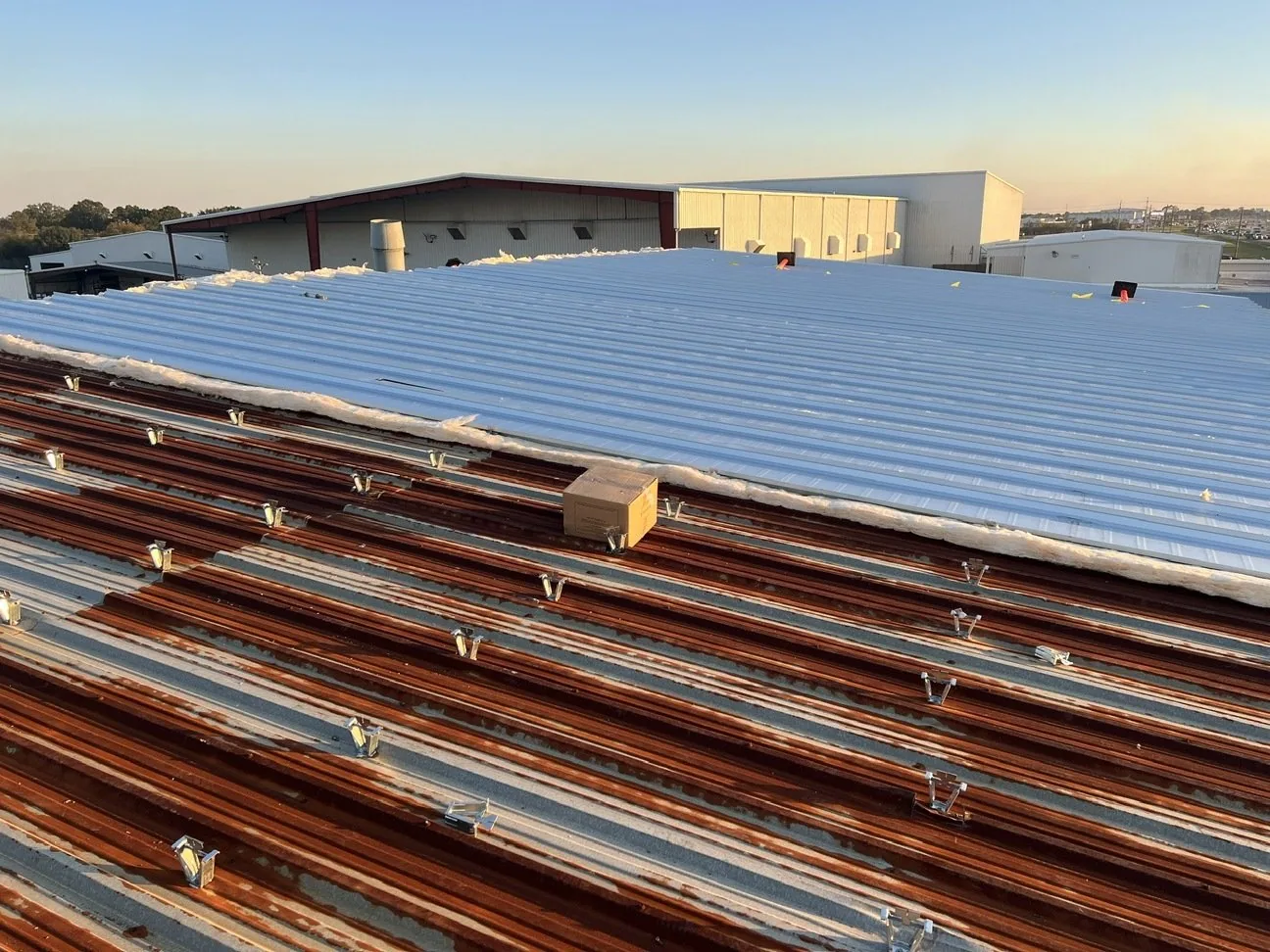
  • Rust streaks running down from the deck or the fasteners.
  • Daylight or a draft at the junction of wall and roof.
  • A musty smell in racking aisles that stay closed up.
  • Cracked panels, if the building has skylights or roof hatches.

Record recurring drips and the rain conditions when they appear. Water can travel within the assembly before reaching that bay. An infrared moisture survey can help investigate affected areas when conditions are suitable, with further checks used to confirm moisture. The entry point and the wet layers need separate findings.

Working over a live floor

Step one is the survey. We walk the roof, mark every defect on a plan and photograph it. Then we sort each item as patch, repair or replace, so the scope matches the roof and not a guess.

In practice, the building keeps working. Racking stays loaded, forklifts keep moving and dock doors keep opening. So the plan carries three habits.

  1. We open only as much roof as we can close the same day.
  2. We dry in every evening, with temporary seals at each cut edge.
  3. We agree on a staging area for materials, away from dock traffic.

Many warehouses are good candidates for a single-ply system such as TPO roofing, laid over fresh insulation and a cover board. Others only need a roof recover once the wet insulation has been cut out. The core cuts and the moisture map tell us.

What moves the price

What moves the price

Square footage is only the start. Price follows the roof more than the floor plan. These items move it most:

  • How much insulation is wet and has to come out.
  • The number of rooftop units, vents and skylights to flash.
  • Edge metal and drain work that must be rebuilt, not just resealed.
  • Lift and crane access, which changes with fencing, trucks and dock layout.
  • Whether a recover is allowed, or the old layers must come off.

For replacement in Clearwater, the permit scope identifies the roofing assembly and relevant product approval documentation. We establish those requirements before materials are installed. We prepare that paperwork with the scope. A new roof must also meet the 8th Edition (2023) Florida Building Code, and Pinellas County sits in Climate Zone 2A, so the assembly is designed for heat and humidity. Full tear-offs are covered in our commercial roof replacement work.

Walk the roof in spring

The wet season starts around May 25 and runs to about October 10. Late May and June can bring hail and damaging winds, and July through early September is the heavy-rain peak. Spring is the time to get ahead of it.

Clear every drain and scupper. Look at the edge metal for gaps. Check around each rooftop unit. A short visit now is much cheaper than a wet racking aisle in August.

A roof that is visited only when something drips fails in a set order, and the order is the same on US 19 as it is out toward the Airport Industrial Park. Two scheduled visits a year break that pattern, and our preventive roof maintenance plan puts them on the calendar. For companies running several sites, a logistics and 3PL roof program keeps the schedule in one place.

Commercial Roofing Questions

How long can water stand on a warehouse roof before it is a problem?

Two days is the working line. Many flat roofs hold a little water after a heavy storm and clear it by the next day. Water still sitting after two dry days means the slope, the drain height or a sagging bay needs a look, and it should be measured before the next storm fills it again.

Can you reroof a warehouse without moving the inventory?

Mostly, yes. We work in sections and dry in each night, so racks stay where they are. The exception is directly under an active tear-off, where we ask for aisles to be cleared or covered. Electronics, paper and food-grade goods get plastic cover and a daily check.

Which is better for a big flat roof near the coast, a recover or a full replacement?

Wet insulation answers it. A dry, single-layer roof can take a recover and save the tear-off. A roof with saturated insulation needs that insulation removed, and at that point most of the old assembly comes off anyway. Core findings are compared with the drainage, attachment and applicable recover requirements before the option is settled.

My lease makes the landlord responsible for the roof. What should a tenant do?

Document it. Dated photos of ceiling stains, the slab and the roof above give landlord and tenant the same facts. We write a condition report that either side can use, and we explain what we saw in plain terms so the repair conversation starts from evidence.

Is a warehouse roof at higher risk in a hurricane than other buildings?

Long edges and large open spans carry real uplift forces, so perimeter fastening and edge metal count for a lot. Doors and wall panels matter too, because a failed door can pressurize the inside and push up on the deck. We check the roof side and tell you what we see.
Send photos or book a roof walk

Send photos of the ceiling stains or the roof, or book an inspection. We will walk the building, show you what we see and explain it in plain terms. Call any day of the week, including holidays.

Request a Roof Assessment   or call 555-555-5555

Call555-555-5555