Roof Coating Restoration in Clearwater, FL

Roof coating restoration for sound commercial roofs in Clearwater, FL: moisture checked first, seams reinforced, a reflective skin applied in dry weather.

A roof that is ready for a coating usually fails in one way: the surface gives out while the layers below still have life. The top skin chalks, cracks and thins. The insulation and deck underneath are still dry and sound.

That gap is the whole opportunity. For a building in Clearwater, FL, a coating can add service years without the cost, noise and mess of a tear-off. It only works when the roof is dry underneath. A coating laid over wet insulation seals the moisture in, and the roof gets worse under a fresh coat.

So restoration starts with questions, not with product. Is the roof dry? Is the membrane sound? Do the seams still hold? Here is how we answer them, and what the work looks like once the answer is yes.

The surface wears out first

The surface wears out first

Sun is the slow enemy of any flat roof. Ultraviolet light breaks down the top layer of a membrane a little each day. Heat swells it, night shrinks it, and the cycle works at every seam and corner. Over time the surface goes brittle, and brittle surfaces crack.

Think of it this way. The membrane is a raincoat, and the top skin is its waterproof finish. Once the finish wears off, the fabric underneath starts to take water. A coating renews that finish before the fabric is damaged.

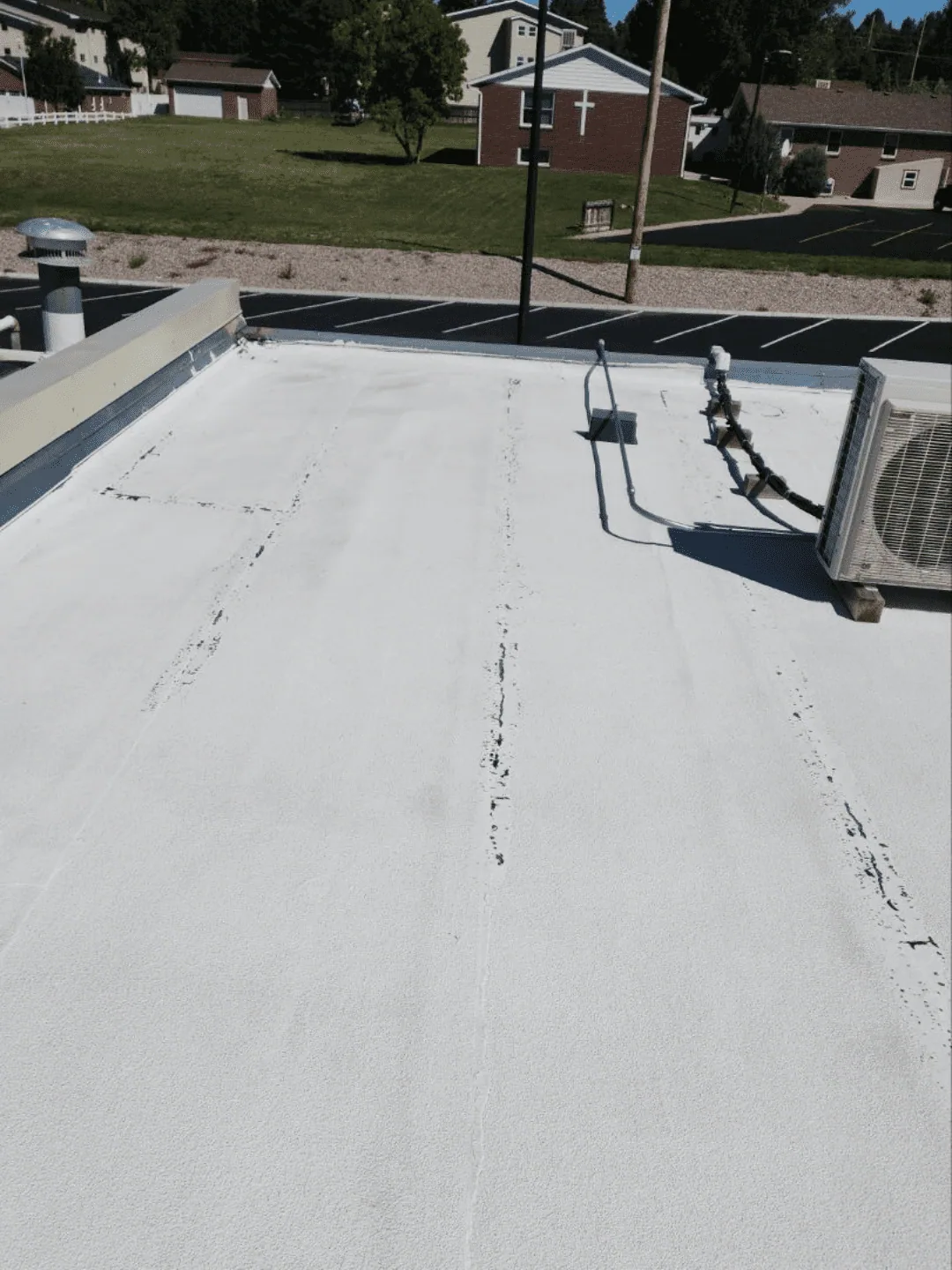
The signs show up in a short order. First the color fades or chalks. Then fine cracks appear along seams and at flashing. Then small blisters, pinholes and open laps. A roof showing the first stage is a strong candidate. A roof showing the third needs repair work before any coating goes on.

Who gets a coating and who does not

We sort roofs into two groups before we recommend anything. Here is what to look for.

  • Good candidates: a dry roof with a surface worn by sun, seams that still hold, and flashing that can be repaired in place.
  • Poor candidates: wet insulation, a torn or blistered field, a deck that has rusted or softened, and roofs already carrying several layers.

Moisture is one part of the suitability review, alongside attachment, substrate condition and compatible surface preparation. We walk the roof, probe the seams and run an infrared moisture survey under suitable conditions to identify suspect thermal patterns. Appropriate checks confirm sampled material and help define the removal area. Wet areas get cut out and replaced before coating starts, or they push the plan toward a full roof replacement.

Wind damage changes the answer too. A storm opening needs compatible repair and moisture investigation before restoration suitability is assessed. Tropicana Field lost much of its translucent roof membrane to Hurricane Milton in October 2024. A coating cannot rebuild a sheet that has left the building.

Silicone or acrylic

Silicone or acrylic

Two coating families cover most flat roofs here, and each has a clear job.

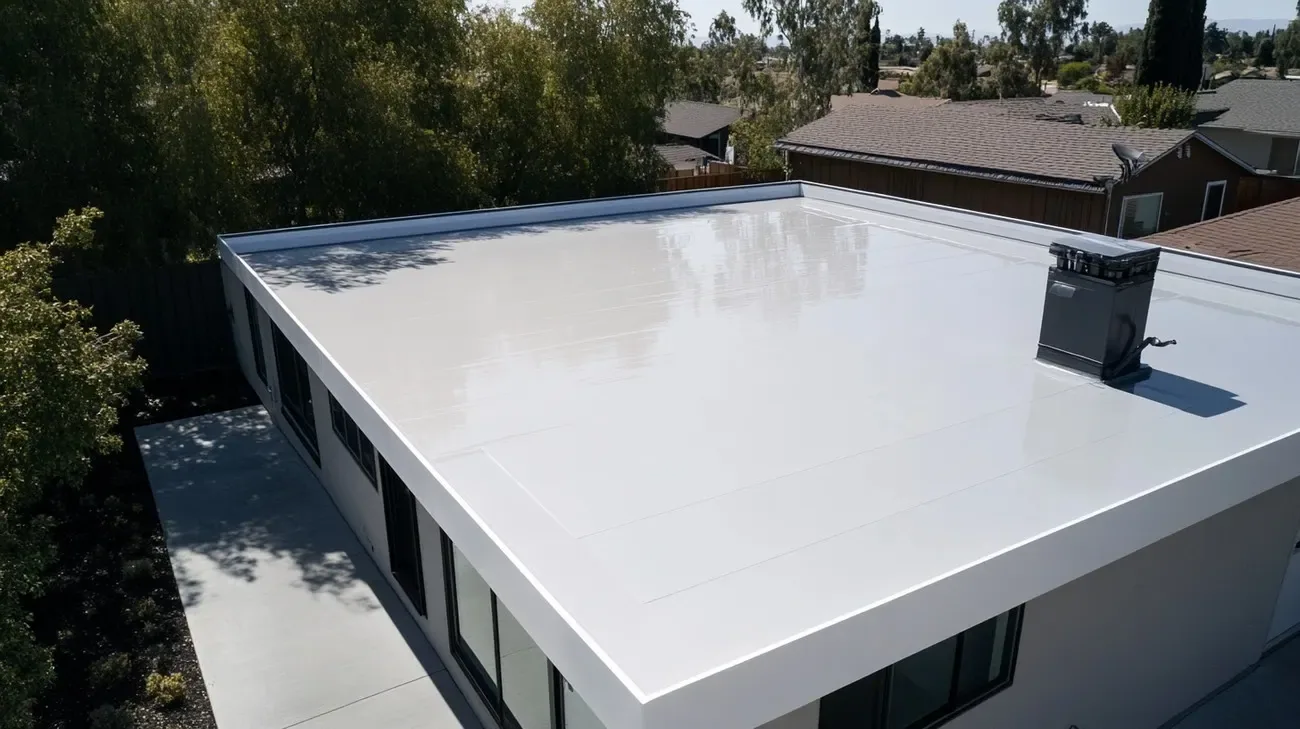
Silicone coatings can suit certain standing-water exposures when the selected product requirements permit them. That matters on low-slope roofs in a county that gets afternoon storms for months. They stay flexible and resist UV breakdown over time. Acrylic coatings are generally water-based and can provide a reflective finish, but they do best on a roof that drains, because long contact with ponded water can soften them.

So the first question about the roof is drainage. Persistent ponding requires drainage investigation before a coating is selected. A roof that sheds water well gives acrylic room to work. The base roof matters as well. Metal, modified bitumen, built-up, TPO and spray foam each want their own primer and prep, and the coating maker publishes those steps. We follow them.

How a coating job runs

Step one is repair. Every open seam, split flashing and failed sealant bead gets fixed before any coating covers it. A coating hides nothing, and it only bonds to a surface that is sound.

Step two is cleaning. We wash the roof to remove dirt, mildew and loose residue, because coatings need a clean surface to grip. Salt air and humid summers leave a film that looks harmless and spoils adhesion.

Step three is reinforcement. Seams, penetrations and curb bases receive the reinforcement and preparation required by the selected system. These are the joints that move.

Step four is the field. We apply the coat in measured passes, check thickness as we go, and let each pass cure before the next. Thickness is where coating jobs succeed or fail, so we measure it and record it.

Step five is the record. You receive photos of the roof before and after, and the coating details for your files. Occupied-building work still requires control of noise, cleaning and material movement, and we plan access, odors and staging around tenants.

A short dry window

A short dry window

Coatings need dry days to cure. West Central Florida's rainy season runs from about May 25 to October 10, and July through early September brings near-daily afternoon storms. A coating that gets rained on before it cures can wash out or blister.

That sets the calendar. The best months for restoration are the dry ones, late fall through spring. Inside the wet season we start early in the morning, watch the radar and stop in time to let the surface set. Wet-season work needs a suitable product-specific drying and curing window; the month alone does not decide feasibility.

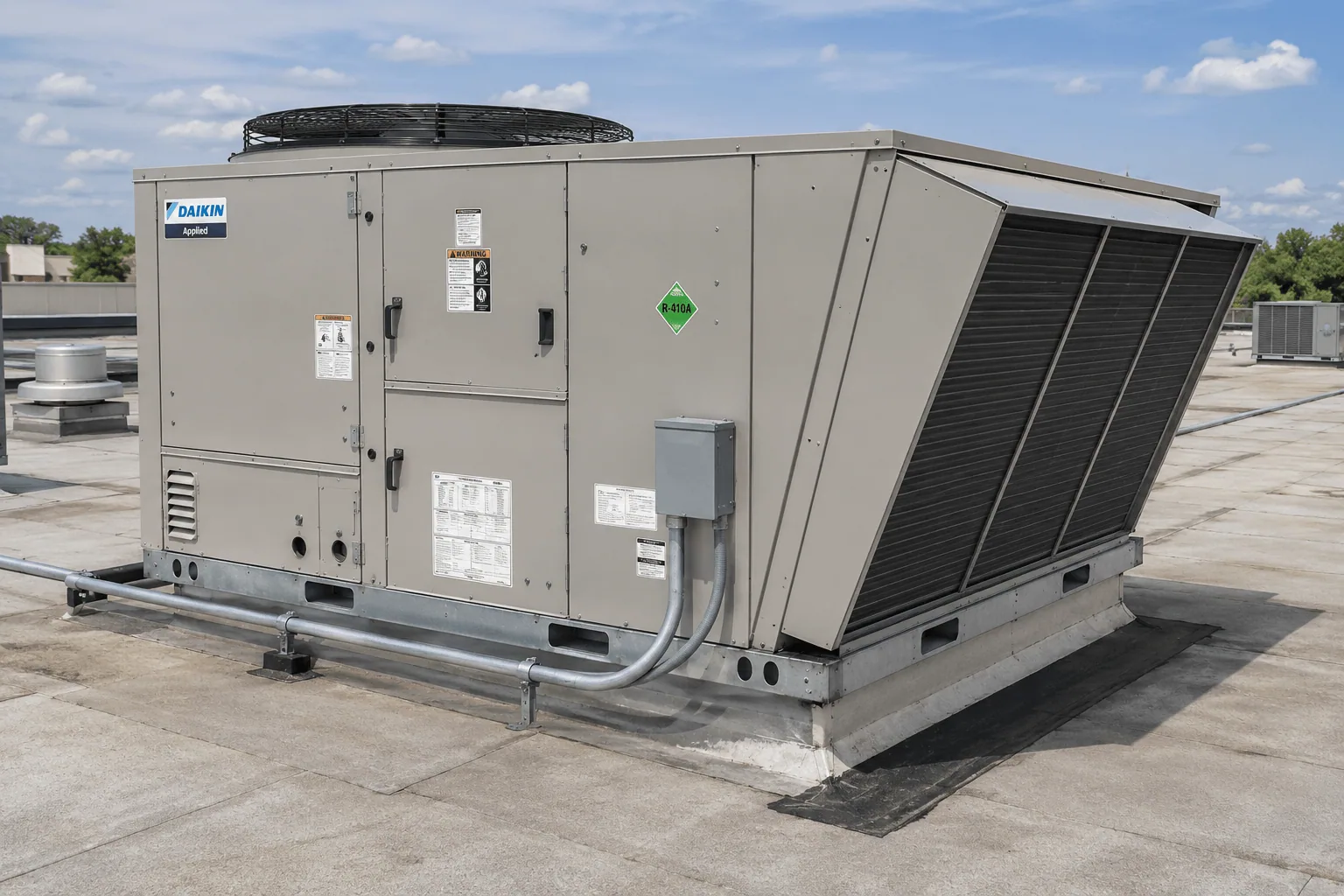
The same heat that damages a roof helps a good coating. With Tampa Bay summer highs in the low 90s, and Pinellas County classed as IECC Climate Zone 2A, a hot-humid zone, the sun does a great deal of the damage. A white or light reflective surface keeps the roof cooler under that sun, which also eases the load on rooftop air handlers. For heat and UV damage, restoration is evaluated only after material and moisture suitability are established.

Where restoration pays

Strip centers and big-box stores along the US 19 corridor need inspection of the assembly, repairs and tenant restrictions before restoration is recommended. A mall such as Countryside Mall, which added new skylights in a 2009 renovation, has the kind of curb and skylight details that a restoration plan must treat one by one. The same logic suits the shopping centers in Countryside, and it is a practical fit for retail and restaurant chains that need every location trading.

Cost follows roof size, the amount of repair needed first, the coating type, the number of coats and how much of the roof is cluttered with equipment. Because the work avoids tear-off and disposal, it is usually a smaller project than replacement. The limit is the roof itself. A coating lengthens the life of a sound roof. It does not turn a failed one into a sound one.

Commercial Roofing Questions

How do you prove the insulation is dry before coating?

Two steps. Under suitable conditions, infrared imaging identifies thermal anomalies. Suitable core samples or readings help confirm moisture; a universal cooler-zone rule does not describe every roof or scan period. Wet sections are removed and replaced first. We record each reading with a photo.

Will a coating stop a leak that is already active?

Not by itself. We trace the leak to its source, repair that source, and then coat. A coating over an open seam only hides it until the next storm.

Can the same roof be coated twice?

Recoating depends on the existing treatment's bond, compatibility, condition and selected product requirements. We inspect and test the substrate as needed before describing preparation and thickness. There is no universal number of acceptable coating cycles.

What does a coating do about heat inside the building?

It lowers the roof surface temperature, which reduces the heat that works down into the building. The effect is largest on dark roofs in full sun. We will not quote a savings figure, because it varies with insulation, equipment and use.

Is a permit needed for a coating job in Clearwater?

Clearwater requires a building permit for installing or replacing any roofing component, and the application asks for a Product Approval specification sheet listing the exterior products. We check the scope against the city's rule before work begins.
Send photos or book a moisture check

Send photos of the roof and the worn spots, or book an inspection. We will check whether it is dry, show you what we find, and explain whether a coating is the right next step. Call any day of the week.

Request a Roof Assessment   or call 555-555-5555

Call555-555-5555