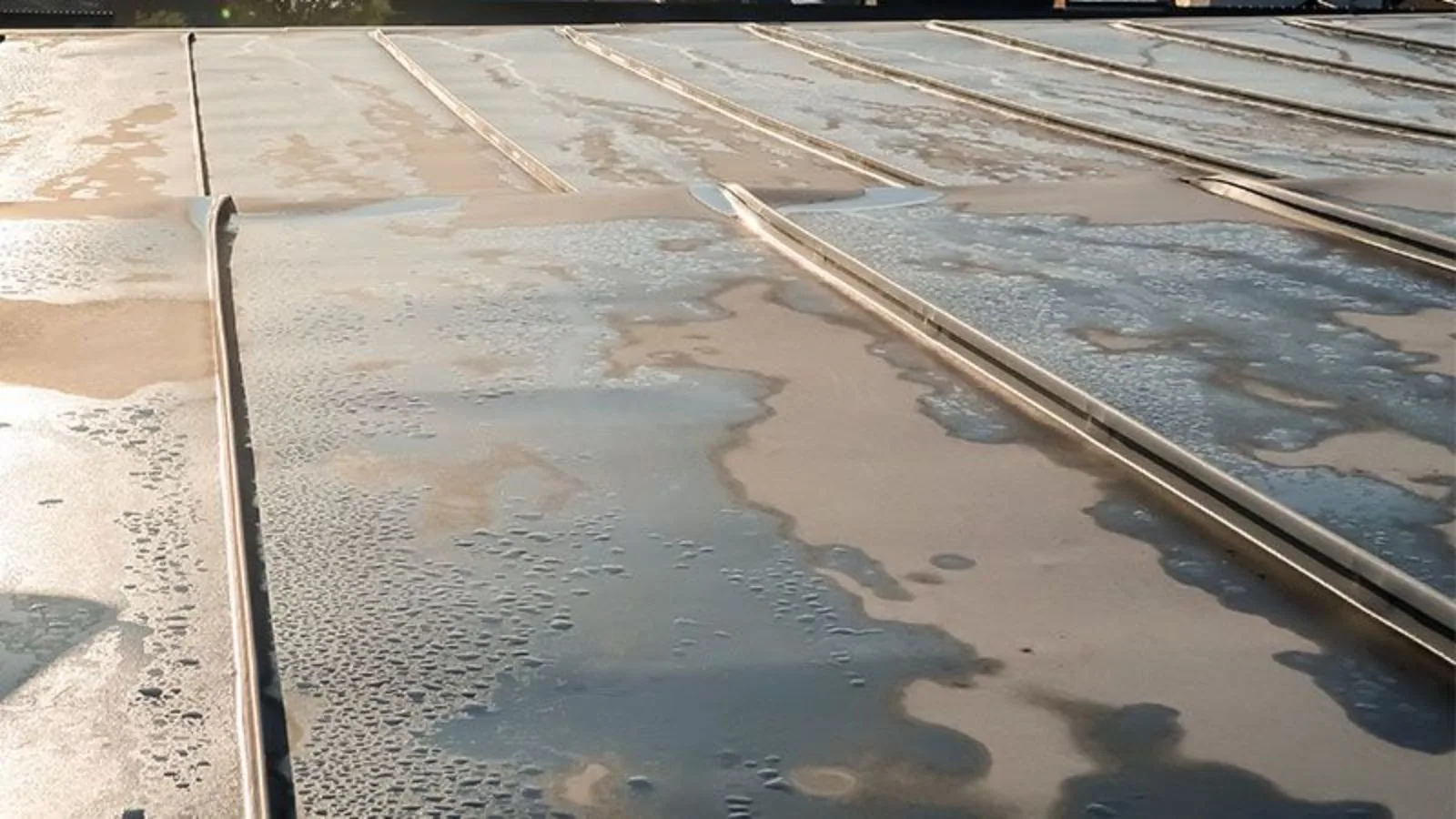
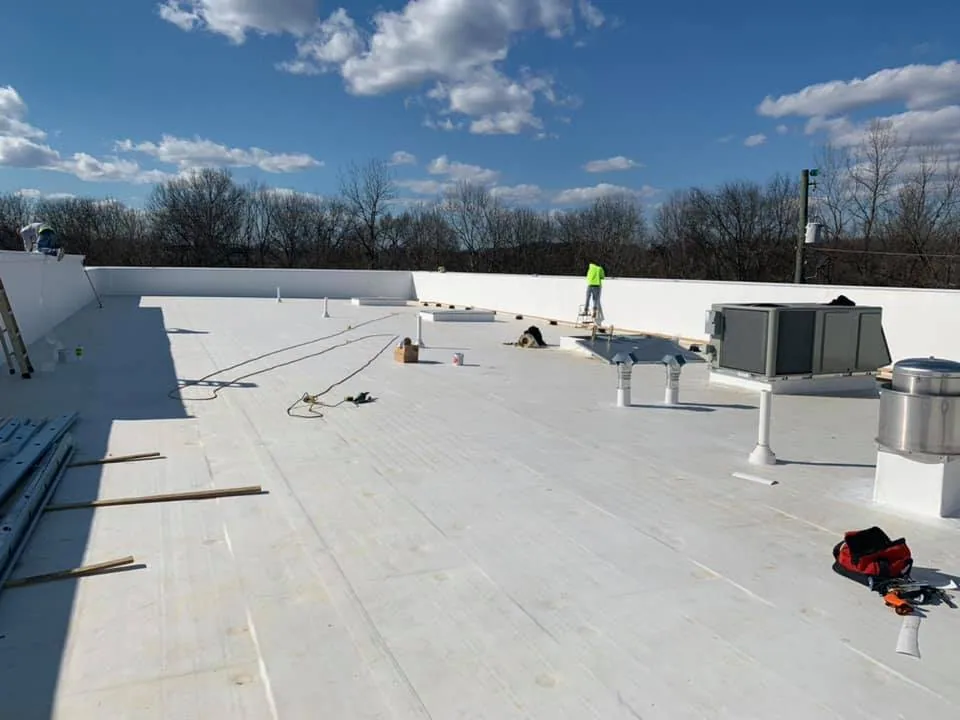
Ponding Water Roof Repair in Clearwater, FL

Clearwater ponding water repairs start with the outlet and roof elevations. We explain blocked drains, low areas, wet insulation and correction choices.

A low roof area holds water when the outlet sits beyond a higher obstruction. Clearing the drain may not empty that area. The water needs a continuous route to leave, and a change in elevation can interrupt it even on a roof with an open drain.

Ponding water roof repair in Clearwater, FL begins by tracing that route. We inspect the outlet, nearby details and the affected surface. The goal is to distinguish debris, a damaged connection and a construction condition that needs more than cleaning.

Clearwater's summer wet season brings repeated thundershowers. US 19 runs through Clearwater and Largo, with commercial properties exposed to that regional pattern of heavy rainfall. A roof along the corridor still needs its own drainage investigation. The visible pool identifies where water stays, not necessarily the reason it cannot leave.

Start at the outlet mouth

Start at the outlet mouth

A drain basket can conceal debris at the throat. A scupper can collect leaves behind its opening. We inspect accessible outlets and the nearby membrane connection. Cleaning and repairing are separate tasks, even when they happen during the same visit. We photograph the accessible outlet before and after work so the owner can distinguish removed debris from a rebuilt roofing connection.

Drain and scupper correction can include rebuilding a damaged flange detail. Water standing beside a drain stresses that connection during each shower. If the membrane has separated from it, removing the blockage alone will leave an entry point beneath the next pool.

A blocked internal leader may require the relevant plumbing trade. We explain what the roofing inspection established at the roof outlet and where the investigation needs to continue below it. A clear opening at roof level is not proof that the entire drainage path is clear.

Follow the elevation changes

A small rise can stop water from reaching the outlet. Repair patches, settled insulation and equipment supports can all affect the path. We inspect the low area and surrounding elevations rather than assuming the drain needs to be relocated.

Surface damage from service traffic may appear in the same wet area. The repair must address the opening, while the drainage investigation addresses why water stays there. Treating them as one task can leave a sound patch sitting under the same recurring pool.

At a property in Largo, equipment and parapet arrangements need direct review. A neighboring building can drain well with a different roof slope or outlet placement. The street and building use cannot substitute for measurements of the area that is retaining water.

Check what the pool concealed

Check what the pool concealed

A stain after evaporation shows the boundary reached by water. It does not establish whether the materials below are wet. Softness, blisters and leak history can indicate a need for further investigation. We inspect these signs before proposing a new surface treatment.

Moisture mapping under suitable conditions helps identify areas needing confirmation. Test openings can establish affected layers and conditions below the membrane. We explain what the investigation found and why it changes the proposed removal area.

A seam within the low area may also need a compatible seam repair. Water exposure does not make every seam defective, but an open join needs attention. The repair connects to sound material after preparation rather than relying on a bead applied over dirt or algae.

Choose a correction that fits

A clear outlet and sound low area may need monitoring and maintenance rather than immediate reconstruction. A damaged drain connection requires repair. A persistent elevation problem can call for slope correction, a revised drainage detail or work during a larger roofing project.

We consider the existing assembly, outlet arrangement and available support before proposing a change. Tapered insulation can direct water in an appropriate design, but it needs compatible detailing at drains, curbs and parapets. Raising the field without checking those heights can create a new flashing problem.

Structural concerns require the appropriate review. Water adds load, and a visibly deflected area deserves more than an untested surface remedy. We identify the observed concern and explain where engineering input is needed before the roofing plan is finalized. The permanent approach should settle the cause supported by the investigation.

Keep coatings in their proper role

Keep coatings in their proper role

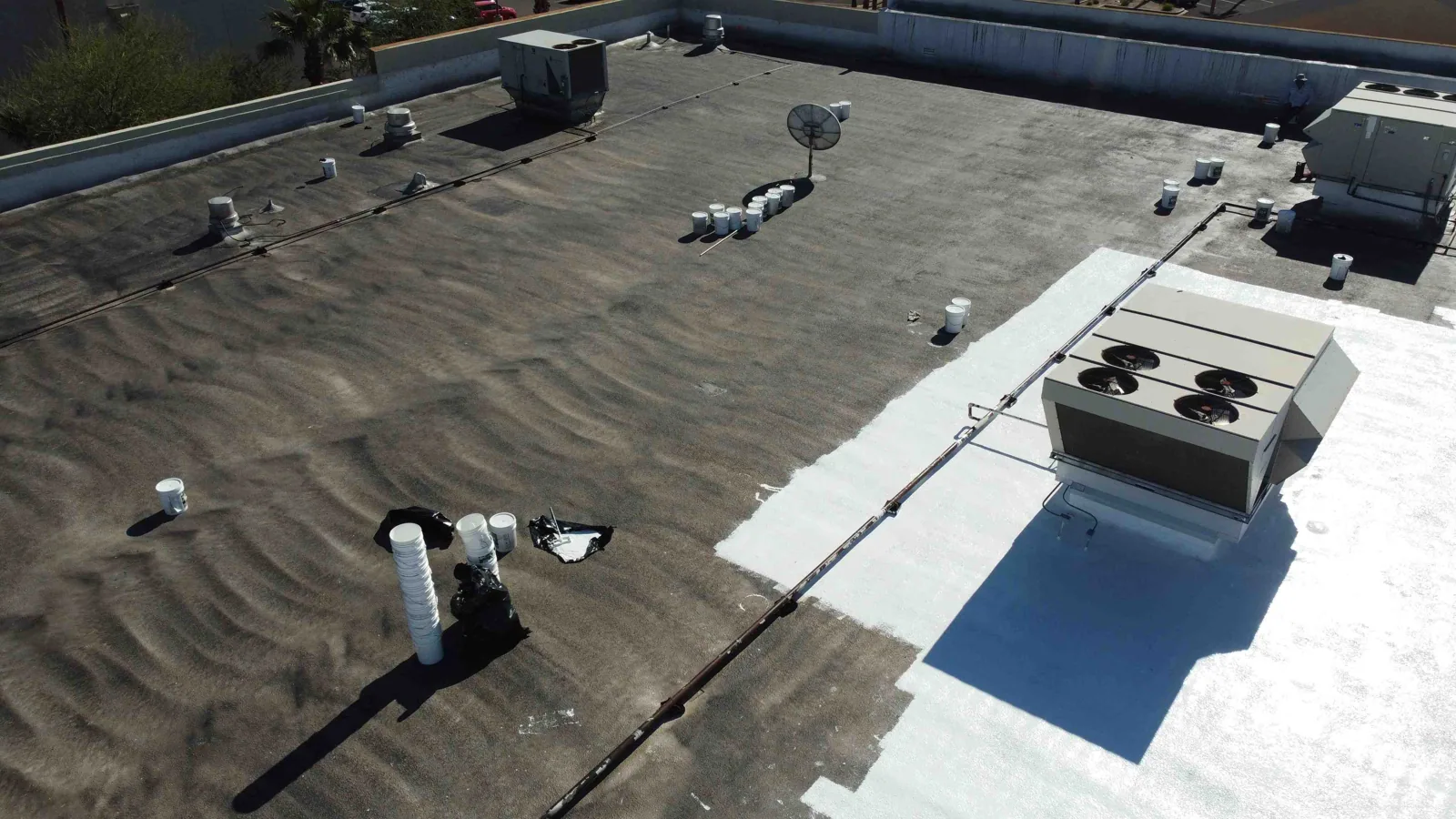
A coating can protect a suitable roof surface. It cannot make a low area drain. It also cannot dry saturated insulation or strengthen a damaged deck. We evaluate those conditions separately before considering restoration.

A coating restoration project needs sound, prepared material and details that suit the selected system. Product requirements govern the exposure it can accept. The owner should understand whether drainage correction is part of the project or remains a separate unresolved item.

Clearwater's cycle of rain and intense summer sun can leave alternating wet and dry surface conditions. Work must fit the preparation and curing requirements rather than start as soon as the pool disappears. We explain the condition needed for application and the weather limits that affect scheduling.

Make drainage care workable

Debris returns when the collection point stays unchanged. We show where it gathers and how it affects the outlet. Accessible maintenance can then target that location instead of clearing only the easiest visible basket.

Routine drainage and roof checks should revisit repair edges and the route to the drain. Equipment changes may introduce another obstruction. Staff should report a new pool location or a change in leak timing so the next inspection can compare it with the earlier findings.

Scope and price reflect the affected area, hidden moisture, insulation changes, drain repairs and access. Urgent water entry may need protection before a full drainage correction is ready. Our roof response is available overnight, through weekends and on holidays. Send safely taken ponding photos and the property address. We will inspect the drainage and explain which correction addresses the actual condition.

Drainage correction begins with elevations, not with the assumption that adding a surface layer will solve the pool. We check the outlet, surrounding insulation, deck direction and any deflection that holds water away from the drain. If water appears after every afternoon storm, note how long it remains and whether the footprint changes. A correction may involve clearing a blockage, rebuilding a low area or revising a larger section, depending on the assembly. The scope should also check curb and door heights before adding material, so an improvement to slope does not create a new clearance or flashing problem.

Commercial Roofing Questions

The drain is clear, but water remains nearby. What do you check next?

The path between the low area and outlet needs inspection. We examine elevations and obstructions, then explain whether the roof needs a local assembly change or another drainage investigation.

Does a water ring mean the insulation is saturated?

A surface mark shows where water collected. Confirmation of wet insulation requires further evidence. We review the roof condition and use suitable moisture checks before defining removal.

Can a coating eliminate the pool?

Changing surface protection does not change roof elevation. We assess restoration suitability separately from the correction needed to provide a workable drainage path.

Will adding tapered insulation affect existing curbs?

New elevations can change flashing heights and connections. We review equipment, walls and outlets together before proposing a slope adjustment.

Should staff walk through the pool to clear debris?

Safe access comes first. Wet roofing and concealed hazards can make an attempted clearing unsafe. Send ground-level or safely available photos and arrange an inspection rather than entering a hazardous area.
Show us where water remains

Send safe photos taken after rainfall and the building address. We will inspect the outlet and roof elevations, then explain the correction choices.

Request a Roof Assessment   or call 555-555-5555

Call555-555-5555