Remove the condition that keeps causing damage
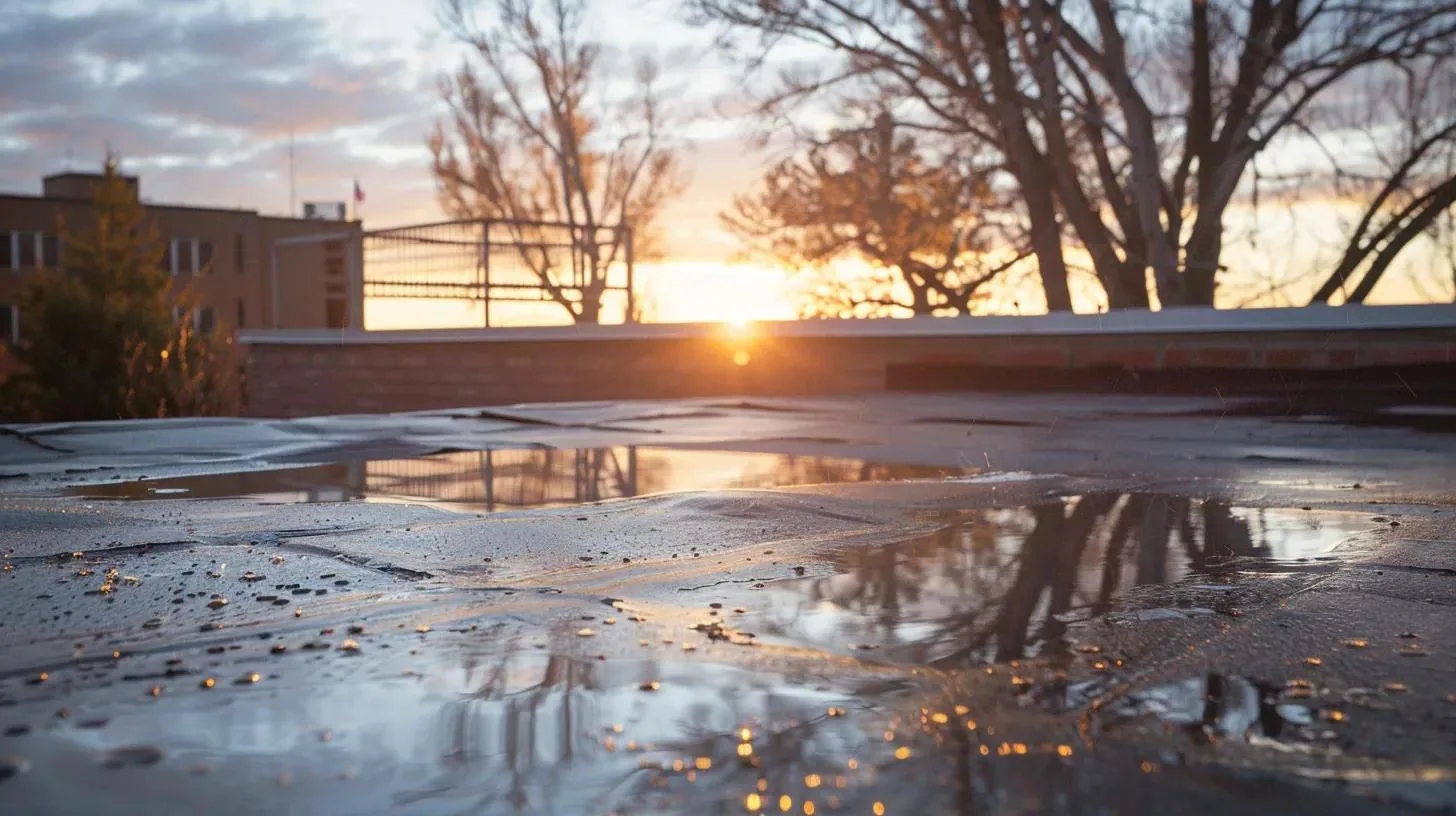
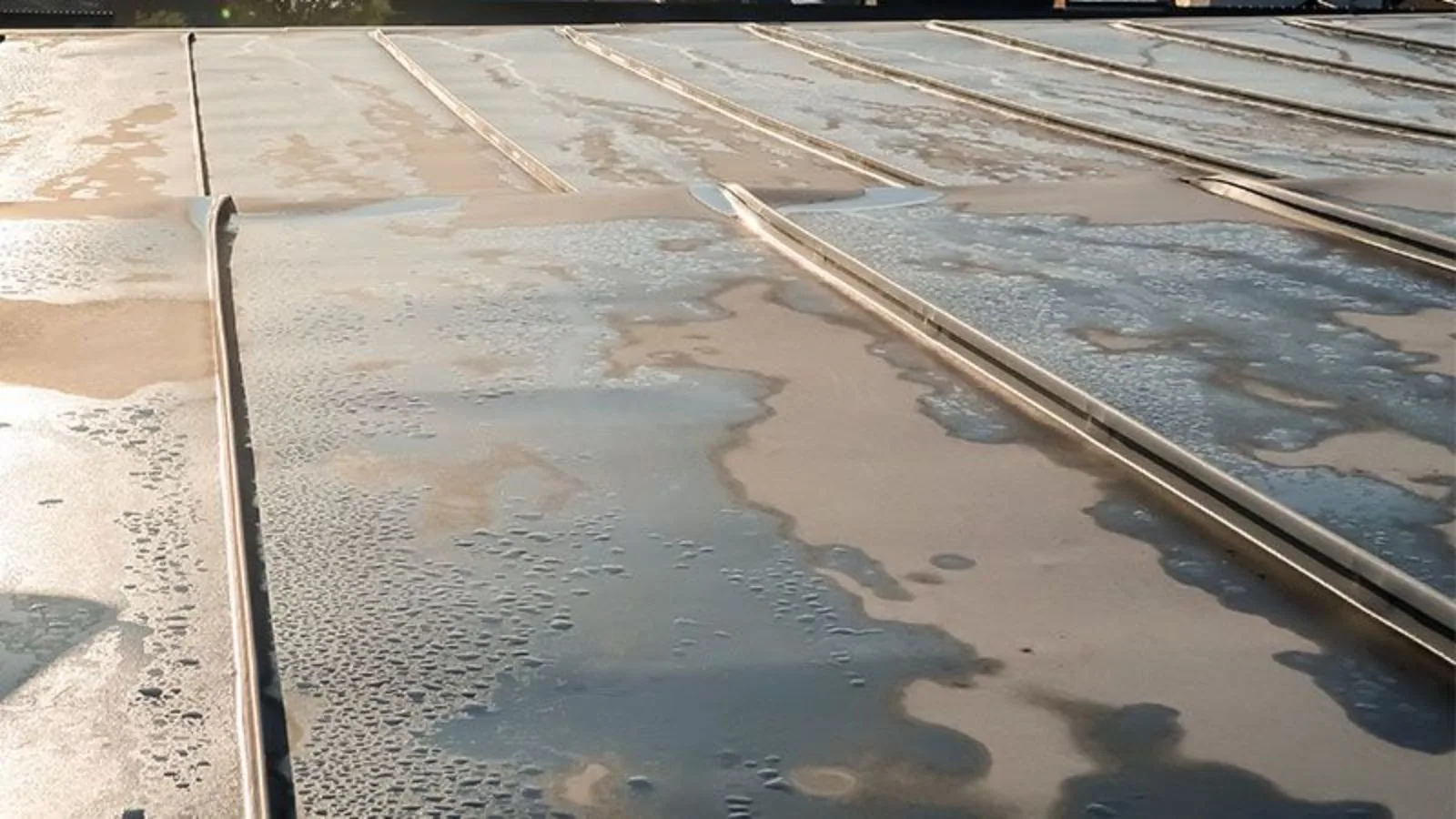
Persistent ponding corrections distinguish blocked outlets from poor slope or damaged drainage details. Cleaning does not raise a low section. The investigation shows which correction is supported.
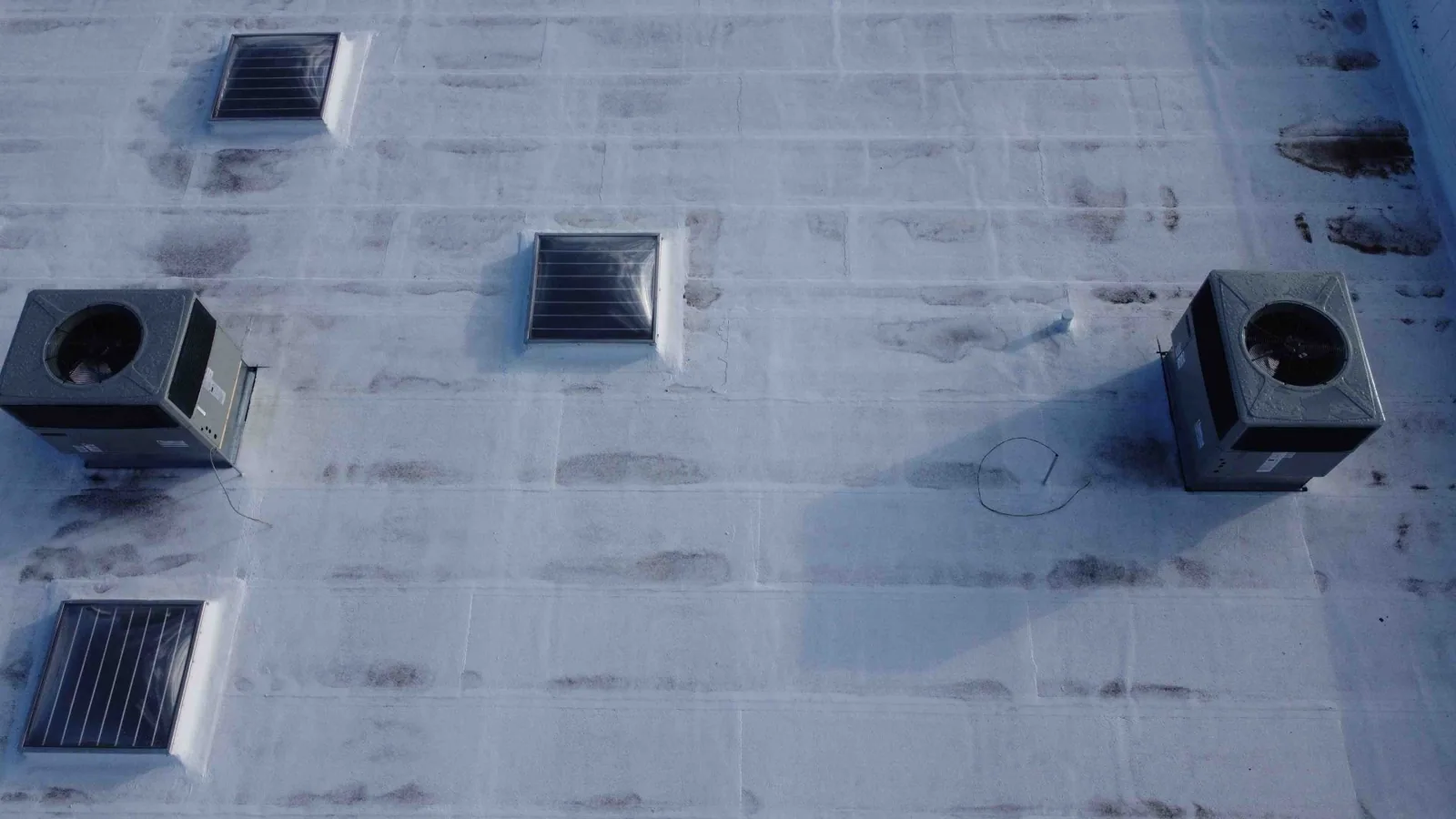
Heat and sun damage repairs examine deteriorated surfaces and details for suitable retained material. A new coating requires a sound substrate, rather than an assumption that another surface layer will restore every connection.
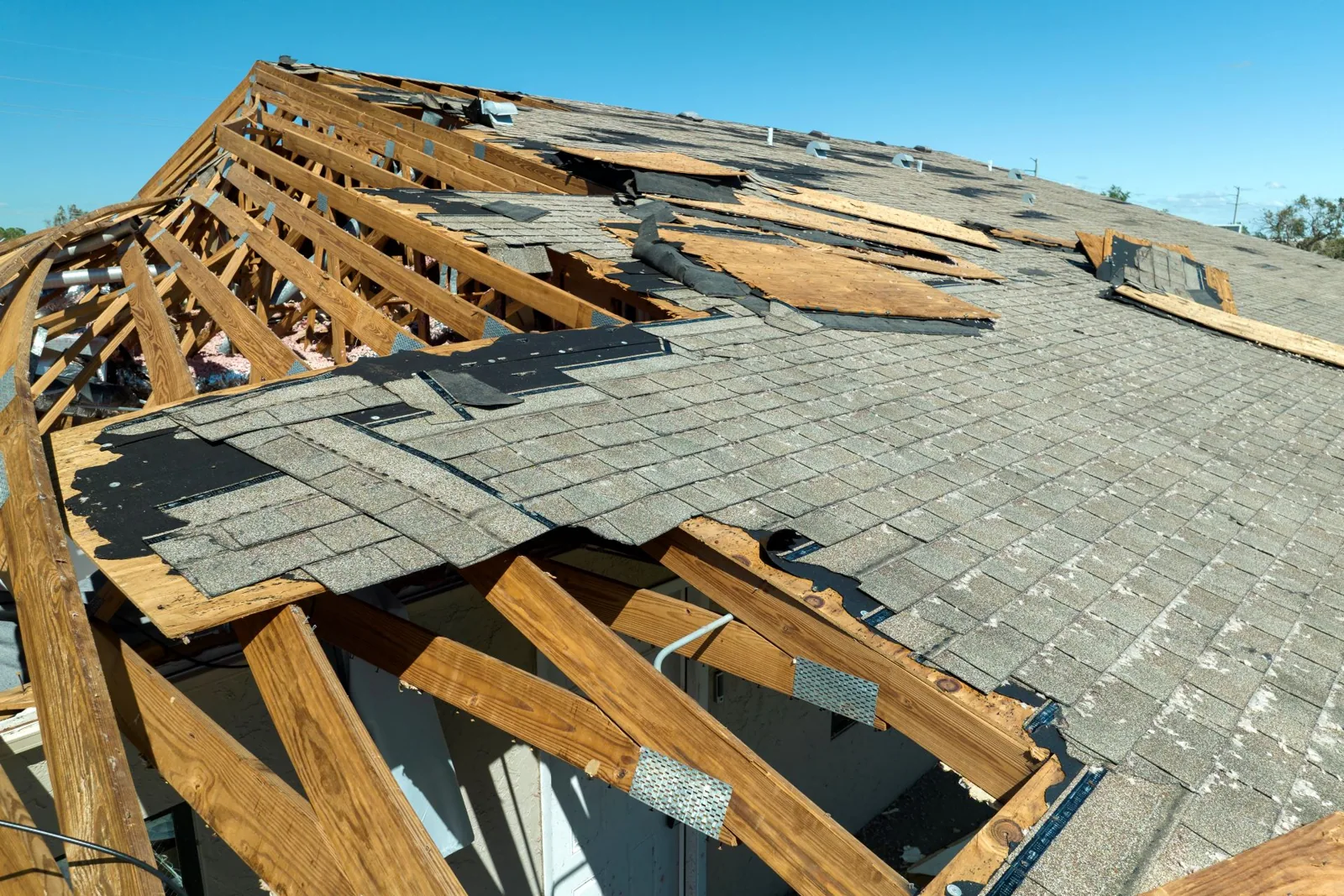
Fire-affected roofing requires the damaged assembly and supporting condition evaluated before roof work proceeds. Related building safety and other trades need coordination through management.
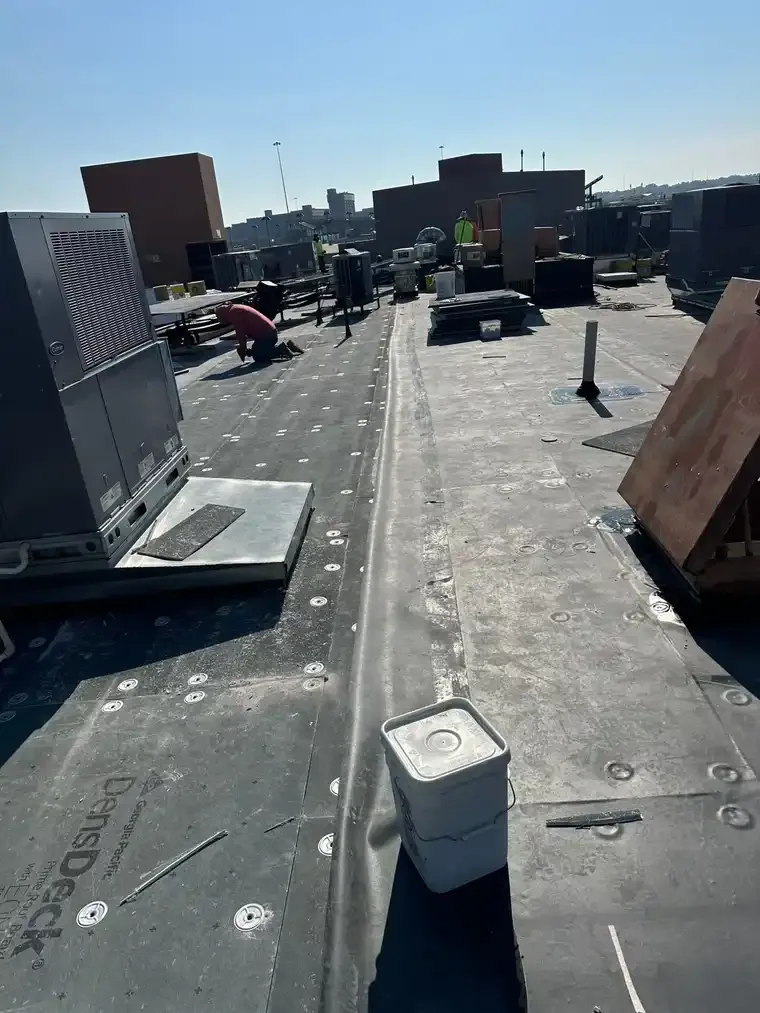
We receive emergency roof calls day and night, including holidays. Immediate measures depend on safe access and weather. Permanent repairs follow the inspected defect and damaged layers, with photographs identifying completed work and any area still requiring investigation.
Separate roof entry from surrounding water
Water can arrive at a building by more than one route. A roof opening, a wall transition and rising water below the roof require different findings. After a coastal storm, we document the roof assembly and its defects without assigning unrelated interior damage to the membrane. The repair scope stays with the condition roofing can correct. A separate building or drainage issue remains visible for the people responsible for it.
Commercial Roofing Questions
Can one storm inspection distinguish roof leaks from flooding?
The entry routes need separate findings. We document observed roof defects and identify other water paths requiring evaluation. A storm date alone does not establish that all interior damage came through the membrane.
Is temporary protection the same as a completed repair?
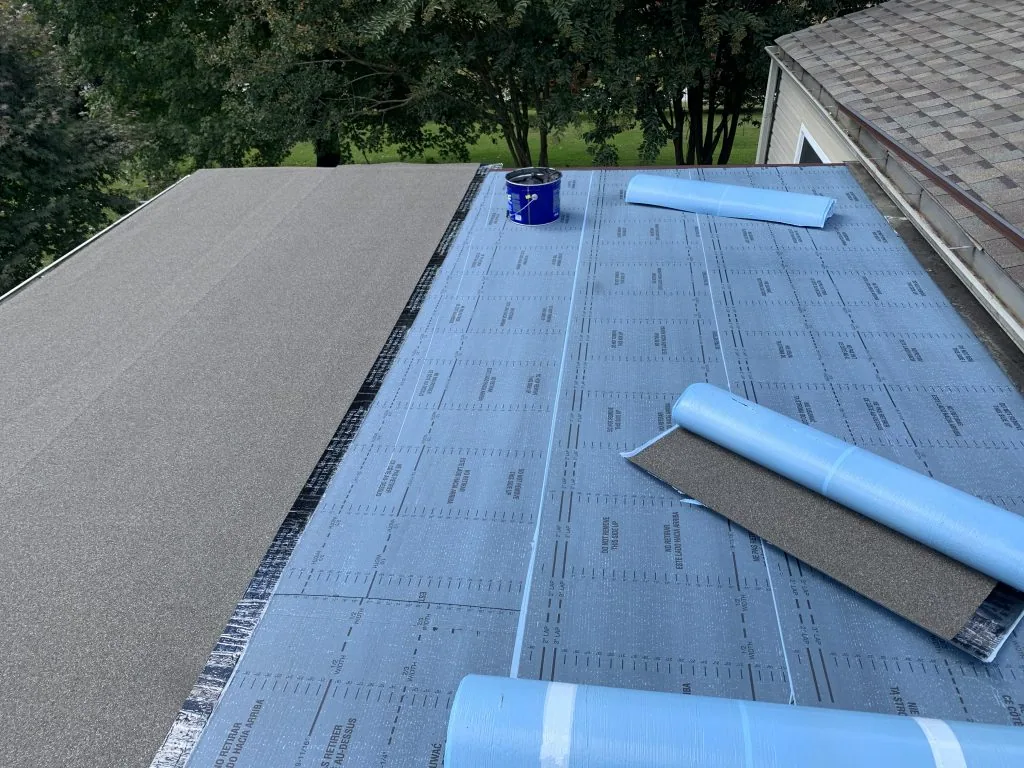
Temporary measures address immediate exposure under available conditions. The permanent correction may require removal, supporting repairs or compatible new details. We explain those remaining tasks after inspection rather than treating emergency protection as the final scope.
Can a roof repair address water entering at a wall?
The inspection needs to identify the actual opening. We distinguish roof flashing from wall or site conditions and scope only the work supported by those findings.
What happens when insulation is wet beyond the visible damage?
Remove the affected layer to a sound boundary, then check the deck and tie-in material. The repair scope should show where that boundary was found.