Metal Roof Retrofit and Restoration in Clearwater, FL

Restore or retrofit exposed-fastener metal roofs in Clearwater, FL: fastener replacement, panel sealing, coatings and new standing seam over the old deck.

An exposed-fastener metal roof leaks at its screws, and the screws leak because the rubber washers dry out and the holes around them wear wide. The panels are not usually the problem. The thousands of small penetrations through them are.

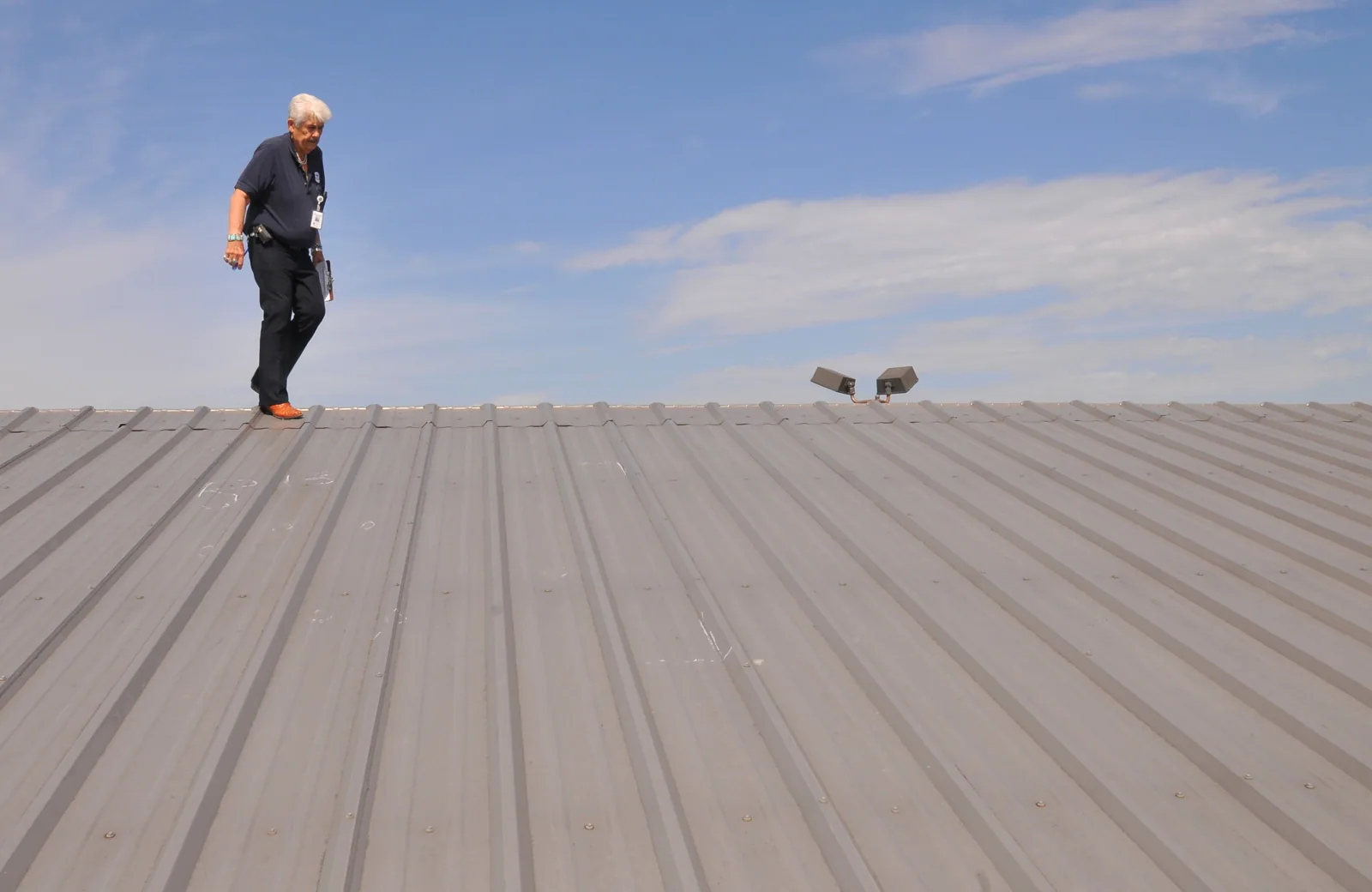
Exposed-fastener metal is the ribbed or corrugated panel you see on many warehouses, workshops and flex buildings. Each panel is screwed through its face into the purlins. That is quick to install and cheap to build. It also means every screw is a place where water can enter, and every screw moves a little each day as the metal heats and cools.

The short version for Clearwater, FL: restoration or retrofit requires an inspection of the existing panels, support and moisture. The choice is between a restoration that re-fastens and seals what is there, and a retrofit that puts a new roof over it. Here is how to tell which one fits.
Why screws let go

Why screws let go

Step one is the washer. A neoprene washer sits under each screw head and squeezes against the panel. Sun and heat harden it over the years. It cracks, and water gets past it.

Step two is the hole. Metal expands in the heat and shrinks at night. The panel slides a hair against the screw shank, again and again, and the hole elongates. A wallowed hole cannot hold a screw tight. In a strong wind, the panel can pull over the head.

Step three is corrosion. Salt air and rain attack the screw, the panel edge and the coating. Red rust blooms at laps and at cut edges, then creeps under paint.

Step four is the lap. Overlaps between panels are sealed with tape or mastic, and that dries out. A dry lap lets water travel sideways under the panel. By the time a stain shows below, the leak path can be many feet long.

Heat, humidity and wind in Pinellas

Metal roofs here live in a hard cycle. Tampa Bay summer highs reach the low 90s, a metal surface runs hotter than the air, and an afternoon storm cools it in minutes. Fasteners and laps work harder in that swing than they would in a mild place. Pinellas County sits in IECC Climate Zone 2A, hot and humid, so the underside of a metal roof also collects condensation when warm moist air meets cool panels.

A retrofit needs a sound load path from the new covering through its supports to the existing structure. Milton's October 2024 wind in Pinellas shows why loose existing screws and damaged panel connections need examination before another system is added. The project design establishes how the new work resists uplift, including its supports and perimeter connections.

Pinellas County has committed over $90 million through its Employment Sites Program to build and redevelop industrial, manufacturing and flex space. Flex and warehouse roofs in Pinellas Park, Largo and the airport industrial park deserve a fastener check before the next storm.

What to look for from the ground and the roof

What to look for from the ground and the roof

Many problems show up before a leak does. Look for:

  • Screw heads with cracked, split or missing washers.
  • Rust streaks running down from screws or laps.
  • Panels that have lifted or rattle in wind.
  • Dried, cracked or missing lap sealant.
  • Stains on insulation or ceilings that follow the rib lines.
  • Chalky or peeling paint over bare metal.

Rust at laps and edges is the item to take seriously. Surface rust can be treated. Rust that has eaten through the panel means the panel has to be replaced, and that changes the plan from restoration to something more.

Restore the roof you have, or build over it

Restoration is the lighter path. We select replacement fasteners for the panel holes, support condition and assembly requirements, seal the laps and details, and cure the rust. A fluid-applied silicone coating over a suitable prepared roof then ties the system together and adds reflectivity. This path suits roofs with sound panels and solid purlins, and it often costs far less than new metal. The coating step works the same way it does in any roof coating restoration.

Retrofit is the heavier path. A framing system is fastened over the old panels, and a new standing seam roof goes on top of it. The old roof stays in place as a base, where the existing assembly can remain. Openings, connections and temporary protection still need a work plan. The new framing creates a gap for added insulation, which helps with condensation and cooling cost. The new panel is a standing seam metal roof, with hidden fasteners and room to move.

Which one fits depends on the base. Purlin spacing, deck condition and wet insulation all matter. Code also limits how many layers a building may carry, so we check the structure before we propose weight.

How the work runs

How the work runs

We start with a walk and a moisture check. An infrared moisture survey may contribute where the assembly and conditions are suitable. Metal surfacing can limit interpretation, so other readings or openings may be required to confirm moisture, and a purlin check shows whether the framing can take new fasteners. Then we decide on the path.

For a restoration, crews replace fasteners row by row, seal laps and penetrations, treat rust and apply the coating. For a retrofit, they set the framing, install insulation and hang the new panels with proper clips and trim. Continued building use requires an agreed access, protection and operating plan. Either path that replaces roofing components goes through Clearwater permit review, with approval sheets for the new products, and we plan around that time.

Not every metal roof is worth saving. When corrosion has gone through the panels, when the purlins have rotted or rusted away, or when the deck is wet throughout, replacement is the sound call. Owners of warehouse roofs weigh the same two paths against budget and downtime.

A retrofit is only suitable when the existing structure can support the new arrangement and drainage remains workable. We inspect panel attachment, framing condition, deflection, existing insulation and the proposed support path before recommending an over-roof system. The design must account for added height at doors, walls, curbs and rooftop equipment. It also needs a plan for water that currently runs through the panel ribs. If those conditions do not support the new assembly, removal and replacement may be the clearer option. The inspection records what is known and identifies any structural or concealed condition that needs separate confirmation.

Commercial Roofing Questions

Can I just replace the screws on my metal roof?

Sometimes that is all it takes. If the panels are sound and the holes are not stripped, compatible fastener correction may address the affected connections. If the holes are wallowed or the panels are rusting, that is not enough on its own.

What is the difference between restoring and retrofitting?

Restoration repairs and coats the metal you have. A retrofit builds a new roof frame over the old one and adds new panels. The first is lighter and quicker. The second adds insulation and a new roof life.

Will a coating stop my metal roof from leaking?

A coating seals what it covers, but it needs sound metal and tight fasteners underneath. We replace failed screws and seal laps first. Then the coating locks the repairs in and reflects heat.

Do you need to tear off the old panels for a retrofit?

Not when the existing roof is structurally sound. The new framing sits on top of the old panels. We check weight, purlin condition and moisture before we propose it.

Why does my metal building drip when there is no leak?

Condensation is the usual cause. Warm, humid air meets a cool panel and water forms on the underside. Added insulation and a vapor control layer help, and a retrofit can build that in.

Send photos of the screws and laps

Send photos of the fasteners, rust or stained ceilings, or book an inspection. We will show you what we see on the metal, explain the leak path and recommend a restoration, a retrofit or a new roof. Call any day of the week.

Request a Roof Assessment   or call 555-555-5555

Call555-555-5555