Roof Membrane Puncture Repair in Clearwater, FL

Clearwater membrane puncture repairs address service damage and wet layers. We explain patch compatibility, technician routes and protection around equipment.

A roof puncture can start with a tool set down in the wrong place. A dropped fastener, sharp support or repeated step beside equipment can open the membrane. The hole may be small, but its repair needs to account for the material below and the activity that caused it.

Membrane puncture repair in Clearwater, FL starts by locating the opening and examining the surrounding sheet. We identify the roofing system, check for affected insulation and review the nearby service route. The permanent correction should close the damage and reduce the same exposure at the next equipment visit.

The airport industrial park serves businesses near St. Pete-Clearwater International Airport. US 19 also passes through Clearwater and Largo. Equipment on a commercial building in either setting needs a safe service approach that protects the actual membrane. The building address does not tell us where technicians walk or how that roof responds to traffic.

Identify the damage pattern

Identify the damage pattern

A single sharp cut suggests a different problem from repeated wear beside a unit. We inspect the visible opening and the route leading to it. Loose objects, unstable supports and damaged walking protection can help explain the pattern without proving who caused a particular hole.

A close inspection of the service area also checks adjacent details. A technician may have crossed seams or stepped against a curb while approaching equipment. Those connections deserve attention even when the reported symptom points to one obvious puncture.

The interior leak location is useful, but the water path may extend beyond it. We compare the symptom with the roof layout and inspect the relevant area. A small opening should not be dismissed because the stain appears farther away from the unit than expected.

Examine the materials underneath

Water through a puncture can enter insulation before the building shows a drip. We check the surrounding assembly for signs of moisture. Where the evidence calls for further investigation, suitable surveys and test openings help define the affected material.

A patch can close entry without removing wet insulation. We explain whether that distinction affects the permanent scope. Confirmed saturated material needs appropriate removal rather than being left beneath a fresh surface. The size of the hole alone cannot establish the removal boundary.

A hard object can also damage a cover board or compress material below the membrane. We review the support condition around the opening. Where hidden damage is found, the repair rebuilds that portion of the assembly before the compatible membrane connection is finished.

Prepare a sound patch connection

Prepare a sound patch connection

Repair material must suit the existing membrane and the surrounding condition. We identify old sealants, contamination and deteriorated surfaces before selecting the method. Cleaning is a necessary operation where it is required for a proper bond, not a substitute for removing unsound material.

On a PVC roof membrane, the repair follows the applicable material requirements and suitable welding preparation. Other systems require their own techniques. A patch chosen only because its color matches the sheet can leave a connection that does not perform as intended.

Nearby seam separation needs separate attention. The puncture and the open join may share a service damage pattern, but they are distinct repair points. We locate each one and describe the work rather than hiding several defects under one broad patch instruction.

Change the equipment approach

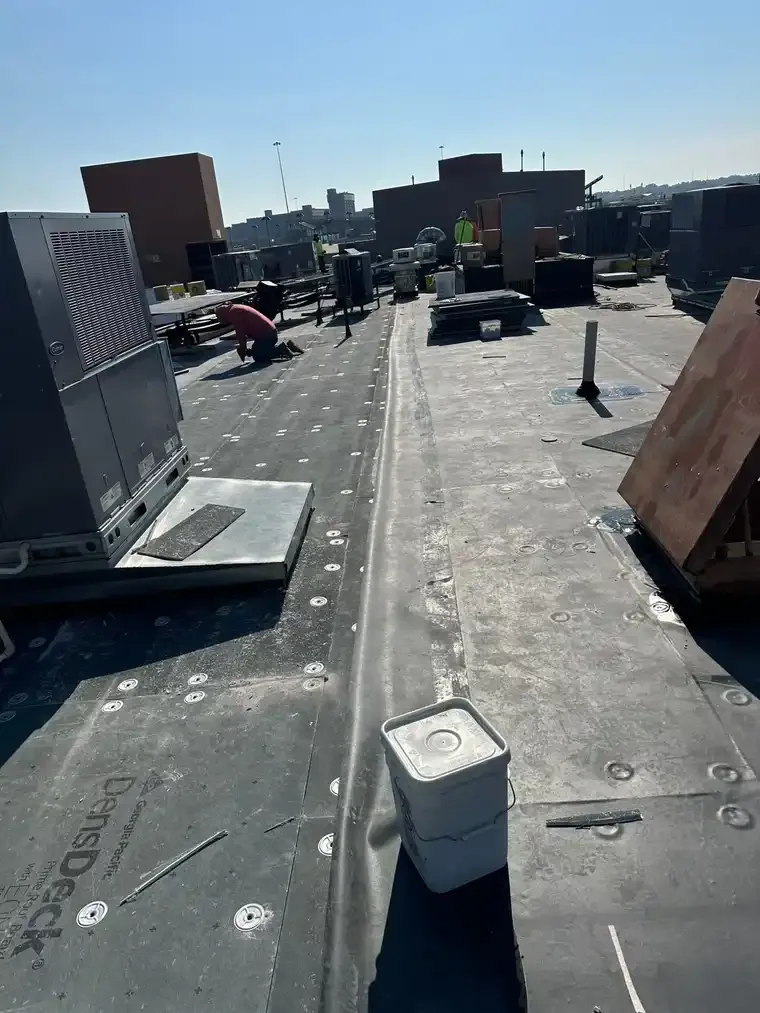
A technician reaching a panel may place weight at the same spot during every visit. The roof needs a suitable walking route and any necessary protection at that approach. We examine how the equipment is serviced before deciding where protective material belongs.

Equipment curb and support review can identify sharp or unstable contacts. The equipment trade corrects its component where needed. Roofing protection should not be used to conceal a loose support or a unit that still moves against the membrane.

Damaged flashing beside the unit may need rebuilding too. The service route must leave those corners accessible and avoid pulling on them when the equipment opens. A repaired detail should be checked after the relevant equipment work is completed.

Preserve the runoff path

Preserve the runoff path

Walking protection can become a drainage obstruction if it is placed without considering slope. We review the route to the outlet and keep water moving past equipment. Protecting a sheet from footsteps should not create a pool against the same repair.

A roof in the airport industrial park needs that site-specific check before adding protection. Access restrictions and equipment schedules are confirmed with the operator. The industrial setting does not identify the roof elevations or outlet arrangement.

Clearwater's summer thundershowers repeatedly test any opening left behind after service work. We explain what to report between inspections: a new water mark, loose rooftop item or recent equipment visit followed by a drip. Those observations help direct the next roof check without sending staff into an unsafe area.

Close the repair with a usable record

A finished patch should be photographed with its location identifiable. We record the affected material and any related equipment correction. This helps distinguish the completed puncture repair from damage that develops during a later service visit.

Maintenance after equipment service can check the approach, repair edges and nearby penetrations. The operator should report new rooftop work so inspection records stay current. A good previous visit cannot account for a sharp object left on the membrane afterward.

Price depends on hidden damage, patch preparation, access and coordination with the equipment trade. Active water may need interim protection before the final repair window. Our emergency roof response continues during nights, weekends and holidays, subject to safe access. Send safe photographs and the equipment service history. We will inspect the opening and explain how the repair can protect both the assembly and its future service route.

After equipment service, add the unit, date and approved roof route to the maintenance log. Note if technicians moved a walkway, carried sharp materials across the membrane or opened a nearby curb. If water appears later, staff can compare that record with the puncture location and ask the responsible trade to review its equipment contact. At closeout, update the roof map with any new protection or changed service path. A dated photo of the repaired area gives the next inspection a useful reference when equipment is serviced again.

Commercial Roofing Questions

The hole is tiny. Can the repair stop at the surface?

The underlying condition needs checking first. If surrounding material is dry and sound, a compatible local repair may suit the defect. Wet or damaged layers require a different scope.

Can a walkway be placed directly over the puncture?

The opening needs a proper membrane repair before protective material is considered. We then review the service route and drainage so the protection does not conceal an unfinished defect.

Will you tell us which technician made the hole?

Physical inspection can describe the damage pattern and location. Assigning responsibility requires supporting records beyond the opening itself. We focus the roofing scope on repairing the defect and reducing repeat exposure.

Should the mechanical contractor inspect a sharp support?

The relevant trade needs to review its equipment contact. We coordinate the roof findings so a corrected support and the new membrane repair are completed in a workable order.

What should we record after a service visit causes a leak?

The equipment location, service timing and safe interior photos are helpful. We compare those observations with the roof condition and document the affected details before selecting the repair.
Show us the service area

Send safely available photos and the recent equipment history. We will inspect the damage and explain the patch and walking protection choices.

Request a Roof Assessment   or call 555-555-5555

Call555-555-5555