Spray Polyurethane Foam (SPF) Roofing in Clearwater, FL

Spray polyurethane foam roof installation, repair and recoating in Clearwater, FL, timed to wet season spray windows and detailed for salt air and wind.

A spray foam roof fails when its coating wears through and sunlight reaches the foam. The foam is a hard, closed-cell plastic that goes on as a liquid. Ultraviolet light eats it from the surface down. The thin coating on top is the only thing standing between the sun and the foam.

Here is how it works. Two chemicals meet at the spray gun and expand into foam on the deck. The foam sets into one unbroken layer, with no laps and no fasteners to work loose. That suits roofs crowded with curbs and pipes.

For owners in Clearwater, FL, the coating is the part to watch. Wet season rain, salt air off the Gulf and Tampa Bay summer highs in the low 90s all work on it at once. We spray new foam, repair damaged foam and recoat tired foam on commercial buildings across Pinellas County.

Foam is only half the roof

Foam is only half the roof

Think of it this way. The foam is the body and the coating is the skin. The foam gives the roof its thickness, its insulating value and its slope toward the drains. The skin keeps sun and water off that body.

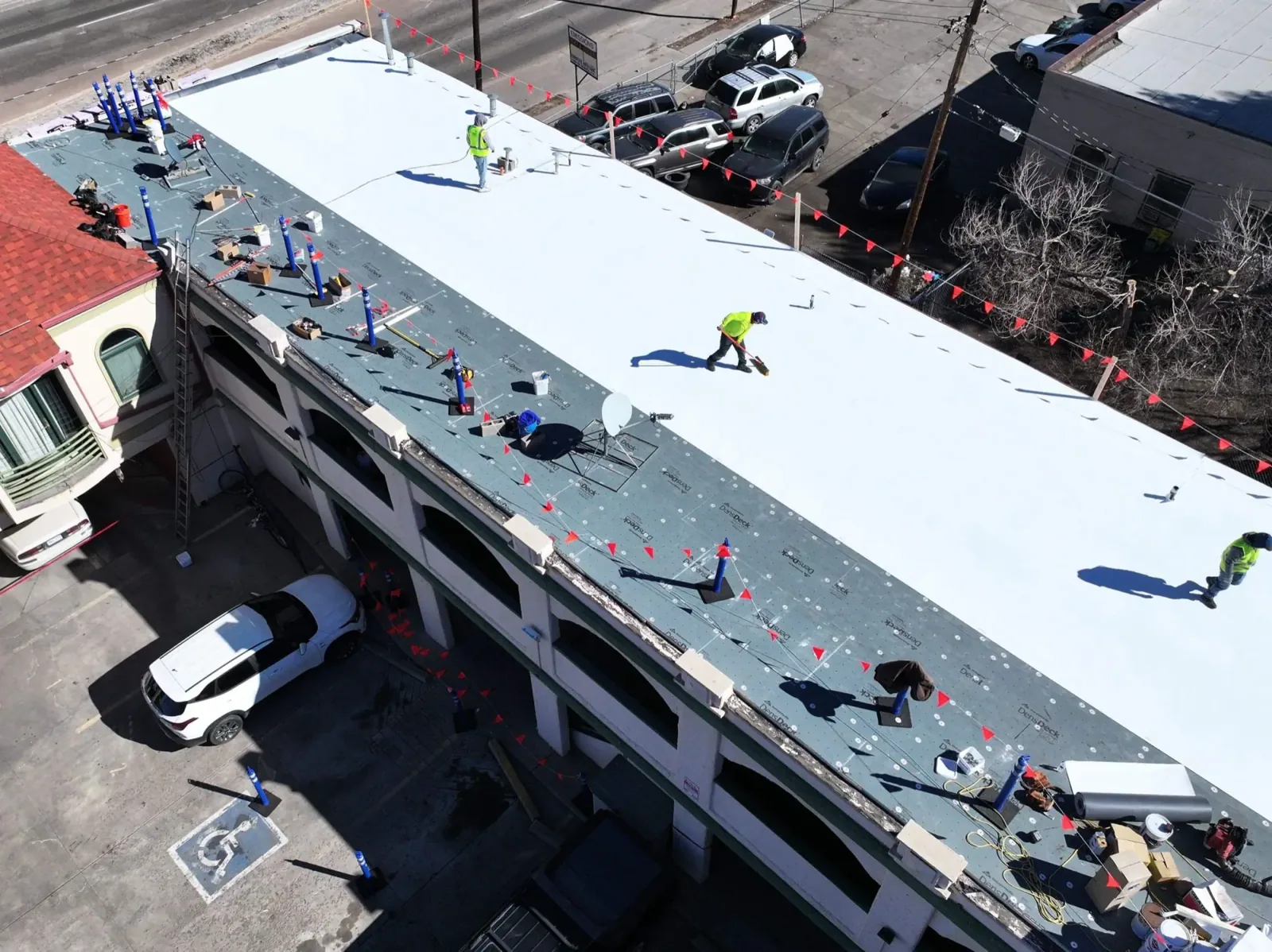
A crew builds foam in thin passes, called lifts. By varying the thickness, the crew can add a gentle fall toward a drain where the old roof held a puddle. Once the foam cures, we coat it. Silicone sheds ponded water well, so silicone coating systems suit low spots. Acrylic selection follows product-specific cost, preparation and drainage requirements, so acrylic coating systems belong on roofs that drain clean.

Foam also needs something sound beneath it. It bonds to clean, dry metal, concrete and old membrane. It does not bond to dust, oil or wet insulation. That is why spraying over a sound existing roof, a form of roof recover, starts with a moisture check and not with a spray gun.

How the coating wears out

Foam roofs rarely fail all at once. They fail in steps, and each step is easier to stop than the next one.

  • Step one: the coating chalks. It turns powdery and thins out, usually first on the sunniest slopes.
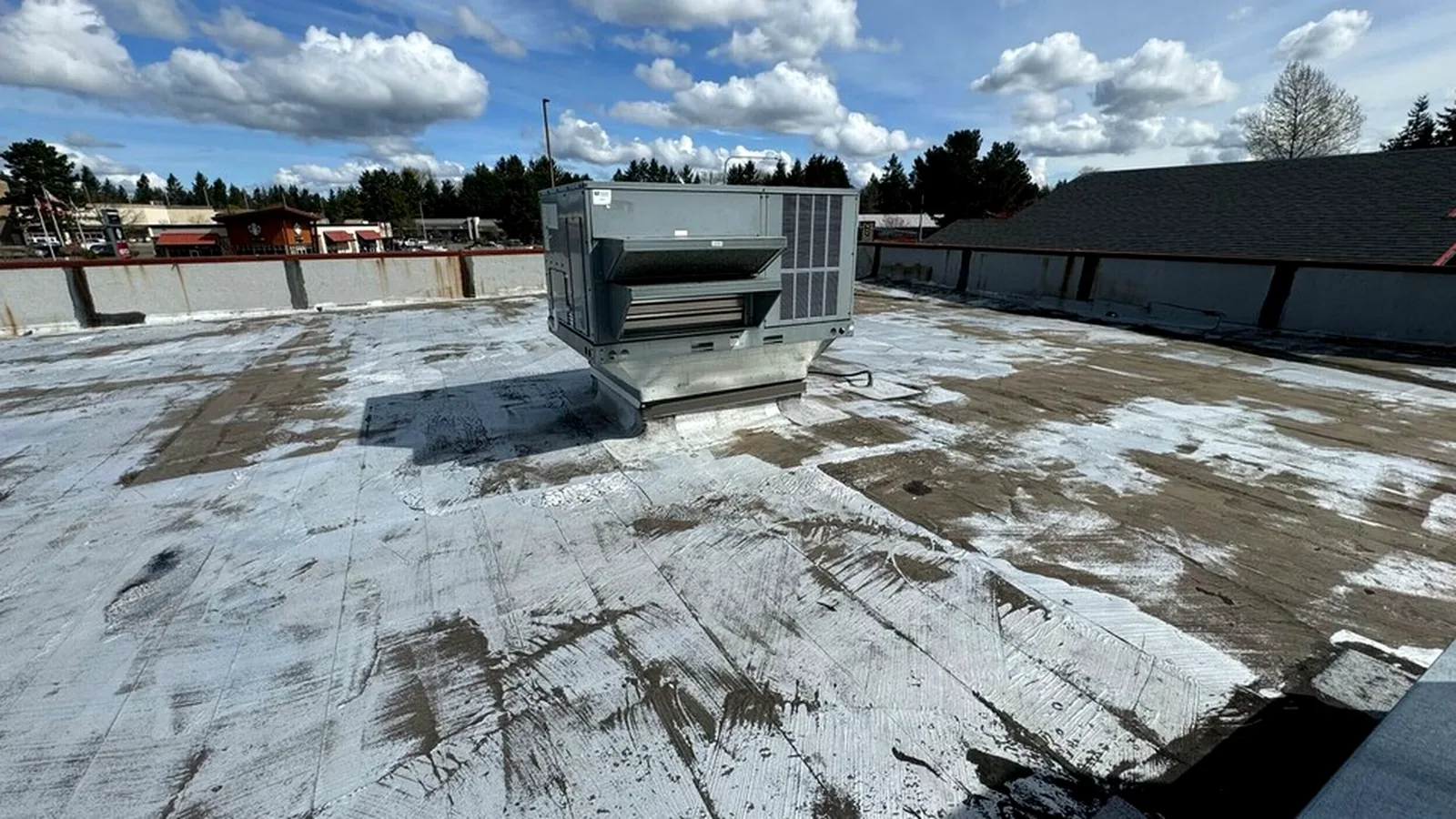
  • Step two: thin spots let ultraviolet light reach the foam. The smooth surface turns tan or orange, then rough.
  • Step three: rain finds the rough foam. A broken skin lets water into cracks and open cells.
  • Step four: damage from outside. Hail dents the surface. A dropped tool cuts it.

The reason this matters is cost. A recoat on sound foam is a modest job. Crumbled foam has to be cut out first. Our roof coating restoration work exists to catch the roof at step one.

Sun, salt and afternoon rain

Sun, salt and afternoon rain

Close to 49 inches of rain fall on the Tampa Bay area each year, and about two-thirds of it comes between June and September. Afternoon storms soak the roof, then the sun bakes it dry, and the coating flexes each time. Late May and June add hail, and hail is what dents foam and opens the first pinhole.

Pinellas County is a peninsula, so salt and humidity are part of the air on a roof in Clearwater. Salt does not eat foam. It leaves a film that holds moisture and dirt, and it corrodes the metal edge and fasteners around the foam.

Spray foam bonds to a prepared substrate, so the substrate condition and attachment matter to the complete assembly. Milton's wind damage in Pinellas during October 2024 demonstrates the need to check the perimeter as well as the field. The design for new foam roofing addresses the approved build-up and edge connections. Our hurricane damage roof repair begins with inspection of the affected assembly before the corrective scope is settled.

Signs the foam is exposed

Walk the roof after a dry week and look at the surface before you look at the drains. These are the signs we check first:

  • A chalky residue that rubs off on a hand or a boot.
  • Tan, orange or brown patches where the coating has gone.
  • A rough, orange-peel texture, or a crumbly feel.
  • Pinholes and small craters, often in a cluster.
  • Blisters, or soft and spongy ground underfoot.
  • Coating peeled back at edges, drains and the base of curbs.

Soft areas require investigation of moisture and support, and a new coat over wet foam only traps it. An infrared moisture survey may help locate areas needing further investigation when roof construction and weather permit. Suitable checks establish the affected material before removal is specified. Look hardest where trades walk to rooftop units, because foot traffic wears the coating into a path.

Spray days are dry days

Spray days are dry days

Foam will not cure right on a damp surface, and wind carries the spray. A spray day needs a dry deck, light wind and a workable temperature. In the wet season that means starting once the dew burns off and finishing before the afternoon storm builds.

Overspray is the other planning item. Fine mist drifts onto cars and glass, so we mask and set a wind limit for the day. With tenants below, we also coordinate with whoever runs the air handlers, because the HVAC team must plan any required intake isolation during an approved shutdown window and preserve the facility's ventilation requirements.

Price follows a few things: foam thickness, coating choice, how much prep the substrate needs, how many curbs and penetrations interrupt the surface, and how hard the roof is to reach. Buildings near airfields, such as those in the St. Pete-Clearwater Airport Industrial Park, can add access steps. Inside the City of Clearwater, the permit file must include a Product Approval specification sheet.

What we do when the foam is hurt

Step one is a hand inspection. We walk the roof, mark every soft spot, and cut small test cores to check foam thickness and whether the layer below is dry.

Step two is the choice. If the foam is sound and the coating is thin, we clean the surface, repair the damaged areas and recoat. If the foam is hurt in spots, we cut out the bad foam, spray new foam into the opening and blend it in. If the foam is wet through or no longer bonded, a recoat only hides the problem, and a new system is the safer path.

Step three is the proof. We photograph each repair before and after. A smaller fix on an otherwise healthy roof goes through our commercial roof repair work.

Commercial Roofing Questions

How do I know if my foam roof needs a recoat or a real repair?

The condition of the foam under the coating decides it. If the foam is smooth, dry and firmly bonded, a recoat is enough. Rough, crumbly or soft foam has to be cut out and replaced before any new coating goes on. We compare the sampled findings with attachment, details, drainage and the selected coating requirements before defining the scope.

Will a foam roof hold up in a hurricane?

A fully adhered surface resists uplift well across the middle of the roof, within a specified assembly whose substrate bond and support must also be sound. Edges and penetrations still take the load, so they get metal fastened to the Pinellas design wind speeds.

Can foam be sprayed over my old roof, or does the old roof come off?

Dry, sound material is one prerequisite. We review substrate compatibility, attachment, layers, deck capacity and applicable requirements, using suitable moisture confirmation before wet-material removal is defined. Metal, concrete and many old membranes are good candidates. A roof with trapped water or a loose surface is not.

How do you keep overspray off the cars and glass at a shopping center?

We pick a morning with little wind, protect windows and equipment while the HVAC team establishes approved intake controls, and rope off the parking area below. If the wind picks up, spraying stops until it falls.

Why does a spray foam roof need a coating at all?

Raw foam breaks down in sunlight and soaks up water once its surface is damaged. The coating is the weather layer. The foam is the insulating, shaping layer. Condition-based inspections identify when repair and recoating are needed to protect the foam from continued exposure.
Send photos of the foam

Send photos of the roof surface, or book an inspection. We will walk the roof, show you what we see and explain what the coating is telling us, then tell you whether a recoat, a foam repair or a new system fits the building. Call any day of the week.

Request a Roof Assessment   or call 555-555-5555

Call555-555-5555