Commercial Roofing in Lutz, FL

Commercial flat roof inspections and repairs in Lutz, with clear findings on drainage, seams, access and the next practical repair step.

A loose perimeter edge can lift in a Gulf Coast gust before the roof field shows a tear. Water then follows the opened detail and enters below the membrane. A patch at the first visible stain may miss the place where the assembly failed.

For commercial buildings in Lutz, we inspect the roof that is actually in front of us. We trace the water path, check seams and flashing, and see whether drains are moving water off the roof. Lutz is a broad Hillsborough County community, not a single property type. The 2020 Census counted 23,707 people across 24.43 square miles of land.

Why does the roof need its own water plan?

Why does the roof need its own water plan?

Rain arrives in short, heavy bursts during the wet season. If an outlet is partly blocked, water backs up toward a seam or curb. Wind can push that water against a wall transition. The entry point may sit several feet from the ceiling mark indoors. We follow the route instead of treating the stain as the diagnosis.

Commercial activity in Lutz includes retail, health-care and social-assistance services, and transportation and warehousing. Those totals describe activity, not any individual building’s roof. We ask who uses each room below, which equipment serves it, and how deliveries or customer access affect the work plan. For larger roofs near Tampa or Town 'n' Country, the same information helps managers compare different buildings without assuming that they share one assembly.

Hillsborough County has a current project at the US 41 and Sunset Lane intersection in Lutz. Its scope includes turn lanes, a signal rebuild, sidewalks and accessibility work. Road projects can change how crews reach a site or stage material, so the arrival plan should be confirmed before the roof is opened. Confirm the approach and delivery window before work begins.

Start at the drains and follow the seam

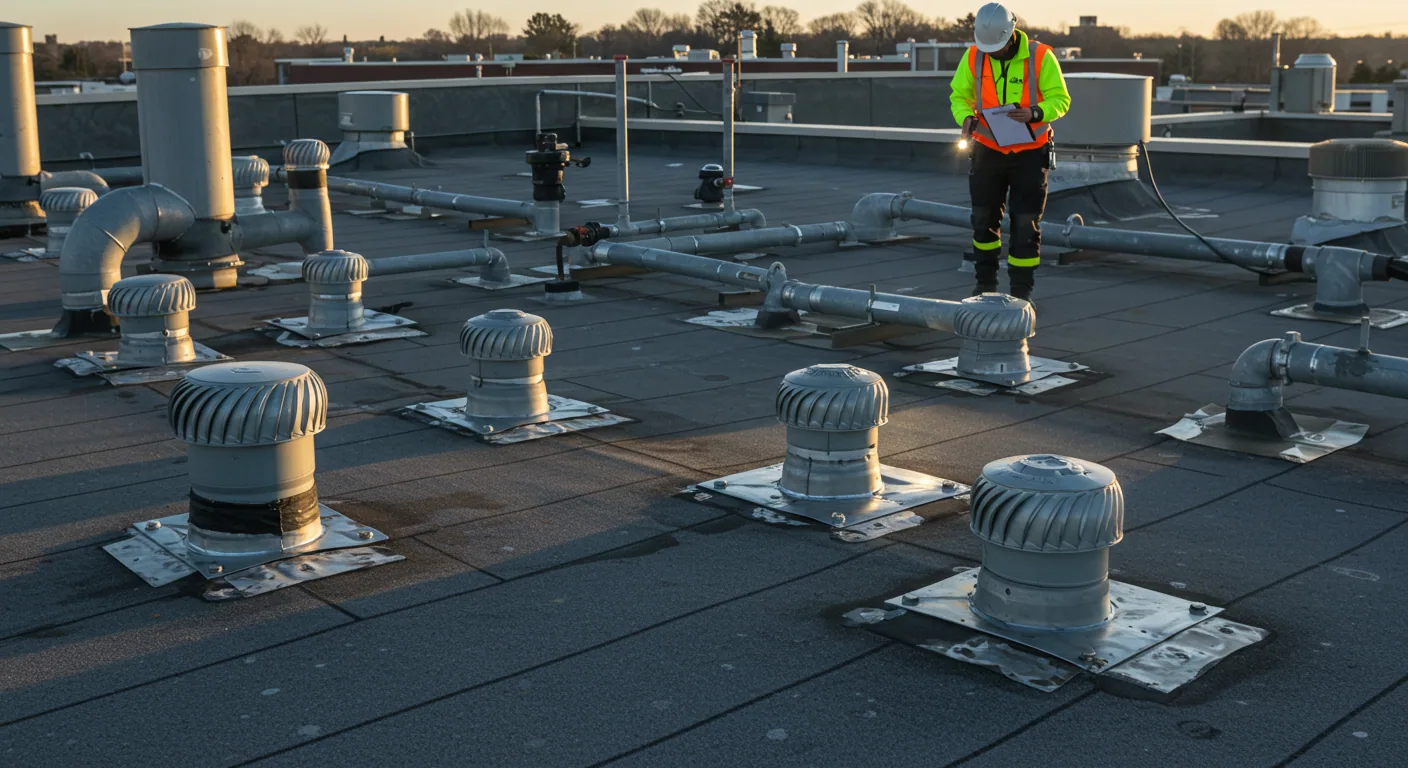
Step one is to map the roof in sections. We mark drains, scuppers, curbs, roof hatches, wall transitions and equipment. Then we photograph the field and the edge conditions before touching a repair. That record gives the owner a way to compare today’s finding with the next visit.

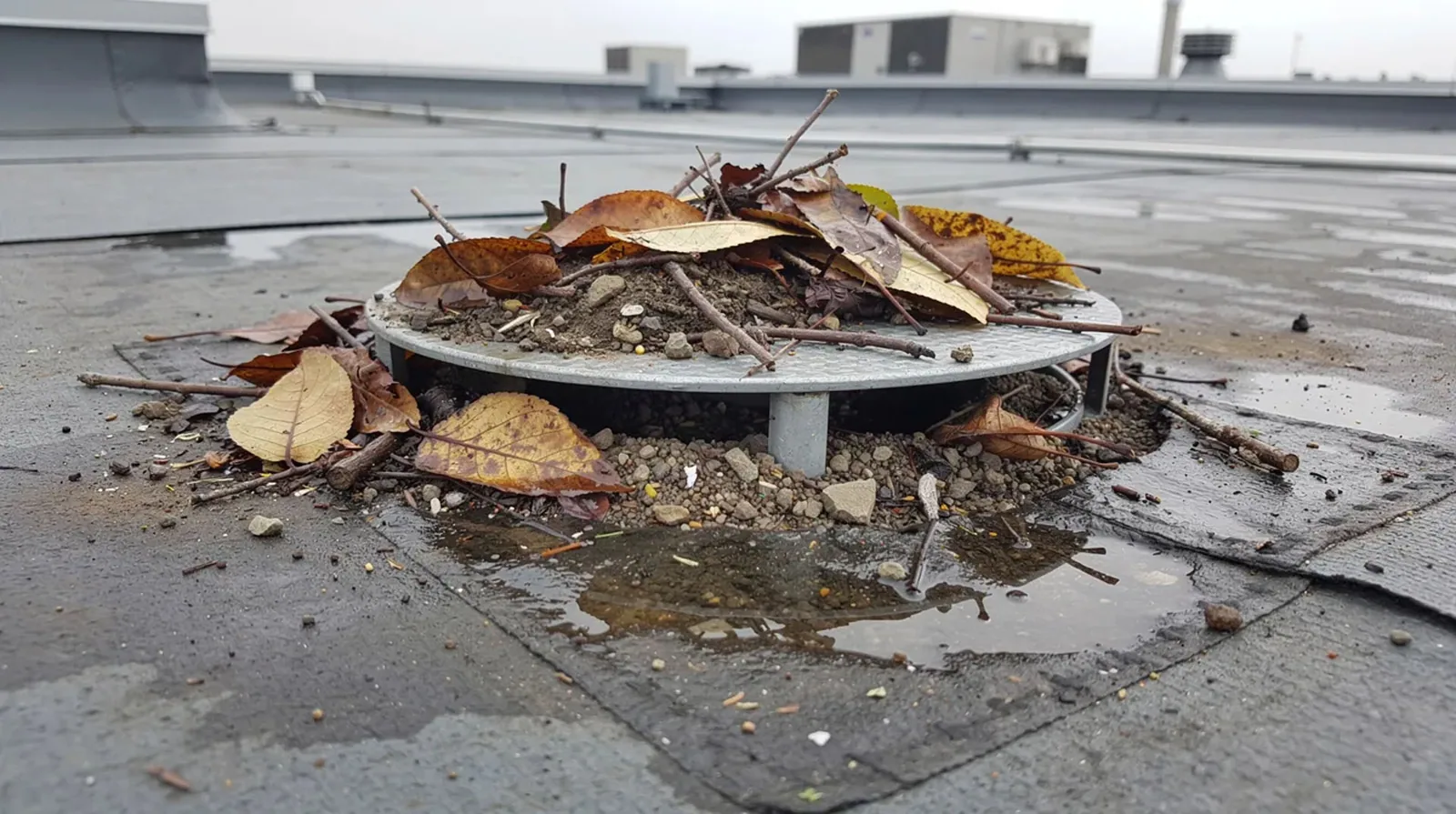
We clear loose debris only where it is safe to do so and observe the drain opening. If water remains, we look for a blocked path, a low area, or a change in slope that keeps the roof wet. We check whether the drain bowl is secure and whether the surrounding flashing is separated. A clean strainer does not prove that the pipe below is clear. A dry roof on inspection day does not erase evidence of ponding after the last storm.

At seams, we look for open laps, wrinkles, punctures and older patches that have pulled away. At a curb, we check the corners and how the flashing turns onto the field membrane. Along the perimeter, we examine edge metal and attachment. If moisture readings suggest wet insulation, we note the limits of the readings and identify where a closer test may help. A commercial roof inspection should leave the manager with findings that point to the next decision, not a list of unexplained defects.

Choose the repair the assembly can support

Choose the repair the assembly can support

A small repair can be the right answer when damage is isolated and the surrounding roof remains sound. We prepare the area, use a compatible material and close the leak path at its source. The roof leak repair scope should say which seam, flashing or penetration was repaired and what nearby condition was checked.

More than one wet area changes the conversation. Wet insulation, recurring leaks, loose attachment or widespread surface wear can make a series of patches poor value. We compare repair with a larger restoration or replacement by looking at the affected area, existing layers, drainage and remaining serviceable roof. If a new layer is considered, we check height at walls, curbs, hatches and equipment supports. The replacement plan should account for how water will leave each phase while the old system is opened.

Coatings also have limits. The surface must be suitable, clean and dry enough for the specified system. An unstable or wet assembly does not become sound because a new coating covers it. We explain what the roof can support and what still needs investigation.

Keep entrances and occupied rooms in the plan

Work on a commercial roof affects the building below it. Before mobilization, we confirm operating hours, loading schedules, roof access, lift placement and the areas that need protection. A shop entrance, treatment room and loading bay do not carry the same interruption risk. The property manager can help set priorities before crews arrive.

For occupied work, we divide the roof into manageable sections and close each exposed area before the shift ends. The plan identifies where material will be staged, how the crew will reach the work, and who can approve a temporary change if the weather shifts. If interior activity must continue beneath a repair, we discuss dust, noise and access controls before cutting or fastening begins. The occupied-building sequence should fit the building’s actual schedule.

Access also changes with nearby road work. For a property near US 41 and Sunset Lane, confirm the approach and delivery window with the site contact. For a portfolio that also includes Tampa or Town 'n' Country, keep a separate roof log for each building.

Recheck the details after a storm

Recheck the details after a storm

After a summer storm, look for new ceiling marks, loose edge metal, displaced flashing and debris at the drains. Do not walk a wet or wind-damaged roof without safe access and the right protection. A manager can photograph the interior stain and note when it appeared, then arrange an inspection from the roof side.

Before the next wet period, check whether past repairs remain bonded and whether outlets are clear. Look at penetrations where service work may have disturbed the flashing. Keep the before-and-after photographs with the building record. If the repair is under warranty, save the date, scope and product information with the same file. That record helps a future manager tell a new leak from a recurring one.

Storm damage may involve more than one roof detail. We inspect the perimeter, field seams and drainage path before defining a repair. If wind or hail damage is present, a storm-damage assessment documents what we can see and which areas need follow-up. A claim decision belongs to the owner and insurer; the roof findings should be factual and clear.

Routine maintenance is useful when it records real conditions and closes actual defects. A scheduled walk can identify blocked drains, open laps and worn sealant before the next storm tests them. It cannot promise that a roof will never leak. The maintenance plan should record the roof’s current condition, the work completed and the items that remain open.

Commercial Roofing Questions

What should I photograph after finding a ceiling stain?

Take a clear photo of the stain and note the room, date and recent weather. Protect contents if water is active. The roof opening may be away from the ceiling mark, so an inspection should trace the likely path above it.

Can a roof repair be completed while the business stays open?

Often, with planning. The manager and crew set access, deliveries and protected work zones before mobilization. The roof is opened in sections, and exposed areas are closed before the shift ends whenever conditions allow.

How do you decide between repair and replacement?

The deciding factors are how far moisture has spread, whether the surrounding membrane and attachment remain sound, and whether earlier repairs are holding. We record those findings so the owner can compare a defined repair with a larger scope.

Do you inspect roof drains during a leak visit?

Yes. We check the drain opening, the surrounding flashing and the route water takes across the roof. A clear strainer does not confirm that the drain line below is unobstructed.

What should a Lutz roof file include?

Keep a roof plan, dated photographs, inspection findings, repair scopes and available product or warranty records together. Add notes about access changes or interior protection so the next manager can see what was done and why.

Show us where the roof is opening

Send a roof photo or arrange an inspection in Lutz. We will trace the entry point, explain what we find and outline a practical next step for your building.

Request a Roof Assessment   or call 555-555-5555

Call555-555-5555