Storm Damage Roof Repair in Clearwater, FL

Storm damage roof assessment and repair in Clearwater, FL: wind, water and debris damage traced, photographed and fixed after Gulf Coast storms.

Storm damage on a flat roof hides in three places: under the membrane, behind the flashing and inside the insulation. The part you can see from the parking lot is rarely the part that matters.

A torn corner or a stack of displaced gravel is easy to spot. A wet layer of insulation is not. It can sit under a roof that looks whole, soaking up water from a pinhole that opened in the gusts. Weeks later a ceiling tile drops, and the storm gets the blame for a leak that was working the whole time.

A proper storm repair starts with a full assessment of the roof, not a patch on the first thing that shows. Here is how we do it for buildings in Clearwater, FL, and what each stage tells you.

How a storm opens a roof

How a storm opens a roof

Wind is the first force. It lifts edges, peels flashing and tears loose any panel or membrane that was not tightly held. Gusts also throw things: branches, signs, sheet metal, pieces of neighboring roofs. A flying object can puncture a membrane that has stood up to years of sun.

Rain is the second force, and it works through whatever the wind opened. Heavy rain finds a lifted seam in minutes, and insulation under the membrane takes up water like a sponge.

Lightning and hail are the third. In late May and June the Tampa Bay area sees its roughest storms, packing hail, damaging winds and waterspouts. Lightning strikes can scorch a membrane and damage rooftop equipment, and hail leaves bruises that show up as cracks months later.

The reason it matters: each force leaves a different mark, and each mark needs a different repair. We read the marks before we choose the fix.

Two storms, two kinds of damage

The 2024 season showed what Gulf Coast storms can do, and the two big ones were not alike. Hurricane Helene in September pushed a record surge onto Clearwater Beach, 6.67 feet above MHHW, but its peak gust at the beach gauge was 73 mph. Surge is a ground-level force. It rises around buildings at Clearwater Beach and along the coast, and needs an investigation separate from wind-related roof entry.

Hurricane Milton followed in October and went after the roofs. Gusts reached 101 mph in places, and rainfall in parts of the county passed 18 inches. Milton partially ripped the roof off Tropicana Field, and it spun up at least 46 confirmed tornadoes across Florida. Tampa Bay's forecast office put out 29 tornado warnings in one day, a record for that office.

For an owner, the lesson is simple. A surge works from the ground up. A wind event works on the roof itself. If your building saw either storm, the roof deserves a look, because a roof can carry hidden damage long after the clean-up ends. Our work after a hurricane follows the same order every time.

Signs the storm got in

Signs the storm got in

Some signs show up fast. Others take weeks. Here is what to look for after a storm:

  • Ceiling stains, drips or bubbling paint, especially below a roof edge or a curb.
  • Membrane that looks puffed, creased or lifted near corners and walls.
  • Gravel, flashing, coping or edge metal on the ground, in the parking lot or in the gutters.
  • Rooftop units shifted on their curbs, with disturbed seals around them.
  • Standing water that was not there before, which can mean insulation has crushed or a drain has failed.
  • A damp smell, or musty air near an exterior wall.

Photograph anything you find, with the date visible if possible. Photos taken right after the storm are the best evidence of what the storm did and what was already there.

Assess first, then repair

Step one is a safe survey. Wet roofs are slick and damaged decks can give way, so we check the structure before we walk it. Then we work from the edges inward, because that is where wind does its first damage.

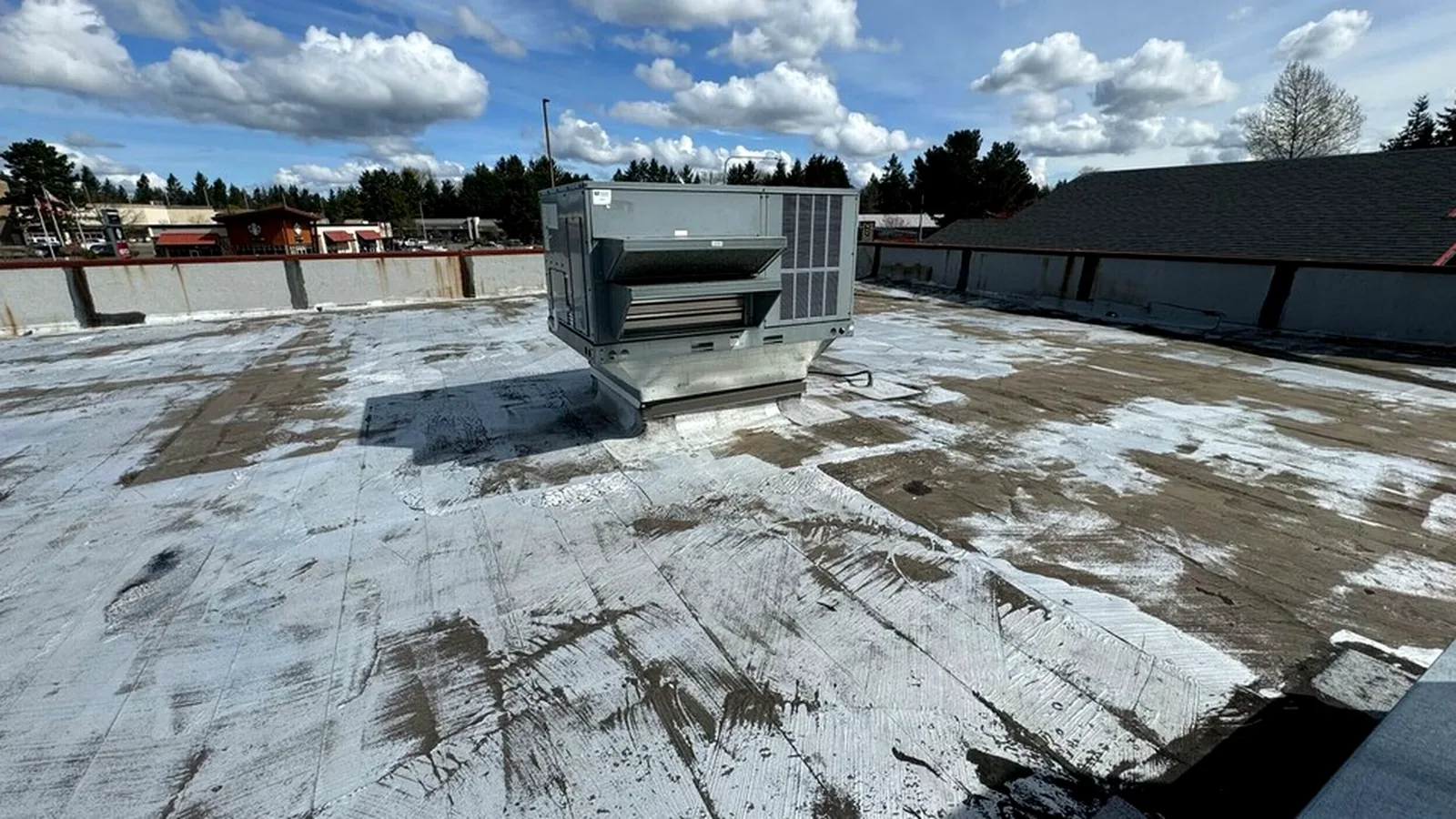
Step two is a damage map. Every defect gets a photo and a location on a roof plan, with an observed damage description and any supported cause. Uncertain timing or cause stays identified as unresolved. For wet insulation we use moisture meters or an infrared scan, under suitable conditions, with appropriate confirmation of suspect patterns.

Step three is the temporary fix when needed. Suitable covering or patches can limit exposure when safe access and attachment permit. We explain the protection limits and checks still required. That is the work of emergency roof repair, and it buys time for the permanent plan.

Step four is the permanent repair, done to the existing system. We replace torn membrane, reset flashing, refasten edge metal, swap out wet insulation and reseal penetrations. The result is documented in photos, so you can show an insurer or a lender exactly what changed. When the damage is part of a claim, our claim documentation follows the same record.

Make the next one cheaper

Make the next one cheaper

Storm damage often grows from weak points that already existed. A loose coping joint, an old sealant bead or a clogged drain turn a gust into a loss. An inspection before the season finds those. A short list of steps before a storm helps further.

  • Clear the drains, scuppers and gutters so rain leaves the roof quickly.
  • Secure loose equipment, covers and hatches.
  • Remove loose items from the roof surface, including leftover materials.
  • Photograph the roof so you have a before record.

A permanent correction needs the applicable design and permit requirements established for its scope. The condition of the existing assembly is checked before the new connection is specified. Our wind damage repair addresses the opened detail and related components, including loose connections discovered nearby. A repaired edge still needs the required materials and attachment; a general wind figure cannot define that construction by itself.

Hotels on the beach and hospital campuses carry the highest stakes, because water entry can affect occupied spaces and require operational restrictions. Owners of hotel roofs and other beachfront properties need inspections scheduled with their actual condition and operating constraints in view.

North county storms

The northern end of Pinellas County gets its own weather. Summers in Tarpon Springs are hot and humid, with frequent afternoon thunderstorms that sometimes bring hail and even tornadoes or waterspouts off the Gulf. A roof there takes the same wind, water and impact damage described above, with local inspection needs following severe weather. Buildings near the Sponge Docks and along US 19 should be walked after any severe storm, not just a named one.

Commercial Roofing Questions

Can storm damage show up weeks after the storm?

It can. Wind may open a seam or crack a flashing without letting in much water on day one. Insulation under it then soaks up moisture slowly, and the first stain arrives after the next several rains. A roof walk soon after the storm catches this early.

How do I tell storm damage from old wear?

Damage patterns, event timing and earlier records guide comparison. Wear can be uneven, and displacement can have several causes. We describe supported findings and avoid assigning a storm date from appearance alone.

Should I wait for the adjuster before any repair?

Do not wait to protect the building. Emergency steps that stop more water are expected and reasonable. Take photos first, save receipts for temporary work, and hold off on permanent work until the damage is documented.

Will the whole roof need replacing?

Not by default. A roof with local damage and a sound field often needs targeted repair. If wet insulation spreads across large areas, or the membrane is torn through most of the field, replacement becomes the better plan. The survey draws that line.

What goes into your damage report?

A roof plan with each defect located and numbered, close-up photos, the likely cause of each one, and a rating of urgent, soon or watch. It reads like a map, so an owner, an insurer or a lender can follow it without us in the room.

Send storm photos or book a roof walk

Send photos of the damage or book an inspection after the storm. We will map what we find, show you each item, and explain what fixes it. Call any day of the week.

Request a Roof Assessment   or call 555-555-5555

Call555-555-5555