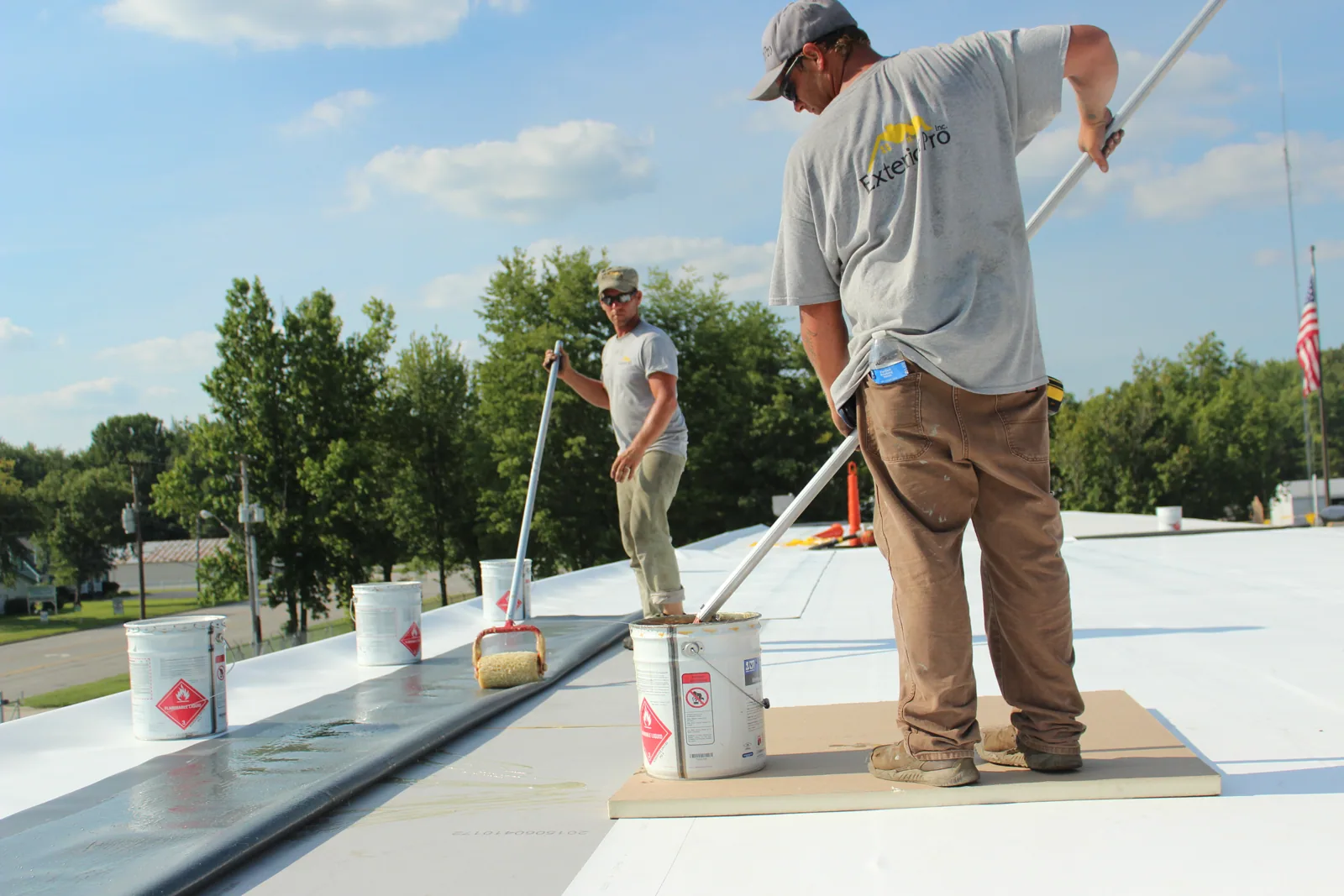
Edge Metal, Coping and Gutters in Clearwater, FL

Edge metal, coping, gutter and downspout repair in Clearwater, FL: loose joints, rusted cleats and failed sealant corrected before the next storm.

Edge metal protects a roof termination and resists wind at the perimeter. A loose piece can expose the membrane connection behind it, so its support and attachment need inspection.

A building owner rarely thinks about a strip of bent sheet metal. It sits at the very top of the wall, out of sight, and it looks the same for years. Then one gust finds a loose joint and the strip is in the parking lot. The membrane it was pinning is next.

In Clearwater, FL, salt air, sun and storm gusts all work on that strip every year. Here is what edge metal does, how coping and gutters fit in, and how we restore each one before the next gust tests it.

A clamp, not a trim

A clamp, not a trim

Think of edge metal as a clamp. It is not decoration. The metal pins the membrane at the roof's last inch and shields the wall below from water. The required connections depend on the selected edge profile. We inspect its cleats, fasteners, backing and membrane transition against the assembly requirements.

Each part has its own weakness. Fascia and drip edge hang on fasteners that rust. Coping caps on parapet walls sit on a joint, and the joint is sealed with a bead that dries and splits. Continuous cleats hold the front lip of the metal, and when the cleat corrodes the metal swings loose. Gutters and downspouts collect everything that runs off, so they fail from the inside, with debris and rust.

The reason it matters is the chain that follows. Once metal loosens, the membrane edge lifts, water enters behind it, and the wall below stains and rots. The repair that costs little at the metal stage costs much more at the roof stage.

Signs at the perimeter

Walk the building from the outside. Here is what to look for:

  • Gaps or waves along a coping cap, or a cap that rocks when pushed.
  • Dark streaks on the wall under a joint, where water leaves the metal.
  • Rust blooms at fasteners and cleats, especially at corners.
  • Open or sagging joints between pieces of metal, with the sealant cracked or missing.
  • Gutters pulled away from the fascia, or sections that hold water after a rain.
  • Downspouts that dump water against the wall, or with elbows knocked loose.

None of these can be judged from a photo of the whole building. Close-up pictures of each joint and fastener work well, and we can start with those.

Salt, sun and gusts

Salt, sun and gusts

Salt hangs in the air all over Pinellas County, a peninsula ringed by Gulf and bay. Salt speeds up corrosion on galvanized steel, fasteners and thin aluminum. At Clearwater Beach, where high-end hotels and condos line the Beach Walk and the Sandpearl resort sits among them, coastal exposure makes accessible metal connections worth checking for corrosion.

Sun adds to it. Metal moves with temperature. Afternoons in the low 90s stretch it, cooler nights pull it back, and the cycle runs daily all summer. We check for loose attachment and splitting sealant under that movement. Add the wet season, from about May 25 to October 10, with frequent rainfall testing open connections.

Then come the gusts. Milton's October 2024 gusts topped 100 mph in places, and the storm stripped much of the translucent membrane from the Tropicana Field roof. Even a smaller storm will find a loose edge and use it. Offices along Ulmerton Road in the Gateway area and the strip centers on US 19 need their own review of perimeter geometry and attachment.

Test, repair, replace

Step one is a hands-on test. We examine accessible metal, cleats, fasteners and joints using a controlled inspection method. We avoid forcing a loose or deteriorated component in a way that creates another hazard.

The repair operations follow the inspected damage, including:

  • Reseal open joints and replace failed sealant with a compatible product.
  • Replace corroded fasteners with the right type for the metal.
  • Add or replace cleats where the front lip has loosened.
  • Reset or replace coping sections that have shifted or distorted.
  • Rebuild the edge in a new profile when the old metal has corroded through.

Edge systems are tested and rated for wind resistance. The ANSI/SPRI ES-1 standard describes how edge metal is tested, and a replacement should match the rating the building needs. We choose profile, gauge and fastening to suit the building, then flash the membrane into the new metal.

These repairs often travel with other work. A loose edge is a common flashing failure, and wind that lifted one section often loosened its neighbors. Our wind damage repair starts at the perimeter for that reason.

Gutters and downspouts

Gutters and downspouts

A gutter that cannot carry the rain turns into a hazard. On commercial buildings it may be a box gutter built into the roof edge, a half-round hung from the fascia, or a scupper that feeds a conductor head and downspout. Each has the same enemy: debris and weight.

Milton's downpour topped a foot and a half in parts of the county. Even a normal afternoon in July pushes a lot of water through a gutter in a short time. A section that sags or a joint that leaks sends that water down the wall. We check slope, hangers, joints and outlets, and make sure each downspout empties away from the foundation.

Gutters join the drainage system. When we correct a downspout, we check the rest of the path. Roof drains and scuppers upstream decide how much water the gutter has to take.

Permits and planning

A building permit is required in the City of Clearwater for installing or replacing any roofing component. The application must include a Product Approval specification sheet listing all the exterior products, and edge metal belongs on that list. We prepare the scope with the metal, fasteners and sealants named, so the sheet matches the work.

Timing matters too. A fall check, once the wet season has ended, finds what the summer loosened. A spring check, before it starts, tightens the perimeter for the next round. After a named storm, a quick perimeter walk catches shifted metal before it becomes a leak. The pattern repeats: the first section lifts, then the next.

Edge metal is part of a storm damage assessment, and it also belongs on an ordinary maintenance visit. Metal roofs, including standing seam metal roofs, depend on their own trim and closures in the same way.

Commercial Roofing Questions

How do you test coping without taking it off?

We examine accessible attachment, joint gaps and water marks, checking movement only where it is safe. Loose components or concealed deterioration may need further opening before the support condition is established.

Is coping replacement just cosmetic?

Not at all. Coping caps the top of the wall, and a failed cap lets water into the wall and behind the membrane. The repair protects the building envelope as well as the roof edge.

What size gutter does a commercial building need?

Size follows the roof area that drains into it and the rainfall rate for the site. The design uses the applicable rainfall basis, tributary roof area and outlet arrangement, with other drainage requirements reviewed for the project.

Does an edge repair need a permit in Clearwater?

The city requires a permit for installing or replacing any roofing component, with a Product Approval sheet listing the exterior products. Small sealant repairs sit differently from new metal, and we confirm the scope with the city before starting.

Can new edge metal go on without a new roof?

In many cases. We can replace edge metal on a sound roof, flash the membrane into the new profile and seal the joints. The membrane near the edge has to be in good shape, so we check that before we commit.
Send photos of the edge

Send close-up photos of any loose metal, rusted fasteners or stained walls, or book an inspection. We will test the perimeter, show you what we find, and explain the repair. Call any day of the week.

Request a Roof Assessment   or call 555-555-5555

Call555-555-5555