Skylight, Curb and Penetration Flashing in Clearwater, FL

Skylight, curb and penetration flashing repair in Clearwater, FL: pipe boots, pitch pockets and skylight joints resealed against heat, UV and rain.

A skylight drip needs investigation of the glazing, frame and roof connection. That meeting line is a joint, and joints are where flat roofs fail.

A roof field is a single sheet, welded or bonded across a wide area. A skylight, a vent stack or a conduit run breaks that sheet. The membrane must turn up the side of the penetration, seal at the top and shed water around the sides. Every one of those steps relies on flashing, which is made of small pieces that move, shrink and age.

For buildings in Clearwater, FL, sun and storms test those small pieces from May through October. Here is how penetrations fail, how to spot trouble early, and what a proper fix looks like.

The joint is the leak

The joint is the leak

Flashing fails in a few predictable ways. Heat cooks the rubber of a pipe boot until it cracks around the collar. Sealant in a pitch pocket, a small pan filled around a pipe, shrinks as it dries and pulls away from the metal. Membrane turned up a curb loses its bond at the corners, where the material is stretched tight. Termination bars lose their fasteners, and the top edge of the flashing opens.

Each failure is small, and each leaks on the first hard rain. Water enters at the base, runs along the deck, and drips at some other point. A ceiling stain across the room from the skylight is common. The leak and the stain are not neighbors.

Why it matters: a penetration is an opening in a waterproof system. Every opening is only as good as its flashing. The more openings a roof has, the more joints it must keep sealed.

Count the holes

Start by counting what goes through your roof. The list is often longer than the drawings show. Here is what to look for:

  • Plumbing vents and exhaust pipes, with rubber boots or metal collars.
  • Conduit, gas lines and refrigerant lines running through the membrane.
  • Equipment curbs for air handlers, fans and hatches.
  • Skylights and smoke vents, with their own curbs.
  • Old penetrations left behind by tenants and other trades, now capped or abandoned.

Now check each one. Cracked rubber or sealant is a warning. So are gaps at the top edge of the flashing and rust on the metal. Surface stains identify runoff or deposits worth checking; they do not establish that water entered the assembly.

Morton Plant Hospital has pavilions from different building periods. We map the current penetrations and identify their actual details before defining the roof scope. Manufacturing buildings, in a county with the third largest manufacturing employment base in Florida, often carry exhaust and process stacks that add to the list.

Leak or condensation

Leak or condensation

Not every drip under a skylight is a leak. In a humid climate, a cold skylight frame in an air-conditioned building collects moisture on its inner surface, and the drops fall as if the roof were open. Here is how to tell them apart.

  • Drips that appear on dry, humid days point to condensation.
  • Drips that start during or just after rain point to a leak.
  • Staining along the curb or the framing, on the inside, points to flashing.
  • Water at the glazing needs inspection of the seal and possible condensation; drip position alone cannot identify the cause.

A true leak needs a repair at the curb, the glazing or the flashing. Condensation needs better air control, a thermal break or a different glazing. Telling the two apart saves money. Commercial roof leak repair begins with exactly that question.

Skylights are a real part of the local building mix. Countryside Mall, for example, got new skylights in a 2009 renovation, so accessible skylight connections belong in a roof inspection.

Three levels of fix

The repair matches the damage. We use three levels.

Level one is a reseal. We clean the joint, remove failed sealant and apply a compatible product. This can suit a failed sealant connection where the adjoining material remains sound. A cracked boot may require replacement rather than surface sealant.

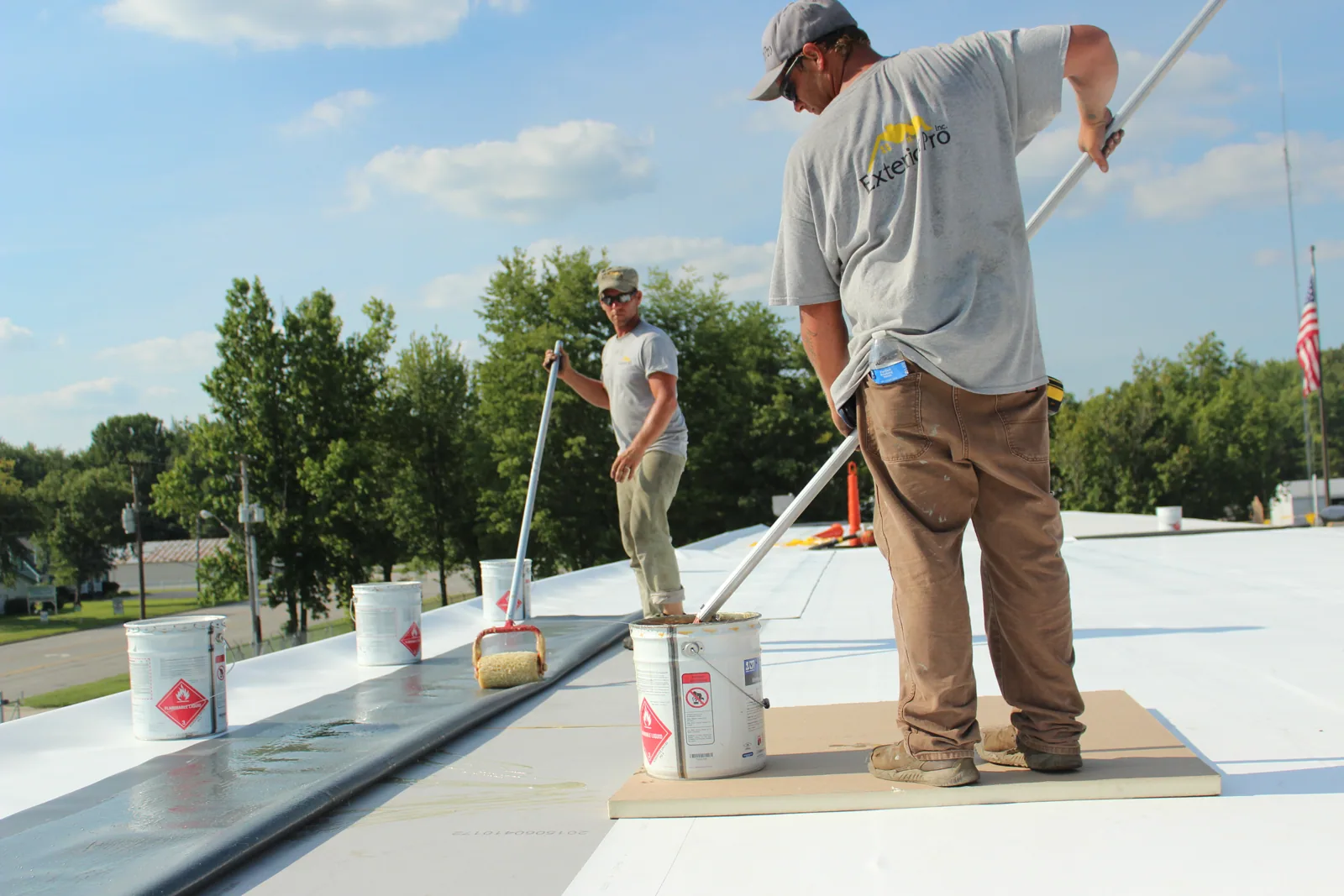
Level two is a re-flash. We cut out the old flashing and build a new one: fresh membrane up the curb, a reinforced corner, a termination bar with new fasteners and sealant at the top edge. We often use a liquid-applied flashing resin, which flows around odd shapes and cures into a continuous joint.

Level three is a rebuild. If a curb has rotted, a skylight frame has cracked or the glazing has failed, we replace the unit or the curb and flash it from scratch.

Penetrations that are no longer used are better removed than sealed. We cut out abandoned pipes, patch the deck and close the roof. Equipment that stays gets a proper equipment curb or support. Every fix ends with photos from the same angle as the before shots.

Sun, hail and a daily soaking

Sun, hail and a daily soaking

Flashing endures a harsh cycle in Pinellas County. Through the summer, Tampa Bay summer highs reach the low 90s and a dark membrane surface runs hotter still, so rubber boots and sealants bake. Then an afternoon thunderstorm cools them in minutes. The cycle repeats nearly every day of the rainy season, which runs from about May 25 to October 10.

Hail is part of the picture. The worst Tampa Bay storms cluster in late May and June, with hail, damaging winds and waterspouts, and hail can crack plastic skylight domes and dent metal collars. Lightning is a fixture of the Tampa Bay summer, so rooftop equipment sits under some of the busiest sky on the continent.

All that traffic adds up. Every service visit to a rooftop unit is a chance for a boot to be stepped on or a sealant bead to be nicked. A flashing failure often traces to a visit from another trade.

New holes, done right

Roofs change. A tenant adds an exhaust fan, a technician runs new conduit, a hospital upgrades its air handling. Each change cuts a hole. The cut is only the first step.

A new penetration needs flashing before the trade leaves, not after the first leak. We can flash new work at the time it goes in, or inspect it on a regular visit. Buildings that swap equipment as their needs change, such as hospital roofs and manufacturing plants, gain the most from a flashing check each season.

A calendar visit through preventive roof maintenance includes a close look at every boot, curb and skylight. Cost follows the number of penetrations, how many need more than a reseal, and how hard they are to reach. A building with many openings, like the mall in Countryside, simply takes longer to walk, and the visit is priced by the count.

Commercial Roofing Questions

How can I tell a leaking skylight from condensation?

Timing is the clue. Drips on dry, humid days are usually condensation on a cold frame. Drips during rain warrant inspection of exterior entry paths. We compare timing, glazing, flashing and suitable tests before assigning the cause.

Should the skylight be replaced, or only re-flashed?

Re-flash when the glazing is sound and the curb is solid. Replace the unit when glazing material has deteriorated, the frame has cracked, or the seals have failed. We inspect the unit before we price either option.

Why do pipe boots fail so often?

Rubber meets sun every day. Ultraviolet light and heat dry it out, the collar cracks, and water follows the pipe down. The fix is quick, which is why boots are the first thing to check.

What is a pitch pocket, and should I worry about it?

It is a small metal pan filled with sealant around a penetration, used where flashing is awkward. The sealant shrinks and cracks over time. Pockets need checking each season and often convert to liquid-applied flashing.

Who flashes a hole another trade cuts?

The best answer is the roofer, at the time of the cut. We flash new penetrations so the water seal stays under one set of hands. If a trade has already left, we repair the opening and log it.

Send photos of the penetration

Send photos of any boot, curb, skylight or stained ceiling, or book an inspection. We will trace the water, show you what we see, and explain the fix. Call any day of the week.

Request a Roof Assessment   or call 555-555-5555

Call555-555-5555