Johns Manville Roofing in Clearwater, FL

Johns Manville roof work in Clearwater evaluates single-ply and bituminous systems. We check damaged layers, explain repair choices and plan the work sequence.

A bituminous roof can leak at a lap that has separated beside a raised flashing. The field remains layered and substantial, but the connection is open. Rain reaches the gap and then the materials beneath it. A coating across the top does not automatically rebuild that failed connection.

Johns Manville roofing in Clearwater, FL includes evaluation of single-ply and bituminous systems. Johns Manville supplies TPO, PVC and EPDM roofing along with asphalt-based assemblies. We identify the actual construction before choosing a repair process. The manufacturer's product range does not establish what is installed on your building.

We inspect the roof layers and accessible details, then explain what the findings support. The scope distinguishes a surface connection repair from removal of damaged insulation or supporting material. That distinction gives the property manager a clearer basis for comparing a limited correction with broader renewal.

Inspect the lap and flashing together

Inspect the lap and flashing together

An asphalt lap may fail where preparation, attachment or surrounding material is deficient. We examine the accessible connection and previous patches before selecting the repair. The finished surface can conceal an unsuitable bond, so appearance alone is not a sufficient acceptance check.

For modified bitumen roof repairs, the joining method and flashing components need to suit the existing assembly. Different products and installation methods have different requirements. We establish those conditions before pricing work as another layer applied over the affected area.

A built-up roof assembly requires assessment of its layers, surface and connections. Damage near an outlet may involve more than the top surface. We explain where investigation is needed so the repair boundary follows the condition of the roof rather than the visible patch outline.

Identify the alternative assembly

A replacement may involve a different roof material from the existing asphalt system. TPO and PVC use thermoplastic sheet connections, while EPDM uses compatible rubber membrane components. Those differences affect installation and future repair. We describe them in terms of the details on your building.

The proposed assembly includes insulation, attachment, cover board where required and perimeter connections. The supporting deck and applicable building requirements affect the selection. A membrane comparison without those items leaves the work incompletely described.

Where retained layers are proposed, we investigate their suitability and moisture condition. Our recover roof assessment identifies which material can remain and which needs removal. A new single-ply sheet over damaged layers should not be treated as a correction for damage concealed below it.

Match the assembly to the operating building

Match the assembly to the operating building

Clearwater's commercial stock includes the GE manufacturing Center of Excellence and the multi-pavilion Morton Plant Hospital campus. Industrial and care uses place different restrictions on roof work. Neither named facility tells us the roof system on another building; your actual assembly needs inspection.

US 19 serves retail and other commercial properties through Clearwater and nearby communities. At a building along that corridor, the scope may need to coordinate several tenants and equipment connections. We identify roof access and the occupied spaces beneath each work section before proposing a sequence.

For a property in Largo, Ulmerton Road and US 19 provide regional access. Material handling still depends on the site's available unloading area and routes. A layered roof removal can produce substantial handling work, so those arrangements need to be established before delivery.

Separate trapped moisture from ponding

Water on top of the roof and water inside it require different findings. We inspect outlets and runoff paths for the surface problem. Suspect insulation beneath the membrane needs investigation before a replacement boundary is defined. Both can exist in the same area without having the same correction.

Through drain connection and scupper repairs, we address the roof details involved in drainage. A downstream problem may need another trade. Cleaning cannot rebuild a failed flashing or raise a low roof section, so the scope states what the proposed task accomplishes.

Clearwater's summer thundershowers can repeatedly wet a marginal lap. Standing water can also make the surface harder to prepare for repair. We plan installation within suitable conditions and explain any preparatory work needed before the connection can be rebuilt.

Available roof records help identify previous removals and recover layers. We compare them with field observations. Where the record and installed construction differ, we explain the difference before using it as the basis for new material selection or removal quantities.

Explain the construction steps

Explain the construction steps

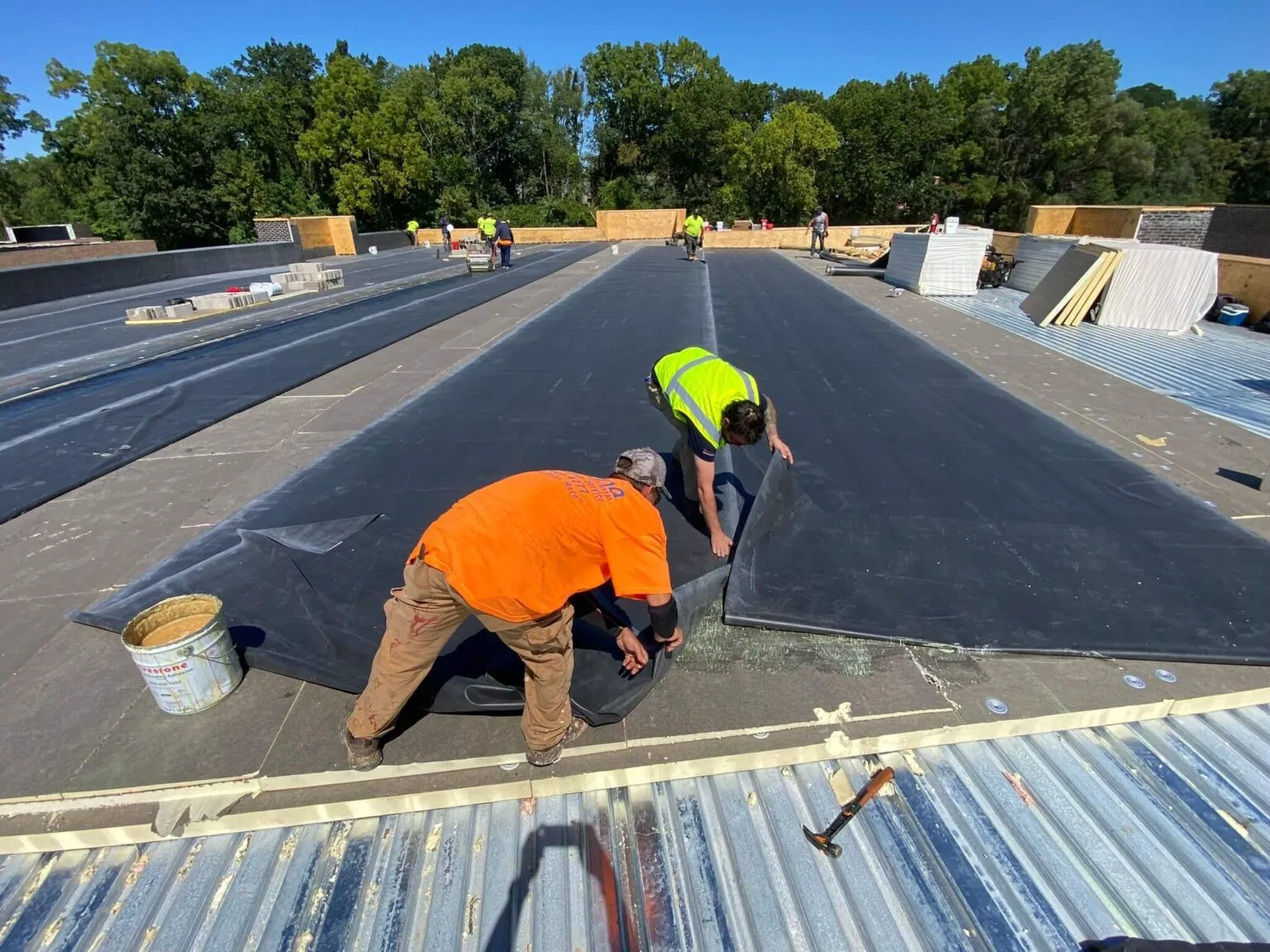
Removing a layered assembly involves noise, disposal and protection below. We describe those steps to building management before setting work periods. An operating facility needs clear information about the areas affected by material movement as well as the location of the roof opening.

Our occupied facility reroofing divides removal into areas that can be rebuilt or protected within available conditions. Intakes and sensitive interiors receive separate coordination. A restricted schedule can change the section size without removing the need for proper daily closure.

Costs reflect damaged layers, supporting repairs, access and equipment changes. We distinguish those drivers from the membrane choice. Selecting an alternative system can change assembly details, but the existing damage and operating requirements still need to be included.

Comparing Soprema bituminous and membrane options or Holcim Elevate systems requires the same complete scope. Product family differences should be considered alongside attachment, drainage and the retained structure. We explain what each assembly would require on the property.

The finished record includes the repaired locations and any sections awaiting future work. Keep it with inspection reports and equipment service information. A returning leak can then be checked against the completed detail instead of prompting another patch based only on the newest ceiling stain.

Older project paperwork can help identify an asphalt-based assembly, but conditions change when later repairs or coatings are added. We inspect laps, cap sheet, flashing and any surface treatment before selecting a compatible repair. If a replacement proposal switches to a single-ply membrane, compare removal, substrate preparation, drainage, perimeter attachment and temporary protection as well as the finished material. The system decision should fit the building and available work window. Where moisture or deck condition remains concealed, the proposal states what needs confirmation before final quantities are set.

Commercial Roofing Questions

Can you repair an asphalt lap without adding a coating over the roof?

A suitable local detail can address a limited lap failure. We inspect surrounding material and damaged layers before choosing that approach. A coating is a separate restoration decision and should not substitute for correcting an open connection.

Does switching to single-ply require every existing layer to come out?

Retained material suitability and applicable assembly requirements determine removal. We investigate moisture and supporting condition before describing a recover option. Unsuitable layers still need correction regardless of the new membrane preference.

A low area stays wet after drain cleaning. What changes in the proposal?

The elevation and assembly need further evaluation. Clearing debris only addresses an obstruction. A slope correction, outlet repair or damaged-layer removal may be required, and we explain which findings support those items.

Why does the removal route affect the roof price?

Material handling adds work independent of the replacement sheet. Height, limited unloading space and occupied routes can require additional setup or a different method. We identify those tasks in the scope so their effect is clear.

Can an overnight leak receive temporary protection before replacement starts?

Emergency roof calls are available after hours and during holidays. We assess access, weather and the affected assembly before immediate measures. Temporary protection is explained separately from the permanent repair or replacement work supported by inspection.

Show us the lap and the roof records

Send safe photographs or book an inspection. We will explain the Johns Manville assembly, damaged layers and practical renewal options.

Request a Roof Assessment   or call 555-555-5555

Call555-555-5555