A local seam repair requires enough time for preparation and proper installation. A larger panel replacement adds lifting, interior separation and closure steps. We compare the task with the operator's available window. Aircraft movements can change the sequence, but they do not reduce the time needed to protect an opened assembly.
For hangar roof replacement, we identify supporting condition and required tie-ins before describing the daily opening. Suspect corrosion or concealed damage can require further investigation. The scope should explain what is known and what needs confirmation before the affected section is rebuilt.
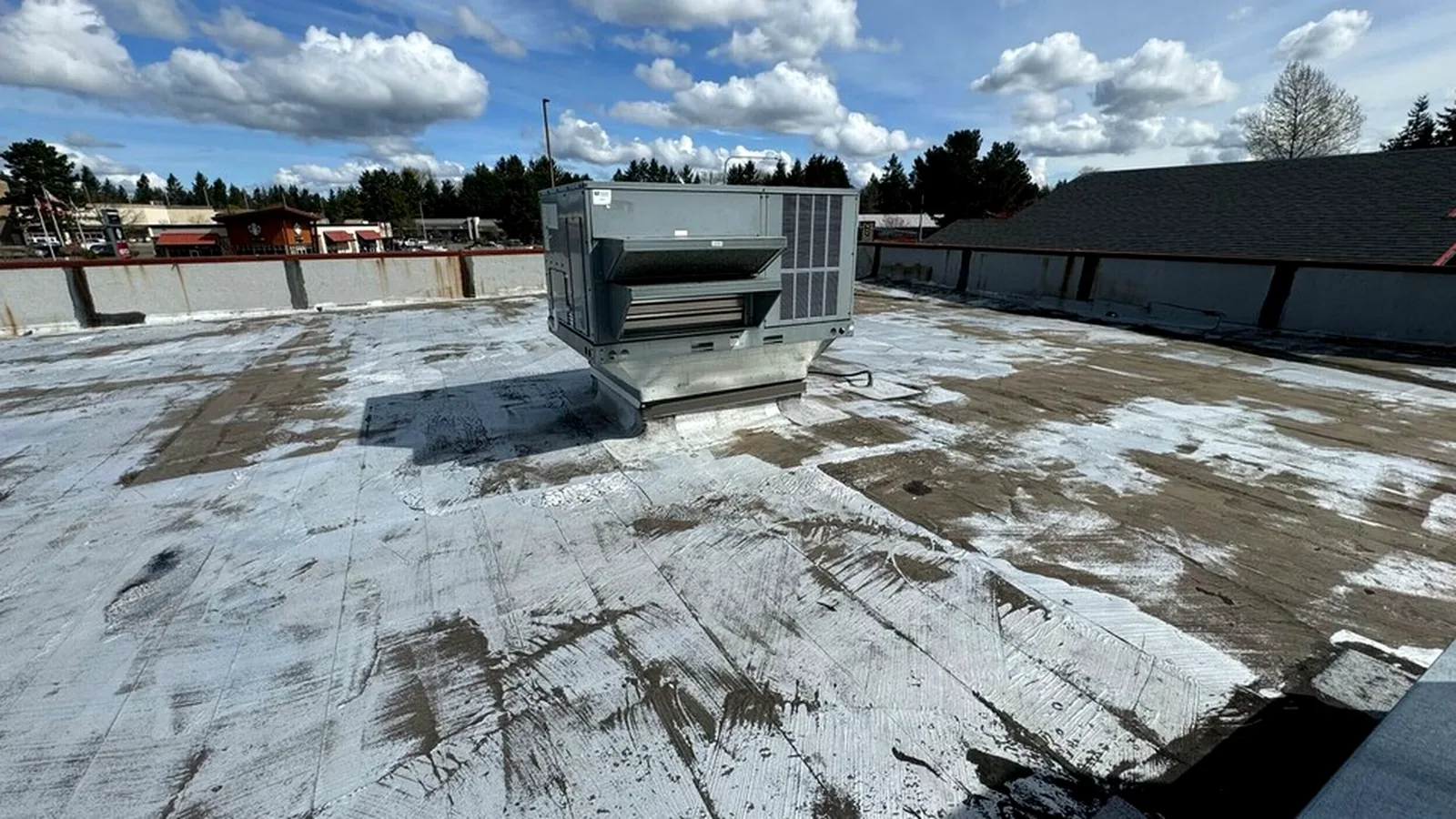
Pricing follows height, lift positioning, material handling, damaged layers and operating restrictions. Equipment that cannot occupy a normal position can change the handling method. We show those access requirements alongside the roof repair so the operator can review the complete task.
Roof records for adjoining parts storage buildings should remain separate. Connected structures can still need coordinated flashing or drainage work. Our written roof findings identify those connections and provide finished repair photographs for comparison after later equipment service or severe weather.
Hangar work needs a deliberate separation between the roof task and movement below it. Before inspection, the facility contact establishes where personnel may travel, what doors or equipment must remain clear and whether an aircraft needs protection or relocation. We then examine panel laps, fasteners, ridge details, gutters and the wall connection without assuming that a leak at a door began at the roof edge. Material lifting and temporary closure are planned for the authorized work window. If a concealed condition requires a wider opening, the scope is paused for approval rather than extending into an area that was not cleared.