College and University Roofing in Clearwater, FL

Flat roof repair and replacement for college and university buildings in Clearwater, FL: lab exhaust, shared buildings, storm risk and term-time work.

A campus leak can appear in one roof section while the next building remains dry. One report may point to a seam, another to flashing around an exhaust stack, and another may follow wind-driven rain. Each location needs its own inspection. Colleges add and alter buildings over time, so the institution's name alone does not identify a roof assembly.

A building-by-building record lets facilities staff compare materials, drainage and current condition without treating the whole campus as one project. We note which sections have active leaks, which need further investigation and which can remain under routine care. Those distinctions help the committee set priorities from physical findings.

For a college property in Clearwater, FL, we map roof sections, mark drains and perimeter details, and review the findings with facilities. The resulting record supports a practical choice among repair, testing or replacement.

Each building keeps its own clock

Each building keeps its own clock

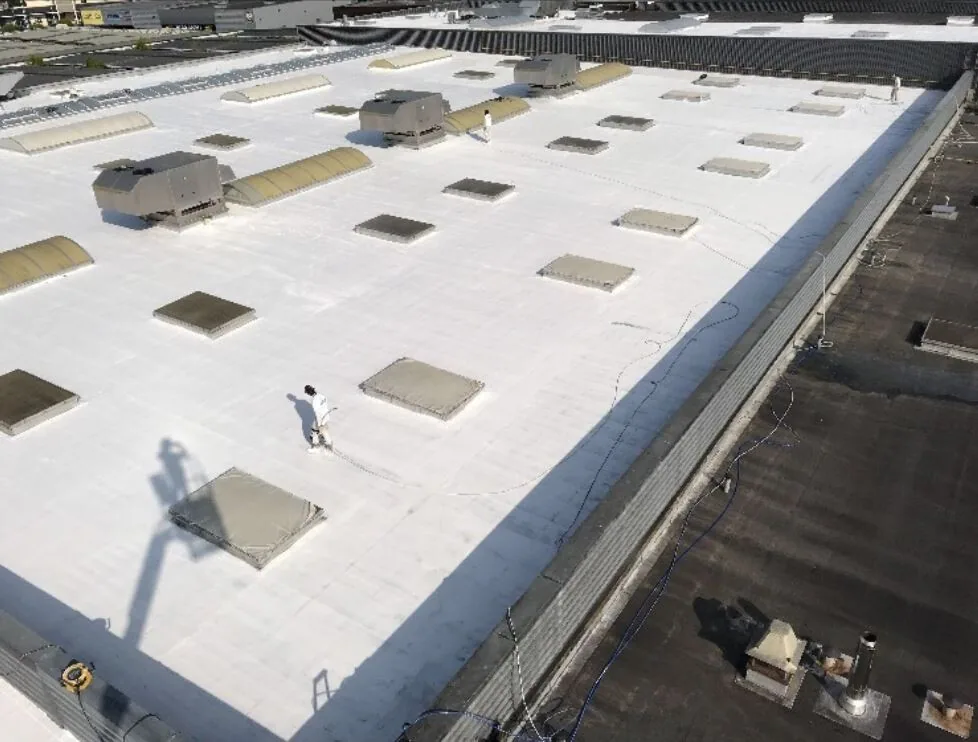
Campus buildings can have different roof layouts. A classroom section may have a broad field and a few drains; a laboratory may add exhausts, pipe supports and frequent service access. Those differences change the inspection map. We examine the membrane and flashing around penetrations, then identify the installed material before selecting a compatible repair.

Some exhaust or process conditions can affect certain roofing materials, so facility staff should identify what each unit serves and any known exposure limits. We also check walking routes where technicians reach rooftop equipment. Our inspection of rooftop equipment curbs and supports records the existing connection and any damage around it.

One building, two owners

Seminole offers a clear example. The St. Petersburg College Seminole campus opened in 1998 across from the Seminole Community Library, and the library is a joint public and college building. A joint building has two sets of interests in one roof. The college wants it dry for students, the public side wants it dry for patrons, and someone has to decide who calls the roofer and who writes the check.

That question is better settled before a leak than after. Where a shared building is involved, we document the roof condition in a form both parties can read. The main arteries into the area are Park Boulevard (SR 694) and Alt US 19, so material deliveries and crane lifts need a traffic plan agreed in advance. A Seminole job is a scheduling problem as much as a roofing one.

Signs inside a lecture hall

Signs inside a lecture hall

On a campus the early signs show up in rooms where nobody expected them. What to look for:

  • Stains near light fixtures, projectors or ceiling speakers. Water and electrical gear is a safety problem, not only a cosmetic one.
  • Dripping in a computer lab, a library stack or a server closet after a storm.
  • Damp carpet along an exterior wall at the top floor.
  • Mildew odor in residence rooms under a flat roof.
  • Roof edges where metal trim has lifted or the sealant has split.
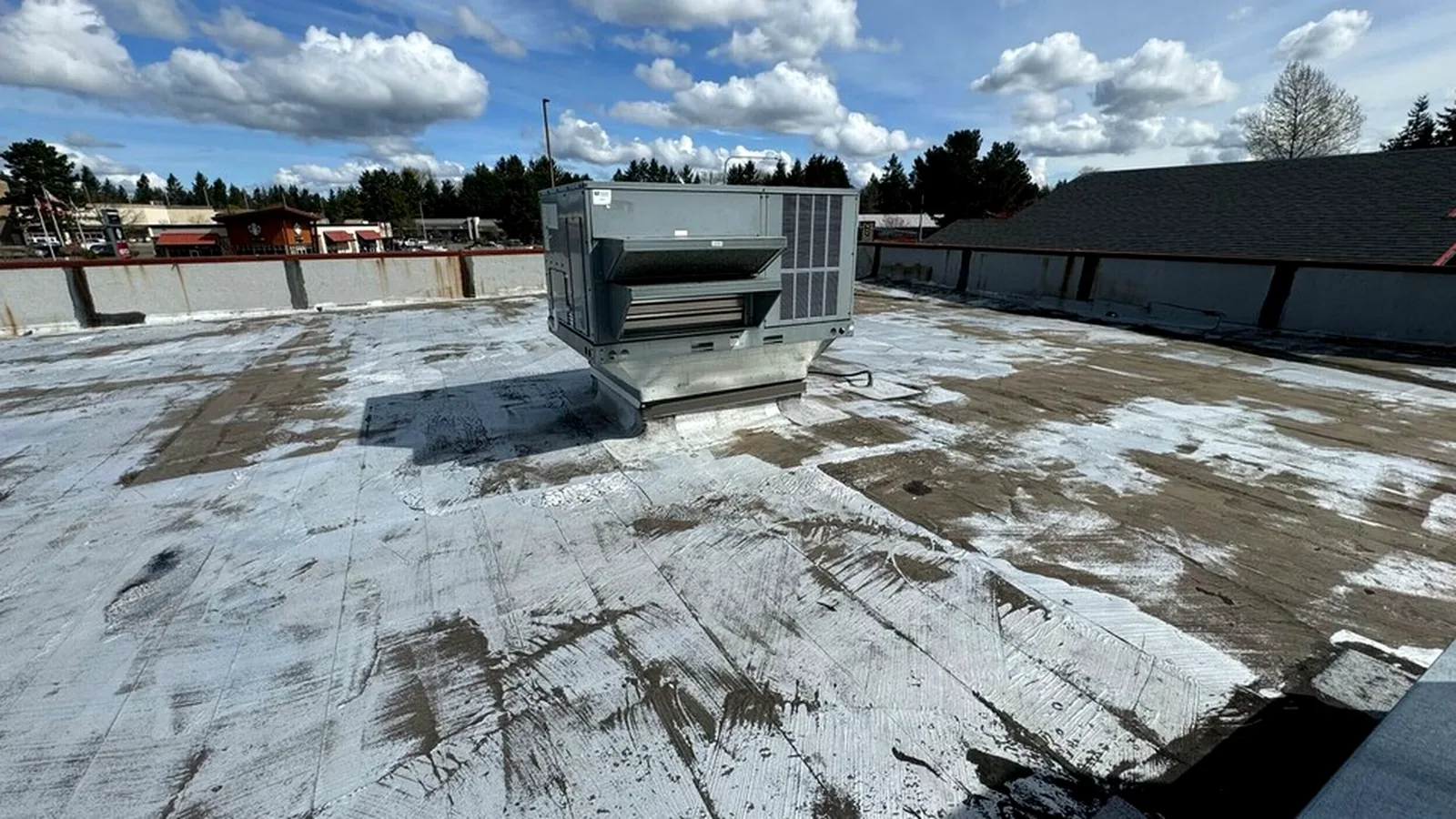
  • Cracked or bulging membrane near rooftop equipment.

Report the room, the date and the weather. That detail helps us trace the water on the roof. An infrared moisture survey can identify temperature patterns needing further investigation under suitable conditions. Confirmatory testing establishes the moisture extent before affected material is included in the removal scope.

A storm that opens a big roof

Tropicana Field in St. Petersburg lost much of its fiberglass roof membrane during Hurricane Milton in October 2024. Repair work there began in July 2025 and finished in April 2026. A stadium is a different building type, so its repair duration does not predict a campus schedule.

The event does show why a storm inspection should check edges, seams, attachment and interior water reports instead of relying on a view from the parking lot. At a college, we inspect each building according to its installed assembly and use, then identify applicable project requirements before developing a repair or replacement scope. Our wind damage roof repair checks the connections that moved and the adjacent material affected.

Working between terms

Working between terms

The academic calendar affects available work periods. Exam weeks, move-in and commencement can restrict noisy tasks or equipment lifts, while summer rain can shorten the work window. We compare those dates with the roof condition and sequence buildings that can be addressed without conflicting campus activities. Each opened area needs a closure plan suited to the forecast and installation method.

The facilities team identifies suitable staging, protects required exits and confirms which air intakes need coordination with mechanical staff. Where campus operations allow, an occupied building reroof can proceed in phases, with unaffected areas kept in use while one section is repaired. We confirm those boundaries with the property contact before materials arrive and revisit the plan if weather changes the safe stopping point.

Where the budget goes

A condition report gives the committee a basis for ranking work: photographs, moisture findings, repair needs and any further investigation required for each roof section. Active entry or damaged attachment may need attention before routine maintenance elsewhere. A dry area with isolated wear may remain in service while staff plans a later project. The findings show what is known today, not a fixed replacement date.

Cost depends on removal depth, penetrations, wet insulation, lifting access and the available work window. We explain those factors separately so facilities can compare buildings on similar assumptions. A roof under warranty may require document review before work begins; roof warranty management keeps those requirements in view. A drone image can help orient a large roof map; a hands-on inspection confirms details that aerial views cannot resolve. Classroom-wing protection has a related task on a school roof, while office-building roof coordination needs its own tenant and entrance plan.

Commercial Roofing Questions

Who handles the roof on a building shared by a college and a public library?

Responsibility starts with the actual joint-use agreement and property arrangements. We document the condition for both parties and describe repairs in plain terms, so the owners can split responsibility without a dispute. Settling it before a leak is far easier than settling it during one.

Can lab exhaust really damage a roof membrane?

Yes, depending on what the equipment emits. Some vapors soften or swell certain membranes, and hot air from a stack can bake the surface around it. We learn what the equipment emits, then choose a membrane and flashing that tolerate it, and we inspect those zones more often than the open field.

How do you keep a roof job from disrupting exams or commencement?

We schedule around the printed academic calendar. Loud work shifts to buildings that are empty that week, and any lift or delivery avoids the days when walkways fill with visitors. Where a roof cannot wait, we work in short sections early in the morning and finish before classes begin.

Is a drone survey enough for a large campus?

A drone sorts roofs and a person confirms them. Images show ponding, damaged edges and equipment problems across many buildings in a day, which helps rank the work. Wet insulation and weak seams still need a hands-on walk or a moisture scan, so we use both.

Do gyms and auditoriums need a different roof than classroom buildings?

Span and occupant count drive that. A gym's span and drainage need assessment rather than an assumption that the middle holds water. Occupancy can affect an auditorium's design criteria, which are established for the project. We size the system and the fastening to the building, not to the neighbor next door.
Send photos or book a campus roof walk

Send photos of the ceiling stains or the roofs, or book an inspection for one building or the whole campus. We will walk the roofs, show you what we see and explain it in plain terms. Call any day of the week, including holidays.

Request a Roof Assessment   or call 555-555-5555

Call555-555-5555