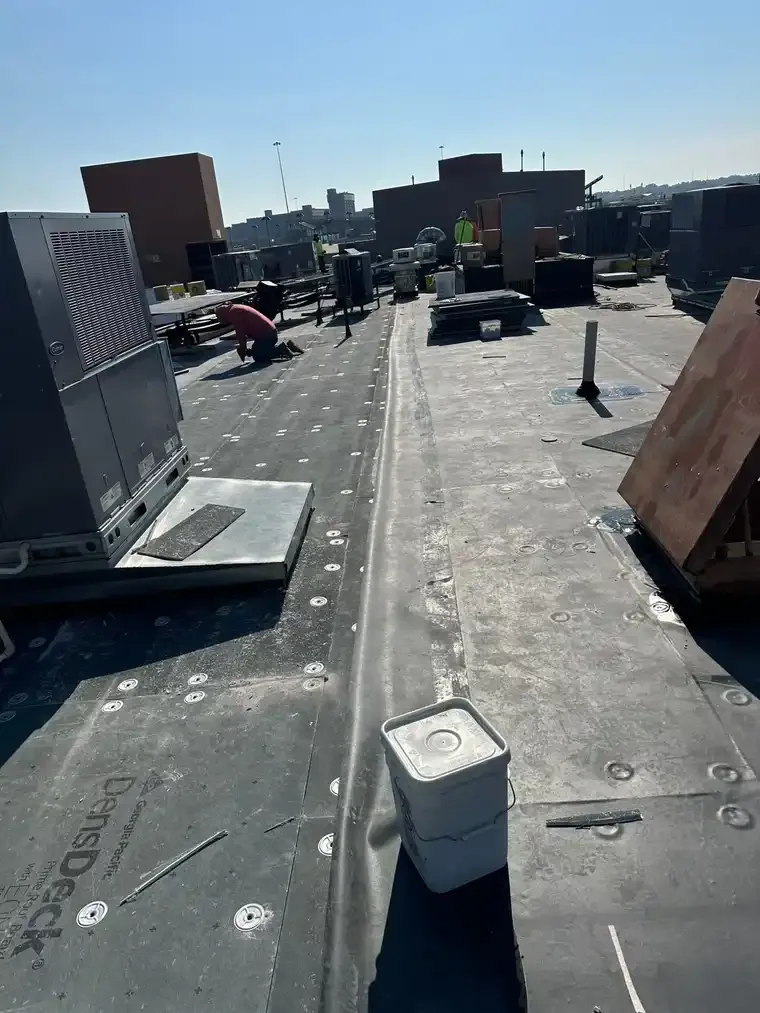
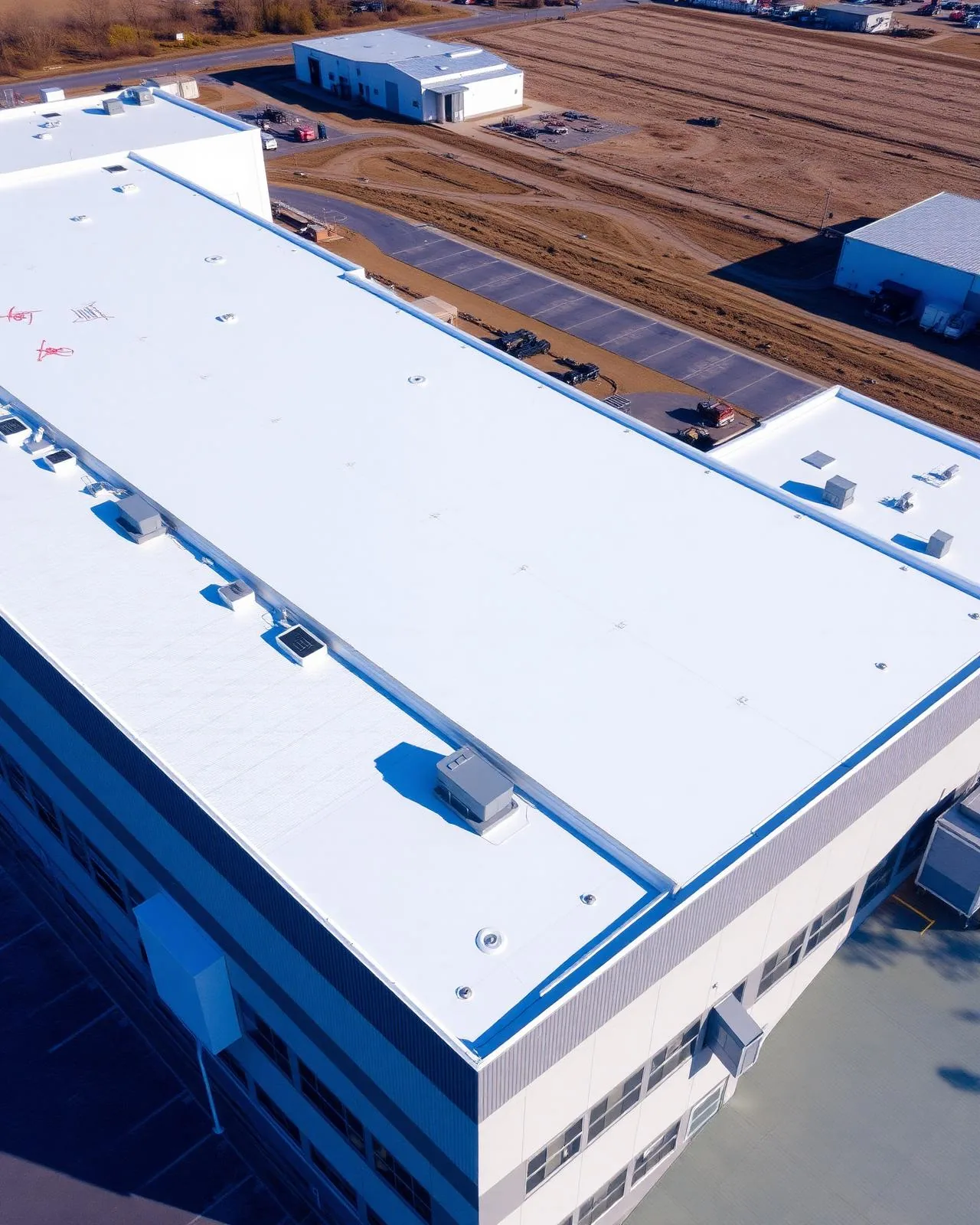
Self-Storage Roofing in Clearwater, FL

Self-storage roof work in Clearwater tracks leaks by unit, checks metal joints and low-slope sections, and plans repairs without blocking customer access.

A storage roof can leak along a fastener line without wetting every unit beneath it. One loose washer lets water past the metal. The water follows framing or insulation before reaching a partition. A tenant reports damaged belongings, but the opening needs to be located on the roof.

Self-storage roofing in Clearwater, FL requires a record of unit locations and roof assemblies. Drive-up buildings can differ from a climate-controlled interior building on the same property. We inspect each affected structure and explain its defects separately. A repair suited to one system may be unsuitable on the next.

Customer access matters throughout that inspection. We coordinate ladders, lifts and material movement with the manager. Occupied units require an agreed access procedure. We do not treat a locked unit as available workspace just because the roofing above it needs attention.

Locate the report by building

Locate the report by building

A useful report includes the building letter, unit number, date and where the water appeared. Photographs can show whether it followed a wall, collected below a roof connection or entered beside a door. The manager keeps those reports together so a line of affected units becomes visible.

During a storage property roof inspection, we compare that pattern with panel joints, fasteners, drains and previous repairs. A series of wet units can share a single exterior defect. Separate reports need investigation before separate patches are specified.

Climate-controlled buildings add equipment and condensate concerns. If water appears while cooling operates during dry weather, the equipment contractor may need to inspect alongside us. Roofing work addresses rain entry and assembly damage. The timing helps identify which other systems need checking before the cause is settled.

Inspect the washer and the lap

An exposed fastener has several working parts. The screw holds the panel, while the washer closes the opening. A deteriorated washer or loose connection can admit rain. We inspect the surrounding metal and supporting material before choosing a replacement. A larger screw is not automatically a suitable correction.

A panel lap needs its own check. Water can enter where overlap details are damaged or an incompatible repair has failed. Our metal roof repair approach accounts for joint movement and the actual panel system. Concealed clips and exposed screws require different inspection points.

Where a broader metal roof retrofit is considered, we evaluate the existing assembly and supporting structure. Added material changes more than appearance. Attachment, drainage, weight and compatibility must be addressed before a recover becomes a practical renewal option.

Protect belongings before opening

Protect belongings before opening

Stored contents can remain close to the underside of the roof. We discuss the affected units before intrusive work begins. The manager arranges customer communication and authorized access. Where interior protection or relocation is needed, that decision comes before the roof section is opened.

Drive aisles need enough room for customers and emergency access. Lift positions and removal routes can temporarily affect unit doors. We identify the closures and their duration by task. A narrow aisle may change material handling even when the roofing repair itself is small.

Similar handling issues arise during roof repairs over stored inventory. Storage units add individual customer permissions to those concerns. Our work schedule identifies which roofs and door approaches are affected so management can provide clear information rather than a property-wide closure notice.

Separate roof water from site water

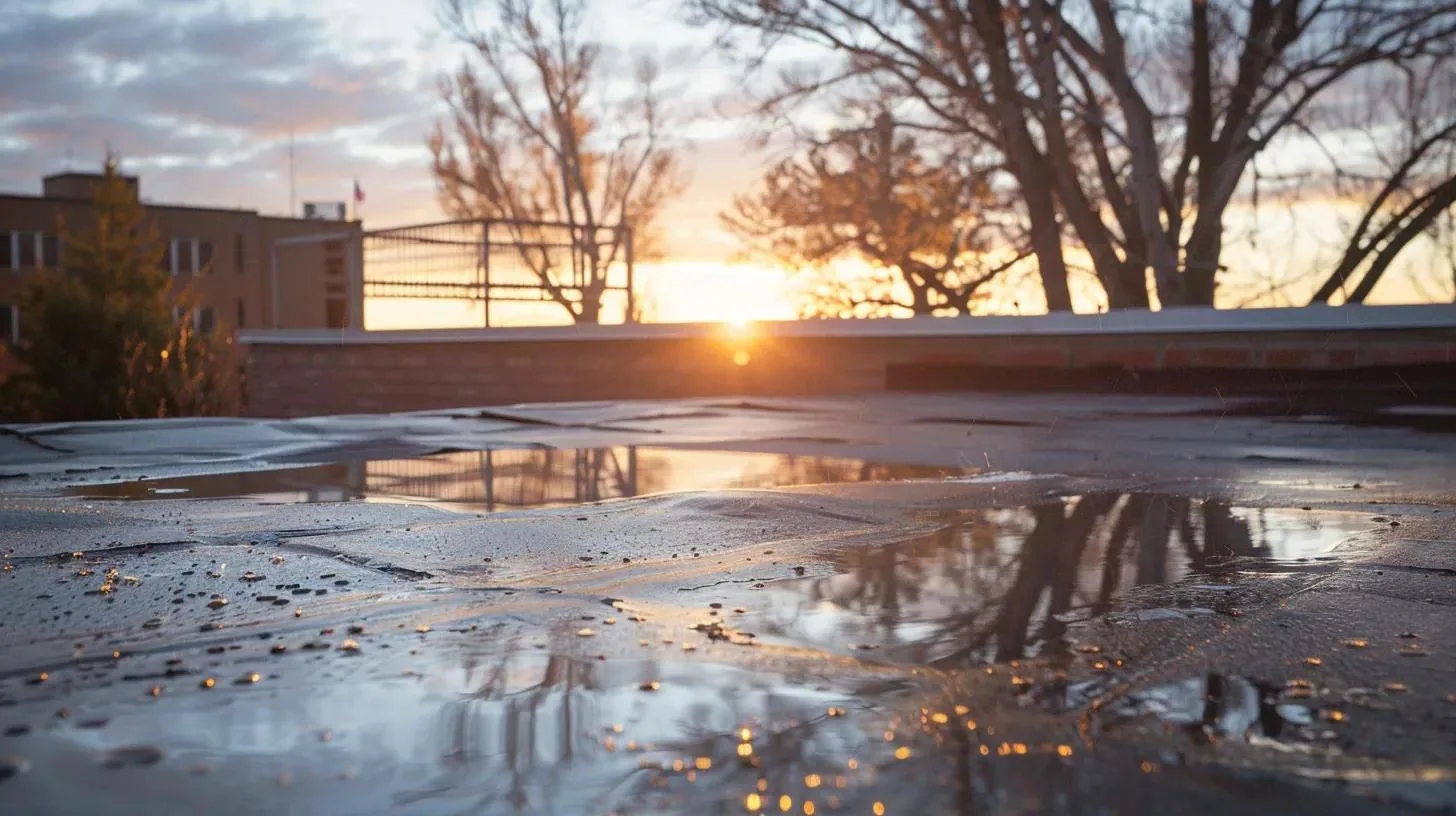
US 19 runs through Clearwater, Largo and Pinellas Park. For a storage property along that commercial corridor, we inspect roof runoff and the discharge point near customer routes. An overflowing gutter can send water toward unit entrances without an opening in the broad roof surface.

Pinellas Park has flat terrain and a history of flooding addressed through drainage canals. Water entering a ground-level storage unit needs its entry route identified. Roofing, gutter discharge and water arriving across the site are different problems. Roof repairs alone cannot correct every source of water at a door.

Clearwater's summer thundershowers repeatedly test those routes. We look for clogged outlets, damaged gutters and runoff concentrated onto adjoining roofs. Our gutter and edge repairs address the roof details involved, while site drainage issues are identified for the appropriate evaluation.

Renew only after checking the layers

Renew only after checking the layers

A small puncture in a low-slope membrane can permit a focused repair. Wet insulation extending beyond it requires more removal. We investigate the affected layers and inspect the deck where conditions warrant. Applying a coating over concealed damage can leave the cause and consequence unresolved.

For roof coating restoration, the substrate needs sound, compatible material and workable drainage. Metal corrosion, open seams and loose attachments require their own corrections. We explain those preparatory steps rather than treating the coating as a replacement for them.

Costs reflect building count, access, interior protection and the material that must be removed. Several small buildings can require repeated setup and movement. A tall climate-controlled structure may need a lift and equipment coordination. The scope should identify those differences instead of applying one repair assumption across the property.

Continued roof upkeep for storage buildings can align inspections with the unit report record. Finished photographs give the manager something to compare with later water reports. That comparison helps identify a recurring defect, a new opening or a drainage concern before another unrelated patch is ordered.

A property with adjoining flex-industrial space may have different access agreements for each building. We identify those boundaries before staging material or inspecting a shared roof connection.

A water report should be tied to the building, unit row and side of the roof before repair begins. Storage tenants may not be present when a leak is first noticed, so staff records and photographs can help identify when the condition appeared. We compare that information with roof seams, penetrations, gutters and site drainage. A wet roll-up door can come from wind-driven rain at the opening or water moving across the drive, not necessarily from a roof breach. Separating those paths keeps the repair scope focused and gives the operator a clear next step for tenant communication and protection of stored contents.
Commercial Roofing Questions

Only one unit is wet. Does that mean the damage stops above that unit?

The interior report does not establish the roof boundary. Water can move through the assembly before it appears inside. We inspect the relevant joints and layers, then define the repair area from those findings.

Can customers use the drive aisle during metal panel repairs?

Clear separation from overhead work governs access. Some doors may remain usable while others need temporary closure. We identify lift positions, falling-debris exposure and removal paths with management before customers receive the work notice.

Should we seal every visible screw on the leaking building?

Individual connection condition matters. Failed washers, damaged panels or poor attachment need suitable repairs, not indiscriminate surface sealant. We check the fasteners and explain whether a local correction or a broader renewal is supported by the findings.

The unit has water by the roll-up door after a storm. Is that a roof claim?

Entry at the door can involve overflowing gutters, wind-driven rain or site water. We inspect the roof discharge and visible roofing defects. The manager may need additional drainage evaluation before the water is assigned to a roof failure.

Can you respond after our office has closed?

Our emergency roof calls are answered beyond office hours, including weekends and holidays. Arrange an approved property contact and access procedure. We assess safe temporary protection and explain what the permanent repair requires after the roof can be examined.

Send the building and unit locations

Share safe leak photographs and the affected unit numbers, or book a roof inspection. We will explain the entry route and the work needed above it.

Request a Roof Assessment   or call 555-555-5555

Call555-555-5555