Define the permanent removal and repair
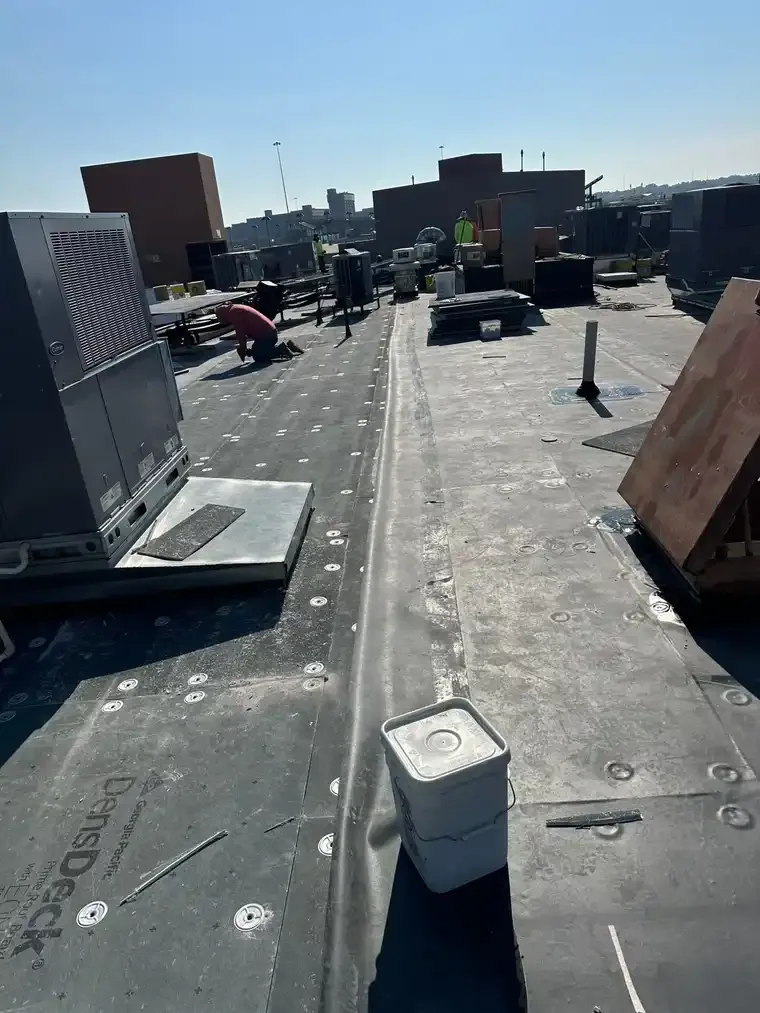
The final scope identifies damaged roofing, wet insulation and the connections needed to join new material to sound assembly. Affected support receives the required review and correction before the membrane work is finished. The repair should preserve the distinction between roofing damage and other building damage.
We record the work with photographs and location references. Findings can also support an insurance review, but coverage decisions remain with the insurer and policy process. Roof documentation for a claim describes the observed condition and roofing tasks without assigning unsupported conclusions about the whole loss.
Cost drivers include safe access, removal extent, hidden water, support repairs and equipment coordination. Urgent roof protection is available around the clock, including weekends and holidays, once safe conditions permit the response. Send the property contact and safely available photos. We will inspect the roofing within the approved boundary and explain what the permanent repair still requires.
Once fire officials release the site and the roof is safe to enter, the inspection should cover more than the visibly burned area. Heat can affect membrane, insulation, deck attachment and nearby penetrations; suppression water may travel beyond the room or roof section where it was applied. We mark areas that can be assessed directly and identify any concealed layers that need opening. Mechanical equipment, vents and temporary penetrations may also need separate review. The repair scope distinguishes immediate weather protection from permanent restoration and does not treat roof work as clearance to reopen the building.
Commercial Roofing Questions
Can you inspect immediately after the fire response ends?
Access needs clearance and a safety review first. We coordinate the inspection boundary with the owner and responsible specialists before approaching a damaged roof.
Does a membrane that did not burn through still need replacement?
Material condition requires examination. Heat can affect the sheet or its connection without leaving a complete hole. We explain the findings and any checks needed before selecting the repair boundary.
Will repairing the roof clear the building for reopening?
Occupancy clearance involves the responsible authorities and relevant building specialists. We report the roof status and remaining roofing concerns so that decision uses the appropriate information.
Can firefighting water remain under a dry surface?
Hidden moisture is possible after water entered the assembly. We use suitable investigation to identify affected layers and explain removal requirements rather than judging dryness by appearance alone.
Should replacement exhaust equipment be installed before final flashing?
The trades need an agreed sequence and detail. We confirm the support, dimensions and access so the roofing connection can be completed without another cut or unfinished corner.