Military Installation Roofing in Clearwater, FL

Roofing planned for military installations near Clearwater, FL: base access, escorts, mission schedules, debris control and Unified Facilities Criteria roofing.

Roofing on a military installation usually goes wrong on the calendar before it goes wrong on the roof. A crew waits at the gate because a badge was not approved. A delivery sits in an inspection lane. A lift is parked for a week because aircraft are moving. The membrane is the easy part. Time, access and mission schedules are the hard parts.

Around Clearwater, FL, the installations sit on an airfield, a bay peninsula and a Gulf-front hospital campus. Each one has its own gate, its own rules and its own weather. Here is how that shapes the roof work, one step at a time.

Schedules slip first

Schedules slip first

Step one is access. Worker approval and vehicle inspection follow the installation's access requirements. A crew that is not on the list does not start, no matter how clear the weather is.

Step two is the escort. On many bases, visitors without full credentials move only with an escort. One escort can watch only so many people, so the number of roofers on site depends on how many escorts the base can spare that day.

Step three is the mission. Flight operations, drills and inspections take priority. A roof job gets paused, rerouted or shifted to another shift, and the crew has to be able to secure the open area at short notice.

Step four is the weather. A paused job on a roof that is already torn open is a leak waiting for the afternoon storm. The fix is to open less, not to hurry more.

Before anyone reaches the gate

A bid for installation work is only as good as the answers to these questions:

  • Who is approved for entry, and how long does approval take?
  • What are the escort rules, and how many people can one escort cover?
  • Which hours are open for work, and which are closed for operations?
  • How are materials, tools and vehicles inspected, and when?
  • What limits apply to cranes and lifts near the airfield?
  • Where does debris go, and who checks the roof and the ground before work ends?

Answering these first turns most surprises into planned steps. It also protects the building underneath, since a job that starts with all the approvals can keep each opening short.

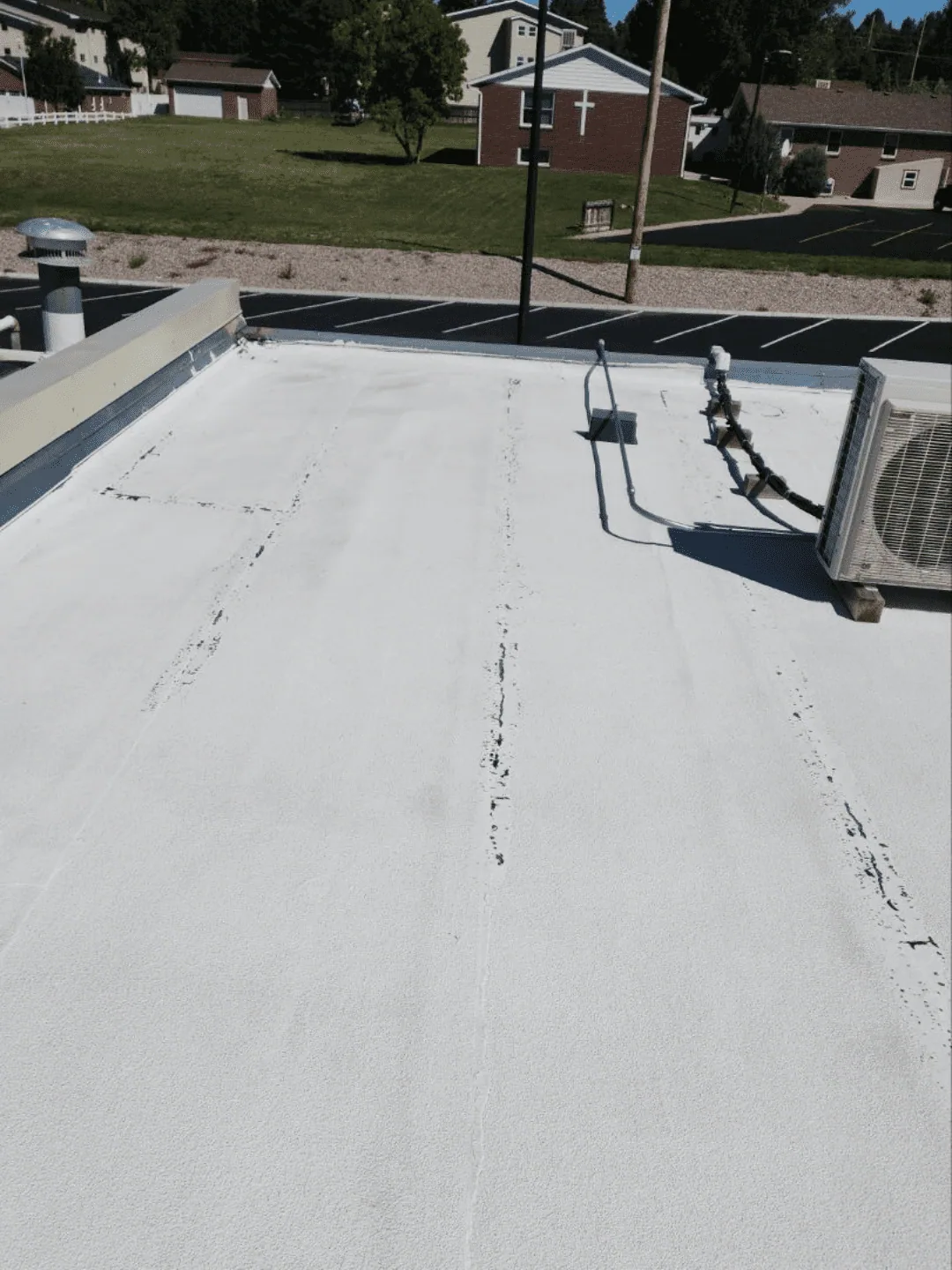
For a roof the base owner wants understood before bidding, a roof condition report with dated photos gives the project team a shared starting point.

Installations around Tampa Bay

Installations around Tampa Bay

Coast Guard Air Station Clearwater sits at St. Pete-Clearwater International Airport, about 8 miles southeast of downtown Clearwater. It is the largest and busiest air station in the Coast Guard, with about 700 people flying MH-60T Jayhawk helicopters and HC-130 Hercules aircraft. Two big maintenance hangars, a headquarters complex, crew quarters, dining space, a clinic and roughly a dozen support buildings share the site. The U.S. Army Reserve keeps an aviation support facility on the same airport grounds. Hangar and apron work share one rule: nothing loose near rotors and engines. That rule drives Coast Guard station roofing and hangar and maintenance facility roofing alike.

MacDill Air Force Base lies about 19 miles southeast across Tampa Bay, on roughly 5,600 acres with about 15,000 people. KC-135R tankers fly from an 11,421-foot runway there, and the base hosts two combatant command headquarters. Housing and visitor lodging on base add building types that run on a different clock than the flight line. Planning for an air force base roof starts with the same gate and escort questions.

The C.W. Bill Young VA Medical Center at Bay Pines, about 11 miles south of Clearwater, has 397 operating beds on a 337-acre Gulf-front campus. Its historic district includes 14 Mediterranean Revival hospital buildings from the 1930s, listed on the National Register in 2012. A hospital campus like this brings VA medical center roofing questions that a hangar never does, and the Bay Pines historic buildings add their own. Tampa's James A. Haley Veterans' Hospital, with 499 beds, is another VA campus in the area.

Built to the criteria

Federal roofing is written down in the Unified Facilities Criteria for roofing, and the project specification points to it. Those criteria set choices a private owner might leave open: design wind loads, insulation, drainage slope, flashing details and tested assemblies. We read the specification before we price, and we mark every place where the existing roof conflicts with it.

Our approach is a sequence. We survey the roof with an commercial roof inspection, photograph every defect, and map moisture. We confirm access, escort and delivery rules with the base. Then we split the roof into sections that can be closed fast, and set daily start and stop times that match the base operating hours.

Hangar roofing needs review of its actual span, deck and structure. Aircraft and equipment on the floor below require suitable protection from the work overhead. Metal hangars need tight fastener and seam control. Membrane roofs need firm edge attachment and a plan for the high winds that cross the airfield. In every case, material tie-down and debris sweeps are part of the day, not the end of the project.

On a base, every plan has to account for hurricane season too. When a named storm approaches, sections get sealed, material is secured and the crew follows the base evacuation plan.

Storms and mission calendars

Storms and mission calendars

Pinellas has not taken a direct hurricane hit since 1921, yet Helene's 2024 surge reached 6.67 feet above MHHW at the Clearwater Beach gauge. Milton brought gusts up to 101 mph to parts of Pinellas County. Buildings on an airfield sit in open ground where wind has a long run at the roof, and Gulf-front campuses take the salt. Roof edges, fastener lines and perimeter metal are the first places we look afterward.

Mission calendars bring their own timing. Exercises, deployments and inspections can close a work zone for days. Good planning leaves float in the schedule, so a closed week does not push the job into the peak of the wet season, which runs from late May to early October.

When damage comes, a base has two urgent questions: is the building weathertight, and is it safe. We document roofing conditions and identify any safety questions requiring specialist assessment through storm damage roof repair, and retain the record for the owner's repair review. The Airport Industrial Park is part of the airport setting and needs its own exposure and access review.

Commercial Roofing Questions

How much time does gate access add before roofing can start?

Gate access starts before mobilization. The installation establishes worker approval, vehicle inspection and delivery procedures. We confirm those requirements before scheduling mobilization. Plan the first stretch of the schedule around paperwork. We submit rosters early and send crews in small groups at agreed times.

What do the Unified Facilities Criteria for roofing change about a design?

They write down choices a private owner might leave open: wind design, insulation, drainage slope, flashing details and tested assemblies. We build to the project specification and flag where the existing roof conflicts with it, so the scope reflects the real condition.

Can roofing work stop when flights are scheduled?

Yes. The mission comes first. Cranes and lifts may be restricted near the airfield, and sections may close without much notice. Our crews work in small areas, with a defined procedure for securing the work when operations require a pause.

What changes on a historic hospital building at Bay Pines?

The owner identifies applicable historic-preservation review requirements for the proposed work. Roof edges, slopes visible from the ground and the materials used can all be part of it. Planning starts with a survey and photographs so the review has facts in hand.

How is debris controlled near a flight line?

Loose debris is a hazard to engines and rotors. Material is tied down at the end of each shift, waste goes into covered containers, and crews sweep the roof and the ground before they leave. A magnet sweep and a final walk close each day.

Bring us the roof and the rules

Send photos of the roof or book an inspection. We will walk it with you, show you what we see, and explain how the work can fit the base access rules and mission calendar.

Request a Roof Assessment   or call 555-555-5555

Call555-555-5555